

Commercial interior painting services can do more than refresh tired walls; they can help create a workplace that feels focused, safe and aligned with how your team actually works. In Melbourne offices, clinics, retail stores and hospitality venues, the interior finish shapes first impressions for clients and everyday comfort for staff. When the job is planned properly, paint becomes part of a broader workplace improvement, not just a maintenance task.
A productive workspace is not only about desks, meeting rooms or technology. It also depends on visual order, reliable lighting, cleanable surfaces and minimal disruption during maintenance. The right painting team will think about access, dust control, colour selection, durability and how to keep your business operating while the work is completed.
What commercial interior painting services include for productive workspaces
A professional commercial repaint usually begins with an inspection of the site and a clear scope of works. That should cover surface condition, previous coatings, patching needs, access requirements, protection of furniture and stock, paint systems and the order in which areas will be completed.
For Melbourne workplaces, this planning matters because every business uses its space differently. A medical reception needs a calm, hygienic feel. A showroom needs colour accuracy and crisp presentation. A warehouse office may need harder wearing coatings around high contact areas. The service should match the function of the space rather than applying one finish everywhere.
| Workspace goal | Painting decision that supports it | Why it matters |
|---|---|---|
| Reduce visual clutter | Consistent neutral base colours with controlled feature walls | Helps staff and visitors read the space quickly |
| Improve perceived cleanliness | Washable finishes in corridors, kitchens and reception zones | Makes maintenance easier in high traffic areas |
| Support brand presentation | Carefully matched brand colours in selected locations | Reinforces identity without overwhelming the workplace |
| Minimise downtime | Staged works, after-hours scheduling and clear access planning | Keeps teams, tenants and customers moving |
Colour, light and finish choices that support work
For a workplace, commercial interior painting services should start with how people use each area during a normal day. Colour choices that work in a boardroom may not suit a busy staff kitchen, and a finish that looks elegant in a reception area may mark too easily in a back-of-house corridor.
Use colour to guide behaviour, not distract from work
Colour can help define zones, soften harsh lighting and make large spaces feel more organised. Cool neutrals often suit focused work areas, warmer tones can make client-facing rooms feel more welcoming and deeper colours can create definition in breakout zones. The aim is not to follow trends blindly, but to choose a palette that fits your brand, lighting and daily use.
If you are still exploring general palette ideas, Auspainters has a useful guide to choosing paint colours that elevate a space. The examples are residential, but the same principles of light, flow and finish can help business owners brief a commercial painter more clearly.
Match sheen levels to lighting and cleaning needs
Sheen affects how walls reflect light and how visible marks become over time. A very flat finish can look refined, but it may not suit a corridor where bags, trolleys or equipment regularly touch the wall. Higher sheen finishes are often easier to wipe, but they can highlight surface imperfections if preparation is rushed.
A good painter will assess natural light, artificial lighting, wall condition and cleaning expectations before recommending a finish. This is where professional preparation saves money over the life of the paintwork, because a durable coating still needs a sound surface beneath it.
Planning a repaint without disrupting business
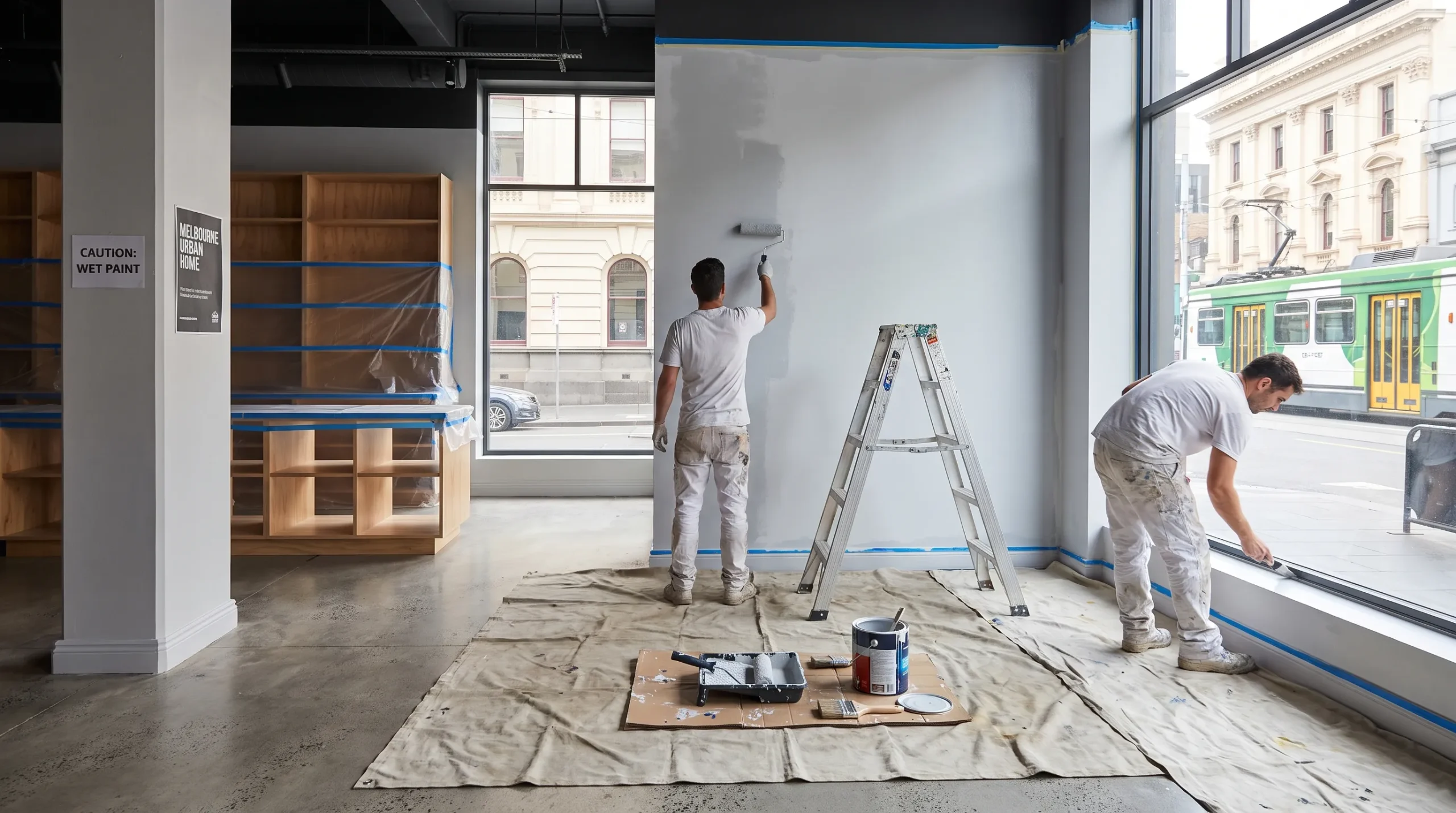
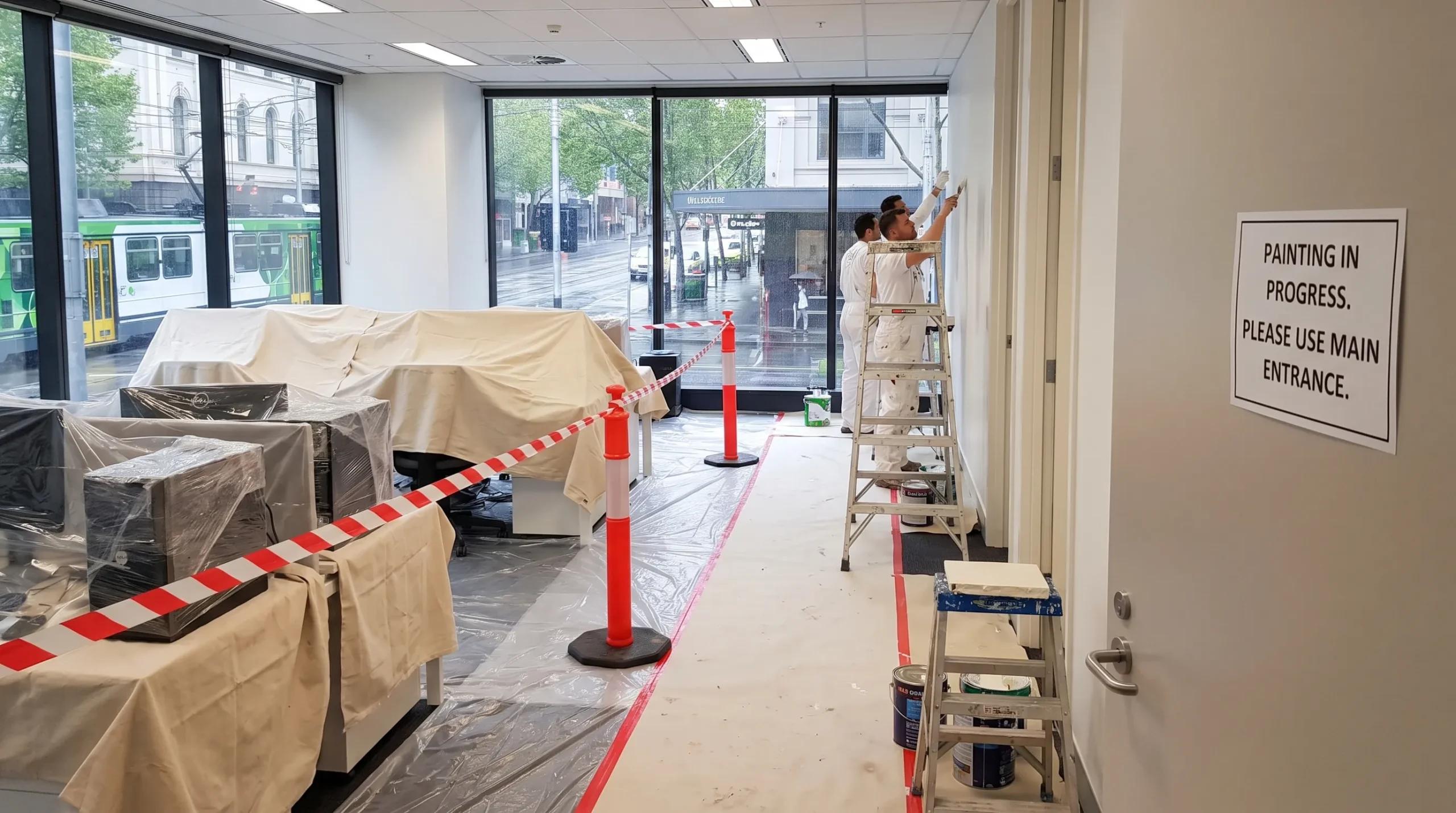
A provider of commercial interior painting services should map the project around your operating hours, staff movement and customer access. That may mean dividing the site into zones, completing noisy preparation outside peak periods or painting client-facing areas over evenings and weekends.
Disruption is often caused less by painting itself and more by unclear sequencing. If furniture is moved twice, meeting rooms are unavailable without notice or drying times are underestimated, the project starts affecting productivity. A clear program helps everyone know which areas are available, when odour may be noticeable and when normal use can resume.
Safety is part of that planning. In Australia, workplace duties require risks to be managed so far as reasonably practicable, and Safe Work Australia provides guidance on managing work health and safety risks. For a painting project, that can involve access control, ventilation, safe storage of materials, protection of walkways and communication with building occupants.
Surface preparation and coatings are where durability is won
The most productive repaint is one you do not have to repeat too soon. That comes down to preparation: washing, sanding, patching, gap filling, spot priming and dealing with moisture or adhesion issues before finish coats are applied. Skipping these steps may look acceptable on handover day, but the surface can fail faster under daily commercial use.
In high traffic premises, commercial interior painting services need to balance cleanability, touch-up consistency and appearance. The best option for a wall behind a reception desk may not be the right option for amenities, stairwells, storage rooms or a retail change room.
| Area | What the painter should consider | Practical outcome |
|---|---|---|
| Reception and waiting areas | Brand impression, lighting and scuff resistance | A polished first impression that stays presentable |
| Offices and meeting rooms | Glare, concentration and acoustic feel | Comfortable spaces for focused work and collaboration |
| Corridors and stairwells | Frequent contact, cleaning and safety visibility | Coatings that cope with everyday movement |
| Kitchens and amenities | Moisture, hygiene and wipeability | Surfaces that are easier to maintain |
| Retail and hospitality spaces | Customer flow, feature colours and fast turnaround | A finish that supports sales without long closures |
Paint selection should also consider indoor comfort. Many businesses now prefer lower odour or low VOC options where suitable, especially when staff return soon after work is completed. Your painter should explain what products are being used, where they are being used and how long each area needs before normal operation resumes.
How to choose the right Melbourne commercial painter
Before approving commercial interior painting services, ask how the contractor will protect your site, communicate progress and prove the quality of the finish. A vague quote can lead to arguments later, especially if it does not spell out preparation, number of coats, product types, exclusions and the handover process.
For a deeper checklist, Auspainters has a practical guide to questions to ask painting contractors before you hire. Many of those questions apply directly to commercial projects, including insurance, preparation standards, supervision and warranties.
Look for credentials that reduce risk
Commercial painting involves more than neat cutting in. You want a team that is fully insured, understands site safety and can work around staff, customers, tenants or trades. Auspainters is fully insured, OHS compliant and Dulux accredited, which helps give Melbourne businesses a clearer benchmark when comparing quotes.
Avoid judging on price alone
A cheaper quote may exclude the preparation, protection or project management needed for a durable result. It can also mean more disruption if the job is understaffed or poorly staged. If you are weighing up whether to DIY smaller areas, Auspainters explains the broader value of hiring a professional in its guide on why a professional painter is often the better choice.
Building a better brief for commercial interior painting services
The best commercial interior painting services brief is practical, not complicated. Give the painter enough information to understand how the site operates, what must be protected and what a successful finish looks like for your business.
Include these details before requesting a quote:
- Business hours and any periods when work cannot occur
- Priority areas, such as reception, meeting rooms or customer zones
- Surfaces that are damaged, stained, glossy or difficult to access
- Furniture, equipment, stock or flooring that needs protection
- Brand colours, existing colour codes or preferred sample areas
- Building access, parking, loading, lift use and security requirements
- Any tenancy, strata, landlord or facility management rules
Auspainters provides free quotations, commercial painting across Melbourne suburbs and a final walkthrough so the finish can be checked before completion. The 5-year workmanship warranty also gives business owners extra confidence that the project is being approached as a long-term finish, not a quick cosmetic patch.
Frequently Asked Questions
How do commercial interior painting services reduce workplace disruption? They reduce disruption through staged scheduling, clear communication, after-hours work where appropriate, protection of furniture and flooring, controlled access zones and realistic drying times.
How often should a commercial interior be repainted? It depends on traffic, cleaning routines, sunlight, moisture and the quality of the previous preparation. Reception areas, corridors and customer-facing spaces usually show wear sooner than private offices.
Can painting improve staff productivity? Painting will not fix poor systems or layout problems, but a cleaner, better lit and more visually organised space can support comfort, focus and a stronger sense of care in the workplace.
Should businesses choose low VOC paint? Low VOC options can be a good choice for occupied workplaces, especially offices, clinics and education settings. Your painter should recommend products based on the surface, performance needs and return-to-work timing.
Ready to refresh your workplace?
A well planned repaint can make your workspace feel cleaner, calmer and more professional while protecting the surfaces that carry daily wear. If your Melbourne business is preparing for a fitout, lease renewal, brand refresh or general maintenance, Auspainters can provide a free quote, reliable workmanship and a premium finish backed by a 5-year workmanship warranty.