
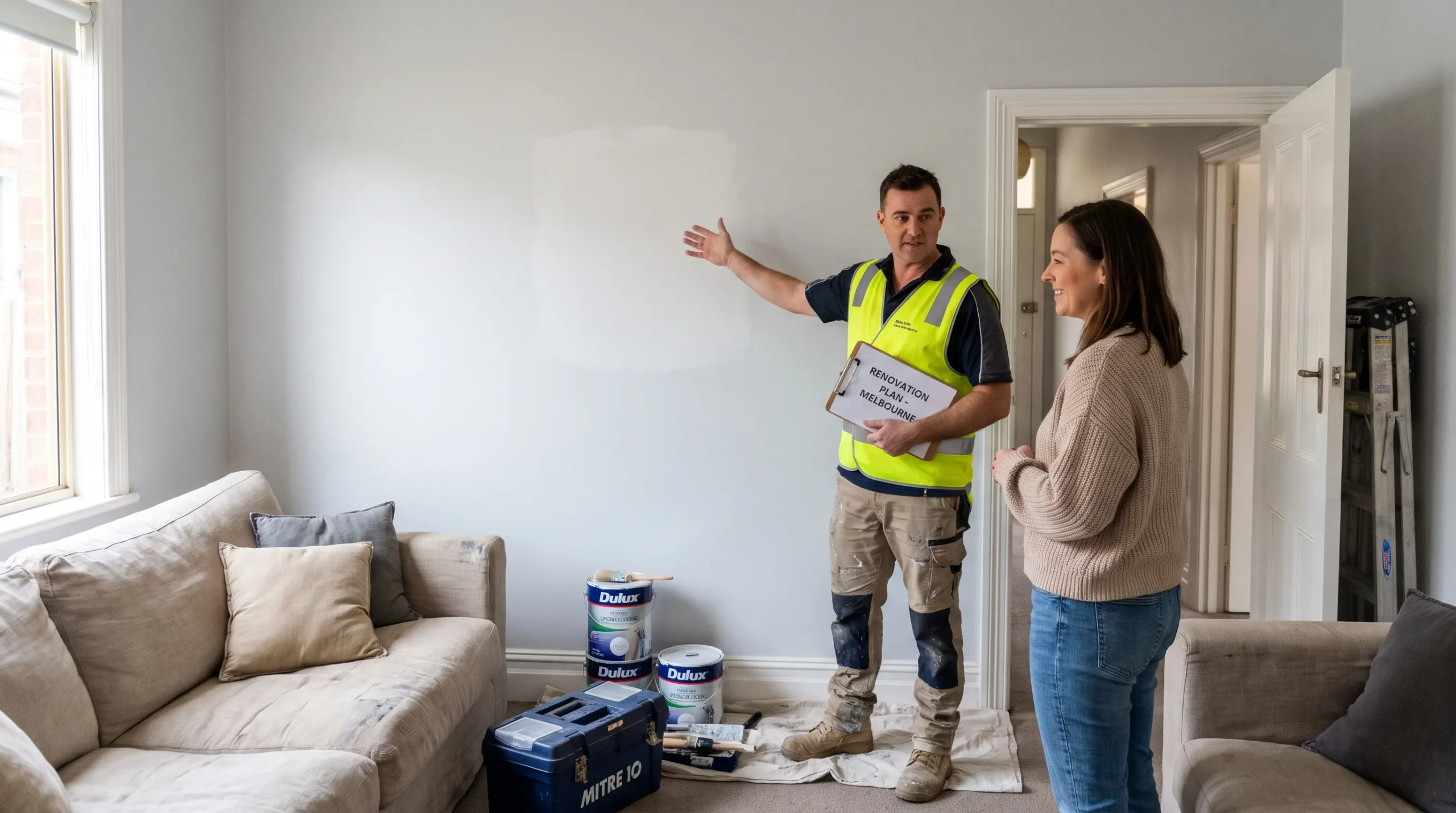

When you hire a professional painting company, the person who visits to quote may not be the person painting your walls. Your project could involve an estimator, a supervisor, employed painters, subcontractors or a combination of these. That arrangement is not automatically a problem. What matters is knowing who will attend, who directs the work and which business takes responsibility for the agreed result.
For Melbourne homeowners and business owners, those details should be clear before the crew arrives, not discovered halfway through the job.
The people behind your painting quote
On a small project, one person might quote, prepare surfaces, paint and conduct the final inspection. A larger job may divide those duties across several people.
| Role | Typical responsibility | What to confirm |
|---|---|---|
| Estimator or business owner | Inspects the property and prepares the proposal | Who receives the information gathered during the visit? |
| Project manager or supervisor | Coordinates people, timing and quality checks | Will they be on site or visiting at agreed stages? |
| Lead painter | Directs the crew’s day-to-day work | Can they discuss access and practical issues with you? |
| Painters and apprentices | Carry out preparation and coating work within their skills and supervision arrangements | Who checks their work? |
| Contracting business | Provides the agreed service under your contract | Who handles variations, defects and warranty enquiries? |
Job titles vary between businesses. Ask what each person actually does rather than assuming that “project manager” means someone will be present all day.
How a professional painting company can organise its crew
There are three common arrangements: employees, subcontractors or a mixed team. None tells you enough about quality on its own.
Employees
Employed painters work for the business you hire. This can support consistent routines and familiar working relationships, but employment status alone does not establish skill or supervision. Ask who leads the crew and how completed work is checked.
Apprentices may also contribute. Their involvement is not a reason to reject a contractor; the relevant questions concern the tasks they perform and the supervision they receive.
Subcontractors
A painting business may engage another business or individual contractor to complete some or all of the work. Subcontractors can be experienced tradespeople with established working relationships with the company.
The issue is transparency. You should know whether subcontractors will attend, how they receive the scope and who resolves problems. A subcontracted crew should not leave you trying to work out which business is responsible for an unfinished room.
Mixed teams
Some projects combine employed supervisors with subcontracted painters or bring in additional workers for particular stages. Ask whether the proposed arrangement is confirmed and how you will be notified if it changes.
Who remains responsible if another crew does the painting?
Your professional painting company should clearly identify the contracting entity and explain how it manages anyone working on its behalf. Do not assume that the name on a vehicle, uniform or invoice tells the whole story.
Check that the quote and contract identify the business you are engaging. You can verify business details through ABN Lookup, although an ABN does not establish painting competence, insurance cover or accreditation.
Ask for current evidence of relevant insurance and clarification of how the proposed work arrangement is covered. Do not assume that one insurance certificate covers every worker, subcontractor or activity. Registration or licensing requirements should also be checked against the actual scope and applicable Victorian rules, rather than inferred from a company’s marketing.
Responsibility needs to be practical as well as documented. If a subcontractor leaves a door unfinished, who arranges the return visit? If a different crew attends next week, who explains the agreed finish?
Warranty responsibility deserves the same clarity. Our guide to what a professional painter’s warranty should cover explains the distinction between workmanship cover and paint manufacturer warranties. Confirm which business receives your claim and what the written terms require.
How the work should move from quote to completion
The most useful way to assess a team is to follow the handovers. Information should travel from the person who inspected the property to the people preparing, painting and checking it.
From estimator to site supervisor
Before work starts, a professional painting company should give its site team the agreed scope, not rely on a verbal summary of “paint the house”. That handover should identify included surfaces, preparation, coating products, colours, sheen levels and exclusions.
It should also capture details discussed during the inspection: a door that sticks, a wall with previous moisture damage or a room that must remain accessible. Otherwise, the homeowner ends up repeating the brief to each new person.
Ask who approves preparation before coating begins. Our explanation of how professional house painters prepare walls provides more detail on that stage. Here, the key question is who checks it before repairs disappear beneath paint.
Between painters and other trades
Painters are not automatically responsible for fixing leaks, moving electrical fittings or completing substantial building repairs. Confirm who arranges those tasks and when the affected area becomes ready for painting.
If you are changing lighting, settle fitting positions before the final coats wherever practical. A professional lighting plan for your home can help you think through room functions and light placement before coordinating the electrician and painter.
Electrical work belongs with an appropriately licensed electrician. Suspected lead paint, asbestos-containing materials or unresolved water damage also needs assessment before ordinary preparation proceeds. Ask who can pause work and contact you when an unexpected condition appears.
From the painting crew to final inspection
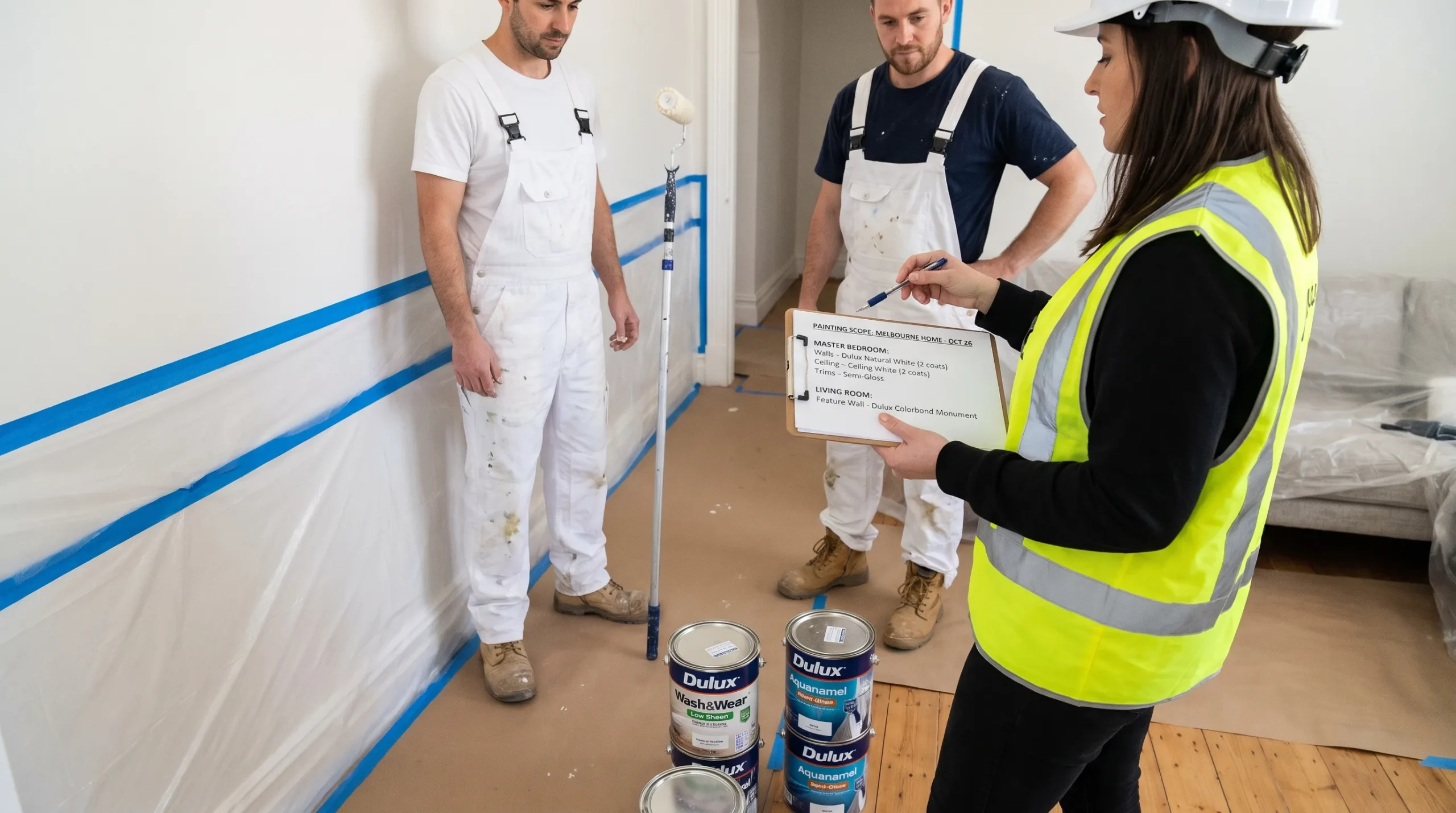
The crew should check its work before asking you to sign off. Your walkthrough is an opportunity to review the result, not a substitute for the contractor’s own quality control.
Agree who will attend, how outstanding items will be recorded and who organises any return visit. Review the included surfaces, coverage, edges, agreed finishes and cleanup, allowing coatings appropriate drying time for assessment.
A short written list is more useful than a promise to “come back sometime”. It gives both sides a record of what remains, who will handle it and the expected next step.
What to confirm before anyone arrives
A useful pre-start conversation covers the people entering your property as well as the paint specification. Ask your professional painting company to confirm these points in writing:
- Your main contact: The person authorised to answer questions, resolve problems and discuss changes.
- The expected crew: Whether employees, subcontractors or both will attend, plus who supervises them.
- Access arrangements: Arrival times, keys, alarm procedures, parking and rooms or areas that remain off limits.
- Protection and daily pack-up: Who moves agreed items, protects surfaces, stores materials and leaves access routes safe.
- Changes and completion: Who can approve extra work, how additional costs are documented and who attends the final walkthrough.
For an occupied home, discuss pets, children, ventilation and when rooms can be used again. Those arrangements depend on the products, work area and site conditions, so avoid relying on a blanket promise that every room will be usable that evening.
For a working business, identify the person coordinating staff and customer access. After-hours work, restricted areas and equipment movement need agreement before the crew plans its shifts.
You do not need every worker’s personal details. You do need to know who is authorised to enter and how changes to the crew will be communicated.
How staffing affects the price and schedule
A larger crew may complete some stages sooner, but adding painters does not remove preparation, drying or access constraints. Several people cannot necessarily work efficiently in one small room.
Likewise, comparing a professional painting company with another business purely by hourly rate can be misleading. A quote may account for supervision, protection, preparation, equipment, materials and cleanup as well as time applying paint. Ask whether the price is fixed or based on labour hours and how variations are approved.
For exterior work in Melbourne, weather may require the team to change its sequence or postpone coating. Commercial access restrictions can have a similar effect on scheduling. Ask who communicates revised dates and whether a crew change will affect the handover.
You are buying an agreed scope and result, not simply a headcount. A clear explanation of staffing is useful; a promise that “more painters means faster” is not enough without a workable plan.
Frequently asked questions
Should I meet the painters before accepting a quote? Not necessarily, particularly if staffing is scheduled closer to the start date. You should still understand the proposed team arrangement, who will supervise and when you will receive your site contact’s details.
Is it a red flag if a professional painting company uses subcontractors? No. The concern is undisclosed subcontracting, unclear supervision or difficulty establishing responsibility. An experienced subcontracted crew can work well when the scope, checks and communication are properly managed.
Can I ask for the same crew throughout the project? Yes, but have that expectation discussed before booking. Availability may change, so agree how substitutions will be communicated and how the replacement crew will receive the project details.
Who do I contact if I notice a problem after completion? Start with the business named in your contract and follow its written defects or warranty process. Provide photographs, the affected location and a description of the issue rather than relying on a conversation with an individual painter.
Discuss your Melbourne painting project with Auspainters
Auspainters provides residential and commercial painting across Melbourne, including interior and exterior work, with free quotations and a five-year workmanship warranty. The business is Dulux accredited, fully insured and OHS compliant, with a final walkthrough included.
When you request a painting quote from Auspainters, ask who will manage your particular project, how the crew will be organised and who will check each stage. Those answers help turn a written quote into a clear working arrangement.