

For a lease make-good, the commercial painters Melbourne businesses choose need more than a colour and a vacate date. They need a clear reinstatement scope, workable building access and an agreed standard for the landlord’s inspection. Without those details, even a tidy repaint can leave you facing extra work just before the keys are due back.
The priority is to establish what your tenancy actually requires, then commission the painting needed to meet that obligation. This guide explains how to brief contractors, compare quotes and organise a documented handover without paying for an unnecessary refurbishment.
Confirm what the lease actually requires
A make-good is not automatically a complete repaint. Your obligations depend on the lease, any relevant agreements and applicable law. They might involve removing branding, repairing fixings and repainting specified surfaces, or returning the premises to a more extensively defined condition.
Start with the make-good clause, entry condition report, dated photographs and approvals for alterations. Ask the landlord or managing agent to confirm the proposed painting scope in writing. Their preferred finish and your contractual obligation are not necessarily the same thing, so resolve differences before authorising work.
For retail premises, the Victorian Small Business Commission provides information about Victorian retail leasing. Not every commercial tenancy falls under the same rules. Obtain legal advice if responsibility, fair wear and tear or the required standard is disputed.
Use a simple schedule to turn broad requirements into identifiable work:
| Area | Detail to agree before quoting |
|---|---|
| Painted walls | Which walls require repainting and whether complete wall sections are required |
| Signage locations | Who removes signs, repairs fixings and treats adhesive residue |
| Ceilings | Whether painting is included and who replaces damaged tiles |
| Doors and frames | Required preparation, colour and finish |
| External surfaces | Whether shopfronts, signs or other external elements are included |
What commercial painters Melbourne tenants hire need to quote
Give each contractor the same information. A site inspection is valuable, but it cannot replace the documents that define your obligations.
Your brief should identify the premises, agreed surfaces, required finish and contractual handover date. Include marked-up photographs or a floor plan so “paint the office” does not become an argument about storage rooms, exposed services or the loading area.
Provide these practical details as well:
- Access arrangements: Loading dock bookings, lift protection, parking restrictions and permitted working hours.
- Building requirements: Contractor induction, insurance documentation, ventilation rules and any required permits.
- Removal and repair responsibilities: Who removes furniture, signage, partitions, cabling and redundant fittings.
- Finish approval: Existing paint information, proposed colours and the person authorised to approve samples.
- Inspection dates: The planned preliminary inspection, time for corrections and final key return.
Identify one tenant representative who can approve decisions. If instructions arrive separately from your office manager, project manager and landlord, ask the painter to refer any conflicting direction back to that nominated person.
Separate reinstatement repairs from paint preparation
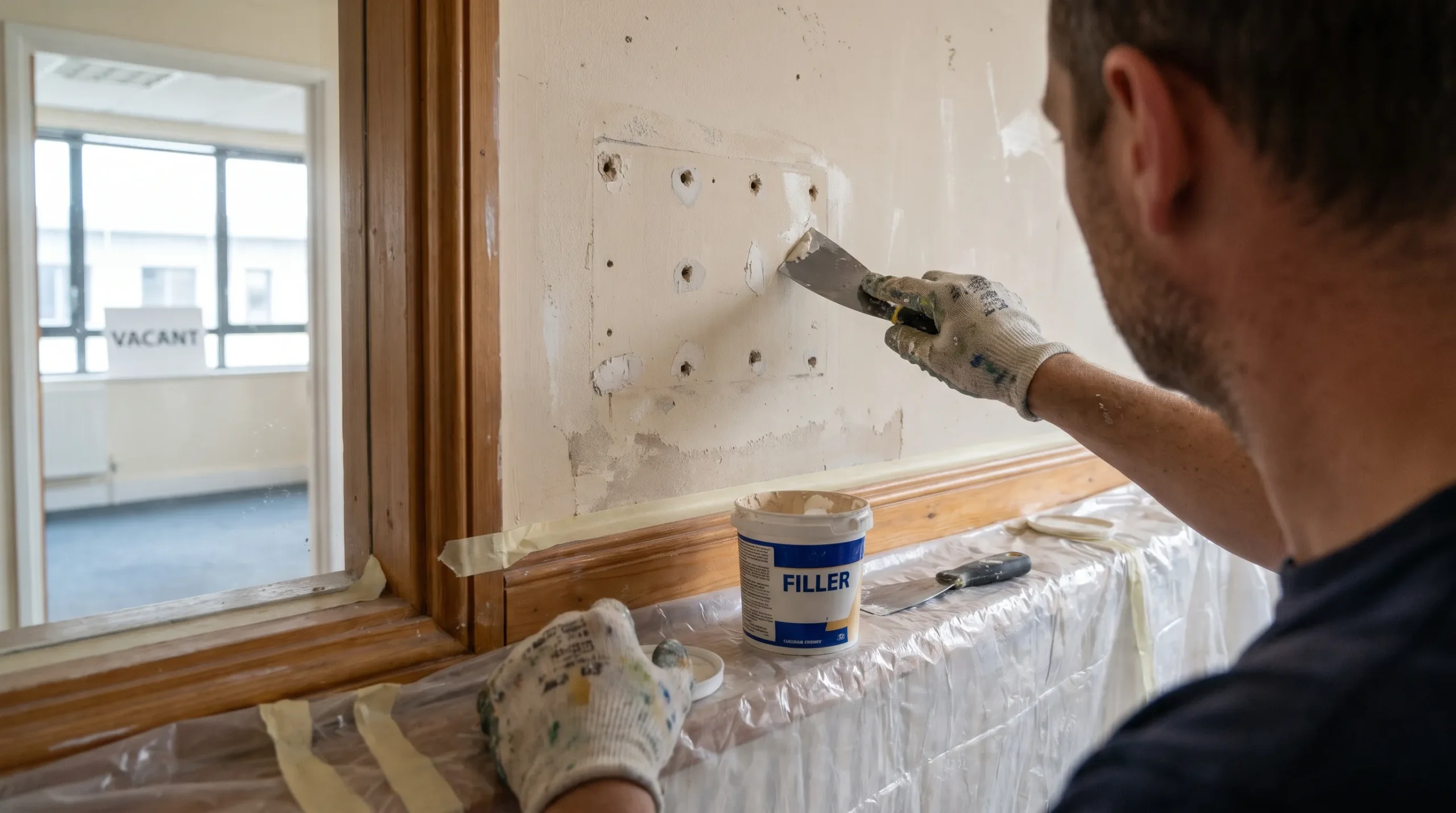
Removing a fit-out can reveal damage that was invisible during the first inspection. Signage may leave adhesive shadows, shelving can expose unpainted strips and partition removal may uncover joints that need more than a quick fill.
The commercial painters Melbourne tenants appoint should distinguish routine paint preparation from repairs that need separate pricing or another trade. Agree who handles plasterboard replacement, ceiling repairs and electrical disconnections before painting starts.
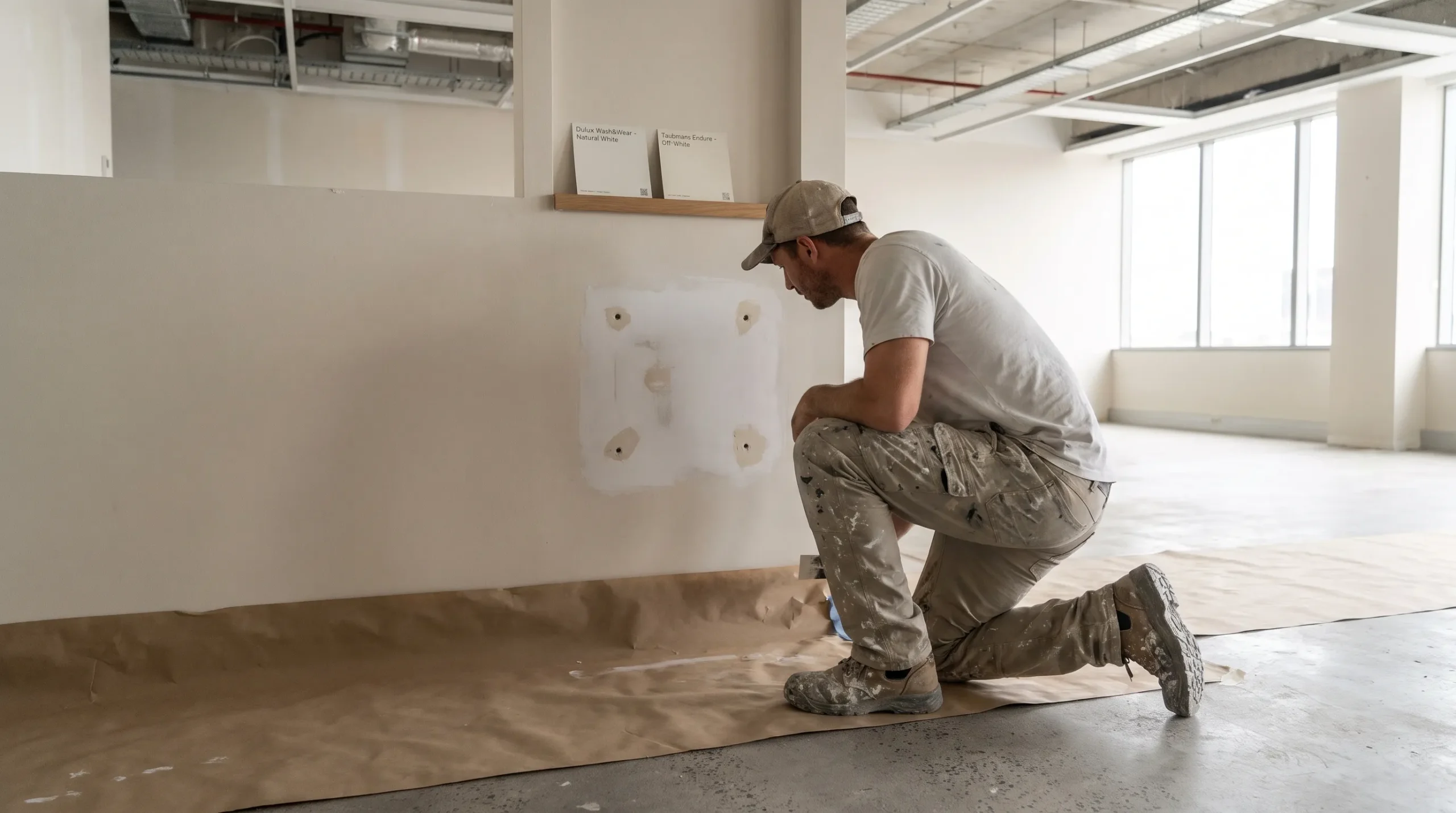
Spot-painting is not always a reliable way to achieve an even finish. Existing coatings can fade, and differences in sheen or surface texture may remain visible despite a close colour match. Where appearance matters, request a sample repair and written approval of the proposed treatment. Full-wall repainting may be appropriate, but it should be justified rather than assumed.
Moisture damage also needs its cause addressed before recoating. If preparation could disturb suspected asbestos-containing material or lead paint, stop that work and arrange appropriate assessment. Hazardous-material investigation and removal should not be treated as ordinary sanding or scraping.
Compare quotes against the agreed handover standard
A useful make-good quote describes what will be delivered, not simply the floor area and total price. Compare the same surfaces, preparation and finish requirements across every proposal.
Ask for the coating system, including relevant primers or sealers, finish coats and the proposed sheen. The product choice should suit the substrate and approved appearance. A premium coating is not automatically necessary everywhere, but an unsuitable system can create adhesion or finish problems.
When comparing commercial painters Melbourne businesses are considering, check exclusions as closely as inclusions. Access equipment, extensive patching, adhesive removal, waste disposal and after-hours work can materially change the total. Our guide to what commercial painting prices include in Melbourne quotes explains how to assess those allowances.
Check current insurance certificates, relevant project references and who will supervise the job. Verify any licences or registrations required for specialist work with the relevant Victorian regulator rather than relying on a general claim that a contractor is “licensed”.
Finally, agree on a variation process. Additional work should have a written description, price and programme impact approved by an authorised person before it proceeds. Do not assume a managing agent’s onsite request automatically authorises an extra charge to you.
Build the programme backwards from handover
The key-return date should not also be the date the final coat goes on. Allow time for inspection, identified corrections and any necessary reinspection.
A practical sequence is:
| Stage | Coordination requirement |
|---|---|
| Scope approval | Resolve required surfaces, colours and responsibilities |
| De-fit and removals | Remove items that conceal or damage painted surfaces |
| Repairs and preparation | Complete relevant repairs before finish coats |
| Painting | Allow for product-specific drying and recoating requirements |
| Inspection and corrections | Leave access and time to address agreed defects |
| Handover | Record condition and obtain written acknowledgement |
Ask the commercial painters Melbourne property managers will need to admit how access restrictions affect this sequence. A missed goods-lift booking or late partition removal can disrupt more than one trade.
Drying time and full curing time are different. Follow the coating manufacturer’s guidance on recoating, ventilation and cleaning rather than promising that every painted surface will be ready for normal treatment the next morning.
If part of the premises remains occupied, agree how work zones, pedestrian routes and ventilation will be managed. Where work is high-risk construction work, the required safe work method statement should be in place. For staged projects, our guide to how commercial paint contractors minimise business downtime covers additional planning considerations.
Keep relocation and rebranding outside the make-good scope
Moving premises may also involve new signage, updated website details or a refreshed brand identity. Manage those tasks alongside the move, but keep their budgets and approvals separate from reinstatement at the outgoing property.
Website or branding work, whether handled internally or by a provider such as Dorron Marketing, serves your business’s next location. The old premises should receive the landlord-approved finish, not automatically your new brand palette. Keeping those instructions separate helps prevent a well-intentioned colour change becoming an avoidable variation.
Document acceptance before returning the keys
Arrange a preliminary inspection while the painter can still access the site. Ideally, the person authorised to assess the landlord’s requirements should attend, rather than leaving their first inspection until after everyone has demobilised.
Use the approved scope as the inspection checklist. Record missed areas, visible patching, finish inconsistencies or damage to adjacent surfaces, then agree who will address each item and when. Distinguish unfinished contracted work from newly requested improvements.
Photograph completed rooms and repaired areas, keeping the images with the quote, variations and inspection correspondence. Request written confirmation of accepted work and any outstanding items. Returning keys alone should not be treated as proof that every make-good obligation has been resolved.
The commercial painters Melbourne tenants engage can document their completed painting work, but they cannot guarantee a landlord will release security or waive disputed lease obligations. Likewise, a painter’s workmanship warranty is not a substitute for landlord acceptance. If a disagreement remains, seek advice before signing a settlement or assuming that the matter is closed.
Frequently asked questions
Do I have to repaint the entire tenancy at the end of the lease? Not automatically. Check the lease, condition records, later agreements and applicable law. Agree on the painting scope in writing before commissioning work, and obtain legal advice where the obligation is unclear or disputed.
Can damaged areas simply be touched up? Sometimes, but colour, sheen and texture differences can make repairs visible. Ask for a sample where appropriate and confirm whether the landlord will accept local repairs or requires complete wall sections to be repainted.
How early should I book the painter? Start obtaining quotes once the likely scope and departure date are known. Ask commercial painters Melbourne tenants are considering to confirm availability, access requirements and the time needed after de-fit. Leave a separate allowance for inspection and corrections rather than relying on a fixed generic timeframe.
Does the painter organise every part of the make-good? Do not assume so. Confirm responsibility for removals, plaster repairs, electrical work, hazardous materials and waste in writing. A painting quote may cover only preparation and coatings on specified surfaces.
Request a clearly scoped make-good painting quote
Auspainters provides commercial painting across Melbourne, with free quotations, Dulux accreditation, full insurance and OHS-compliant work practices. Services include a final walkthrough and a 5-year workmanship warranty.
To request a quote from Auspainters, provide your agreed painting scope, site photographs, access rules and proposed handover date. Ask the team to confirm inclusions, exclusions and scheduling before booking, so the painting work can be coordinated with your wider lease make-good obligations.