


A Melbourne commercial painting quote should tell you more than the cost of applying paint. Commercial painting prices should be tied to a defined scope, including the surfaces being painted, preparation, coating system, access arrangements and completion requirements. Without that detail, a fixed total can still leave room for unexpected charges.
For an office, shop, warehouse or strata-managed property, the practical question is what the quoted amount actually buys. Does it include moving furniture? Are ceilings and doors covered? Who pays for access equipment or additional repairs discovered after preparation starts?
This guide explains the inclusions to look for, the items that need separate confirmation and how to read pricing allowances before approving work. A quote does not need a separate price for every task, but it should make the boundaries of the job clear.
What commercial painting prices should cover
There is no universal package of inclusions. The written quote determines what the contractor has allowed for, so broad descriptions such as “paint office interior” need clarification.
A useful scope connects each part of the building with the work proposed:
| Quote item | Detail to look for | What needs clarification |
|---|---|---|
| Surfaces | Rooms, elevations, walls, ceilings, doors and trim | Whether every surface in the work area is included |
| Preparation | Cleaning, scraping, sanding, patching and priming | The extent of repairs allowed for |
| Paint system | Product range, finish and application requirements | Whether primers and specialist coatings are included |
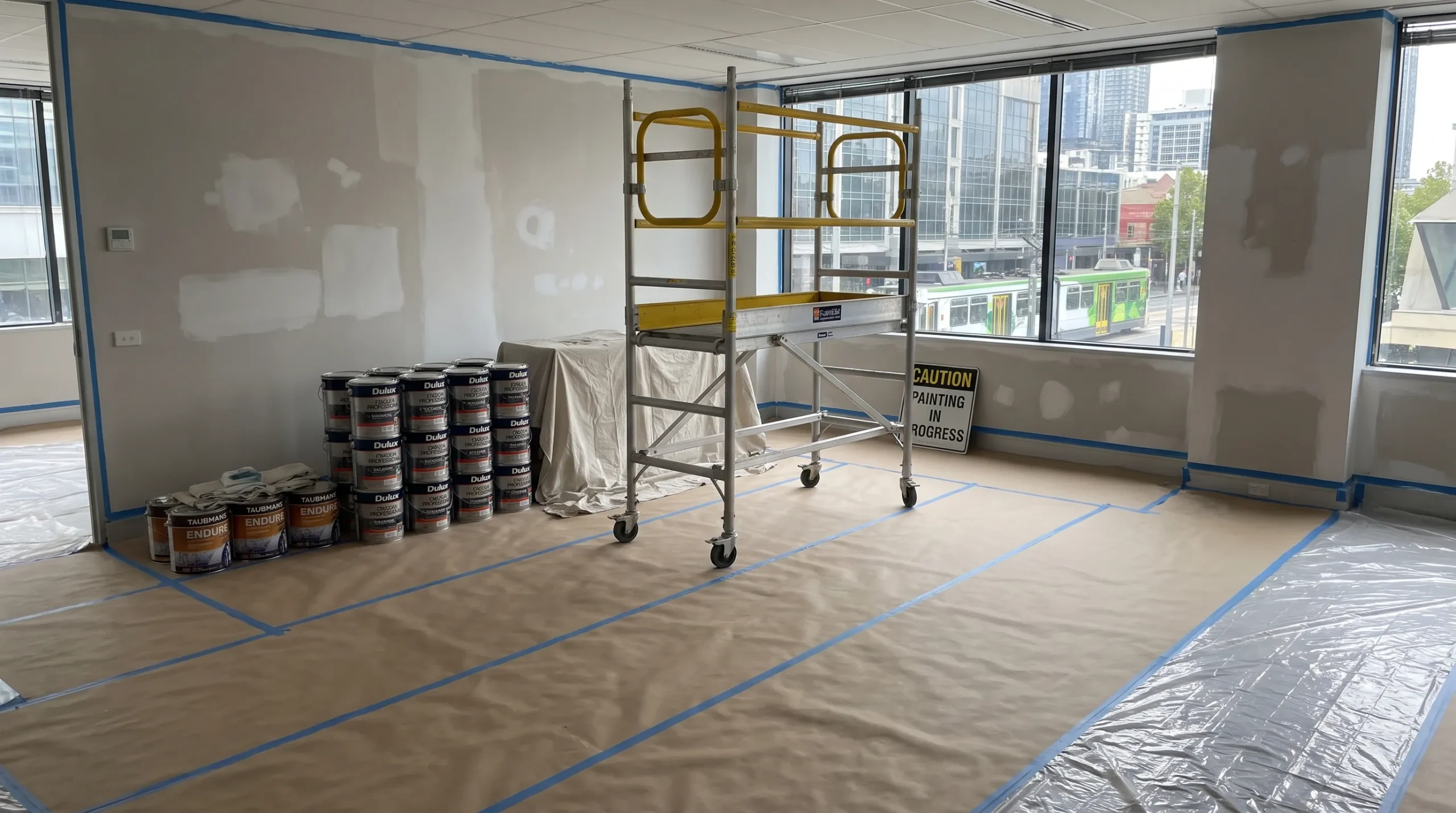
| Site protection | Protection of floors, furniture, stock and equipment | Who moves heavy or sensitive items |
| Access | Ladders, scaffolding or elevated work platforms | Hire duration and associated access costs |
| Scheduling | Working hours, stages and occupied areas | After-hours work and repeated site setups |
| Completion | Cleanup, touch-ups and final walkthrough | Waste removal and acceptance requirements |
An item being necessary does not mean it is included. For example, a painter may need clear access to shelving but expect your staff to relocate the stock. That responsibility should be recorded before the start date.
How painters calculate the quoted amount
Painters generally build an estimate from labour, materials, equipment and the practical demands of the site. Commercial painting prices can therefore differ between two buildings with similar floor areas, even when both projects involve an ordinary repaint.
Labour allowances reflect more than application time. Preparation, masking, moving between work zones, allowing coats to dry and returning for staged work all affect the hours required. Materials depend on the specified products, surface porosity, coverage and coating system.
A contractor may present the result as a lump sum, a schedule of rates or separate amounts for different areas. Any of these can work if the scope and assumptions are clear.
Square metre rates need a defined measurement
A rate per square metre is useful only when you know what is being measured. Floor area, wall area and total paintable surface area are different quantities.
For example, a rectangular room measuring 10 metres by 8 metres has an 80 m² floor area. With walls 3 metres high, its gross wall area is 108 m² before deducting doors or windows. Adding the ceiling brings the gross wall-and-ceiling area to 188 m², excluding trim.
That example is a measurement illustration, not a price estimate. Ask whether the contractor measures openings separately, includes ceilings and prices doors or detailed trim as individual items. Converting an overseas square-foot rate into square metres will not resolve differences in scope, local labour or access.
A useful breakdown separates different work types
An open warehouse wall and a reception area with doors, glazing and joinery should not automatically be treated as equivalent work. Detailed areas can require considerably more cutting-in and protection.
For larger projects, ask for separate amounts for logical work zones, such as offices, amenities and external elevations. This makes commercial painting prices more useful for budgeting because you can see the cost of deferring a clearly defined area.
If an optional area is removed, request a revised total rather than assuming its full original allowance can simply be deducted. Shared setup and equipment costs may still be required for the remaining work.
Preparation and repairs: define the allowance
Preparation is one of the easiest inclusions to misunderstand. “Prepare surfaces” could describe light sanding and minor filling, or much more extensive work on peeling coatings and damaged substrates.
The quote should explain the treatment proposed for the conditions visible during inspection. It should distinguish routine preparation from repairs that fall outside the painting scope, such as replacing damaged plasterboard, repairing leaks or addressing deteriorated timber.
For commercial painting prices to provide a dependable budget, repair allowances need boundaries. Useful descriptions might identify particular damaged areas, specify an allowance for minor patching or provide an agreed method for pricing additional repairs.
Hidden defects need an approval process
Some problems become apparent only after loose coatings are removed. The quote should state how the painter will document those findings and seek approval before undertaking additional chargeable work.
Suspected asbestos-containing materials or hazardous old coatings also need appropriate assessment before disturbance. Do not assume ordinary sanding or scraping is suitable for every existing surface.
For external work, preparation should also reflect the substrate and exposure. Our guide to how exterior commercial painting protects a building explains why coating work cannot substitute for repairing underlying building defects.
Access and trading arrangements belong in the scope
Commercial sites often introduce costs that have little to do with the quantity of paint. A shop operating throughout the project may need staged work zones, daily pack-down and clear customer access. A warehouse may require coordination around forklifts, deliveries and stored goods.
Check whether the quoted amount assumes unrestricted daytime access or work outside trading hours. If your business can only release one area at a time, disclose that before the price is finalised.
Access equipment also needs a clear allocation. Confirm whether hire, delivery, collection and the expected hire period are covered. Where relevant, ask who arranges building access approvals, parking or permits and whether their costs are included.
Weather can affect exterior scheduling, particularly where surfaces need suitable drying conditions. The quote or accompanying terms should explain how delays are handled, including any potential effect on equipment hire. Do not assume a weather delay automatically creates an additional charge, or that extended hire is automatically included.
What may sit outside the painting quote
Exclusions are not necessarily a problem. They become a problem when neither party recognises them until work begins.
Common items to clarify include major substrate repairs, water ingress investigations, electrical disconnection, removal of fixed signage and moving heavy equipment. Specialist coatings, line marking, anti-graffiti systems or additional colours may also require separate pricing unless expressly specified.
Cleaning deserves a precise description too. Removing painting debris and leaving the work area tidy is different from a full commercial clean of carpets, shelving or production equipment. Confirm the agreed completion standard rather than relying on the word “cleanup”.
If the repaint forms part of a rebrand, keep associated business costs in a separate budget. Signage, photography and digital updates are not painting inclusions. Businesses coordinating a physical refresh with website optimisation or local SEO, such as the services offered by Sleek Web Designs, should treat those as separate scopes rather than part of the painter’s price.
GST, allowances and variations affect the final amount
Before comparing commercial painting prices, put every quote on the same GST basis. For a GST-registered contractor, taxable painting services generally attract 10% GST, as explained in the ATO’s GST guidance.
As a hypothetical example, a quote of $12,000 excluding GST becomes $13,200 including GST. Another quote of $12,800 including GST has a lower payable total, assuming the scope is equivalent. These figures illustrate tax treatment only, not Melbourne market rates or Auspainters pricing.
Also distinguish a fixed amount from an estimate or provisional allowance. An allowance for uncertain repairs may change once the extent of work is established.
Require written approval for variations before additional work proceeds. The variation should describe the change, its price and any effect on timing. Confirm payment stages and invoice terms before accepting the quote so that deposits, progress claims and final payment are understood from the outset.
Completion, defects and warranty terms
The quoted scope should extend through to an agreed handover, not stop when the last coat is applied. Confirm whether the painter will remove protection, clear painting waste and complete a final walkthrough with your nominated representative.
During that walkthrough, record any agreed touch-ups or incomplete items and establish when they will be addressed. It is easier to resolve these details against a written surface schedule and paint specification than a general promise of a quality finish.
Warranty wording also matters when assessing commercial painting prices. Ask for the warranty period, written terms and the process for reporting a workmanship concern. A workmanship warranty and a paint manufacturer’s product warranty are different commitments, so clarify which applies to which issue.
Auspainters offers a 5-year workmanship warranty and a final walkthrough. Request the applicable warranty terms with your quote. For broader checks beyond inclusions, our guide to comparing commercial painting companies in Melbourne covers contractor selection in more detail.
Frequently asked questions
What do commercial painters charge per square metre? There is no single rate that describes every commercial repaint. A useful rate must identify the measured surfaces, preparation, coating system and access conditions. Ask for a site-specific quote rather than multiplying your floor area by an unrelated advertised rate.
Do commercial painting prices include the paint? They can include paint and other materials, but the quote should confirm this explicitly. Look for the product range, finish, primer requirements and number of coats, including how the contractor will handle a colour change that needs additional coverage.
Is after-hours painting included automatically? No. Evening or weekend work should be agreed during quoting. Ask whether the amount covers your required working hours, staged access, daily setup and any restrictions imposed by building management.
What are common mistakes when accepting a quote? Typical mistakes include treating floor area as paintable area, assuming all repairs are included and overlooking GST or access costs. Another is approving extra work verbally without confirming its price. Resolve unclear wording before acceptance rather than relying on assumptions about normal practice.
Request a quote with clear inclusions
The most useful commercial painting prices are attached to a scope you can check, approve and use at handover. Before requesting a quote, identify the areas to be painted, your trading restrictions and any known surface problems.
Auspainters provides commercial painting across Melbourne with free quotations, fully insured workmanship and a 5-year workmanship warranty. Request a site assessment and ask for the preparation, paint specification, access arrangements and exclusions to be documented so you can approve the work with a clear understanding of the cost.