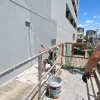

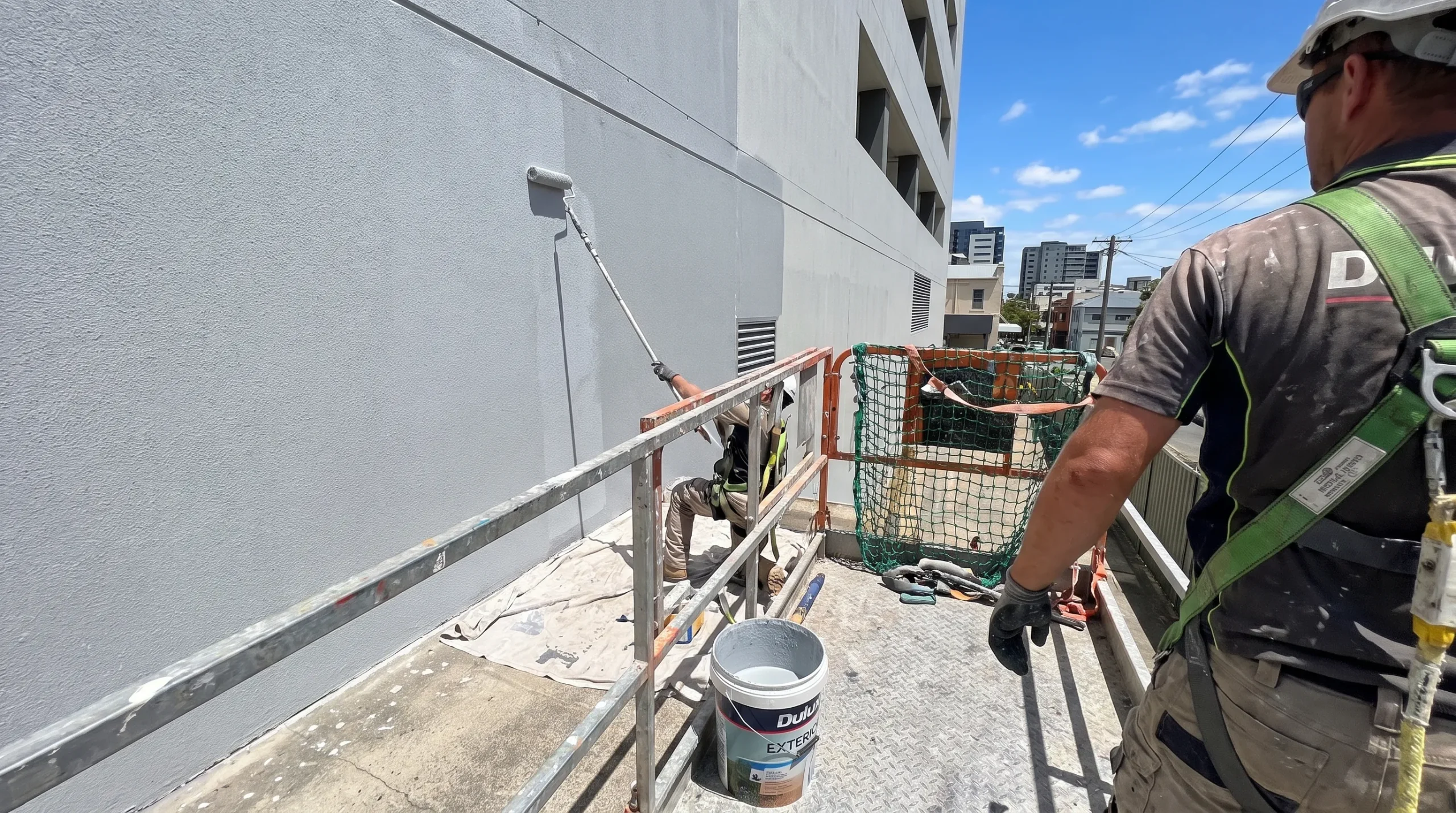

A freshly painted façade can improve a business’s presentation, but exterior commercial painting does more than refresh its appearance. A correctly specified coating system helps protect exposed surfaces from rain, sunlight and everyday wear. For Melbourne property owners and facilities managers, that protection can reduce avoidable deterioration and make building maintenance easier to plan.
The key is treating repainting as building maintenance rather than a cosmetic cover-up. Surface condition, moisture sources, coating compatibility and application conditions all influence whether the finished work provides lasting protection.
Paint is a protective layer, not a structural repair
Exterior coatings form a protective film over a building’s substrate, meaning the material beneath the paint. Depending on the system, that film can limit rainwater absorption, shield surfaces from ultraviolet exposure and help protect metal against corrosion.
However, paint cannot compensate for a defective building envelope. Leaking flashings, failed joints, blocked gutters and structural cracks need appropriate investigation and repair. Coating over these problems may hide warning signs without stopping the damage.
Moisture also needs a way to escape. On masonry, an unsuitable coating can restrict drying and contribute to blistering or peeling. White salt deposits, known as efflorescence, should prompt investigation of moisture movement rather than simply another coat of paint.
A useful assessment therefore separates coating failure from underlying building defects. That distinction helps owners direct their budget towards work that addresses the cause, not just the visible symptom.
How exterior commercial painting shields different materials
Different parts of a commercial building face different risks. A rendered office façade, steel warehouse door and timber shopfront should not automatically receive the same preparation or coating system.
| Building surface | Main exposure risks | What a suitable coating system contributes |
|---|---|---|
| Render and concrete | Rain penetration, surface weathering and minor non-structural cracking | Limits water uptake and protects the surface when compatible with the substrate |
| Steel doors, rails and framing | Corrosion where moisture reaches exposed metal | Provides a protective barrier using suitable preparation, primer and topcoats |
| Exterior timber | Moisture cycling, ultraviolet exposure and deterioration of exposed fibres | Reduces weather exposure when sound timber, edges and joints are properly treated |
| Previously painted cladding | Loss of adhesion, chalking and incompatible coating layers | Restores protection after the existing finish and substrate have been assessed |
The correct specification depends on the actual material and its condition. Galvanised steel, for example, requires a different preparation approach from rusty mild steel. Some factory-finished cladding also has manufacturer requirements that need checking before repainting.
On mixed-material buildings, transitions deserve attention. Junctions around windows, parapets and wall penetrations can be more vulnerable than the broad wall surfaces beside them. A neat finish across the façade does not prove these details are sound.
Preparation closes the gaps in protection
The protective value of exterior commercial painting depends heavily on what happens before the finish coats are applied. Paint needs a clean, stable and appropriately prepared surface to adhere properly.
Dirt, grease, salts and chalky residue can interfere with adhesion. Loose coatings need removal using methods suited to the substrate, while exposed areas may require specific primers. Cleaning alone is not enough if the remaining paint is poorly bonded.
Repairs should also match the defect. A small, stable surface imperfection is different from a crack that continues to move. Sealants at movement joints need compatibility with the surrounding materials and coating system; simply filling every opening with a rigid compound can create another failure point.
Older premises introduce additional hazards. Suspected asbestos-containing materials or lead-based coatings should be assessed before abrasive preparation begins. WorkSafe Victoria’s asbestos guidance is a useful starting point for understanding asbestos risks and responsibilities.
Preparation should be visible in the written scope, not hidden behind a general promise to “prepare all surfaces”. Ask which defects will be repaired, which areas will be primed and which issues require another trade before painting proceeds.
Melbourne weather changes application decisions
A coating needs suitable conditions during application and curing, not merely a rain-free moment. For exterior commercial painting, the forecast, substrate temperature and surface moisture all affect scheduling.
Direct sunlight can heat a wall well above the surrounding air temperature. Depending on the product, rapid drying can make application more difficult and affect the finish. At the other extreme, cool conditions and overnight dew can delay drying or leave a surface unsuitable for recoating.
Wind matters too. It can carry dust onto wet paint and increase overspray risks near parked vehicles, glazing or neighbouring properties. Sheltered entrances and exposed upper façades may therefore require different work sequences on the same building.
The practical response is to follow the coating manufacturer’s requirements for temperature, moisture, recoating intervals and expected weather exposure. A fixed completion date should not override those limits.
Coastal and bayside sites also warrant attention to salt contamination, especially around metalwork. Thorough cleaning and a system suited to the exposure are more useful than simply applying an extra coat over a contaminated surface.
Protect trading areas as well as walls
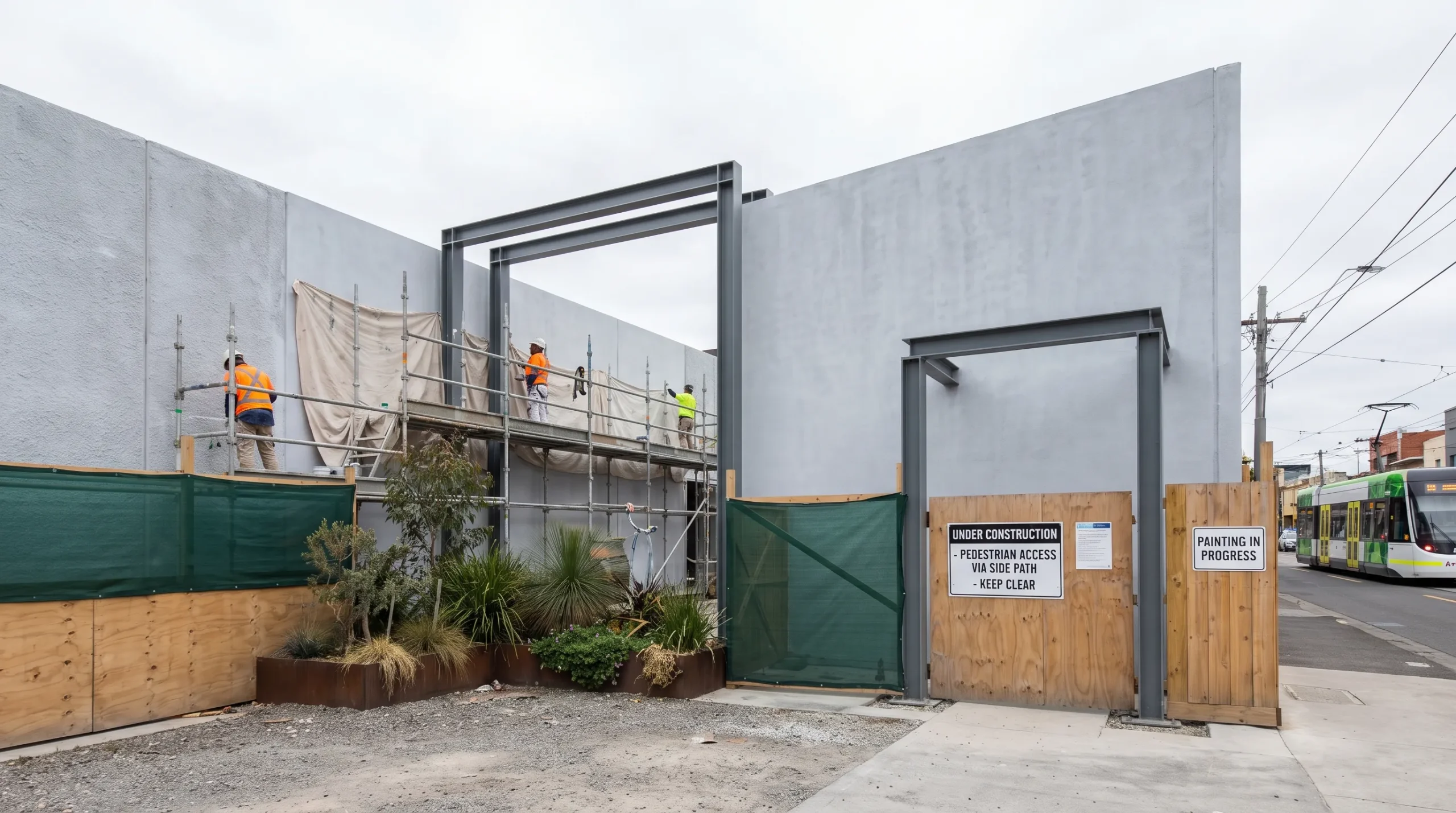
On occupied premises, exterior commercial painting also requires controls that protect people, stock and access routes. Work around loading bays, outdoor seating, air intakes and emergency exits needs coordination with the building’s daily operations.
Agree on exclusion zones, delivery arrangements and communication responsibilities before work begins. Businesses with customers arriving throughout the day need clear temporary entrances and signage, not just a notice at reception. Auspainters’ guide to minimising business downtime during commercial painting explores this operational planning in more detail.
Community facilities can need a more individual approach. A service such as Ons Plekske’s day programme for young people with intellectual disabilities and/or autism illustrates the range of users that an access plan may need to accommodate. For comparable facilities, discussing changes with staff can help preserve familiar arrival routes and account for sensitivity to noise or odours.
This planning does not replace the coating specification, but it makes the maintenance project workable. A protective finish is little comfort if the process blocks an essential exit or exposes nearby property to uncontrolled spray.
Use inspection-led maintenance to control costs
Rather than waiting for widespread peeling, use exterior commercial painting as part of a condition-based maintenance plan. The aim is to identify weakening protection while repairs are still relatively localised.
Useful inspection points include sun-exposed elevations, parapets, window surrounds, low-level splash zones and metal edges. These areas often experience different conditions from sheltered walls, so a building may not need the same intervention everywhere.
Look for changes such as persistent chalking, cracking, blisters, exposed substrate or rust staining. Record their location and extent with photographs. If deterioration returns repeatedly in one area, investigate the cause before commissioning another patch repair.
There is no single repainting interval that suits every Melbourne commercial building. Exposure, substrate condition, previous preparation and the selected system all influence maintenance needs. Manufacturer guidance and site inspections provide a better basis than an unsupported promise that every façade will last a fixed number of years.
Local touch-ups can help where the surrounding coating remains sound, but colour and sheen differences may remain visible. Once adhesion failure becomes widespread, repeated patching may offer poor value compared with properly preparing and recoating the affected elevation.
Keep records of products, colours, preparation methods and completed repairs. These details make future maintenance more consistent and help the next contractor avoid incompatible materials.
What to ask for in a protective painting scope
When comparing exterior commercial painting quotes, assess the proposed system rather than the headline price alone. Two quotes covering the same wall area can include very different preparation, access arrangements and repair allowances.
A useful written scope should identify:
- Surface assessment and exclusions: Which substrates are included, what defects have been identified and which repairs sit outside the painting contract.
- Preparation and coating system: Cleaning methods, removal of unsound paint, primers and specified finish coats, with application to manufacturer requirements.
- Access and site protection: How workers will reach the surfaces and protect pedestrians, vehicles, neighbouring property and business operations.
- Inspection and handover: How completed work will be checked, what maintenance information will be supplied and what the workmanship warranty covers.
For a broader assessment of contractor suitability, this guide to comparing commercial painting companies in Melbourne explains what to examine beyond price.
Ask how additional defects discovered during preparation will be documented and approved. That process helps prevent necessary repairs from becoming unexpected costs or being overlooked to preserve the original schedule.
Frequently asked questions
Does exterior commercial painting waterproof a building? Not by itself. Suitable coatings can reduce water absorption through sound surfaces, but they do not replace properly functioning flashings, joints, drainage or a purpose-designed waterproofing system.
Can painters coat over rust or peeling paint? Loose paint and corrosion need appropriate treatment before recoating. Some specialist systems allow particular surface conditions, but their preparation requirements must still be followed. Painting over unstable material is not a reliable repair.
Is commercial exterior painting different from residential painting? The protective principles are similar, but commercial projects often involve larger areas, mixed substrates, elevated access and occupied work sites. Business access and site safety can substantially affect the scope.
What affects the cost? Surface condition, building height, access equipment, repairs, coating specification and operational restrictions all influence pricing. A site assessment is more useful than a square-metre figure that excludes these factors.
Arrange an assessment for your Melbourne property
If your building shows peeling paint, exposed surfaces or early corrosion, start with an assessment rather than choosing a colour alone.
Auspainters provides residential and commercial painting across Melbourne, with free quotations, Dulux accreditation and a 5-year workmanship warranty. The team is fully insured and OHS compliant, with a final walkthrough included.
Request a free quote from Auspainters to discuss your building’s condition, the preparation required and a suitable scope for protecting its exterior.