

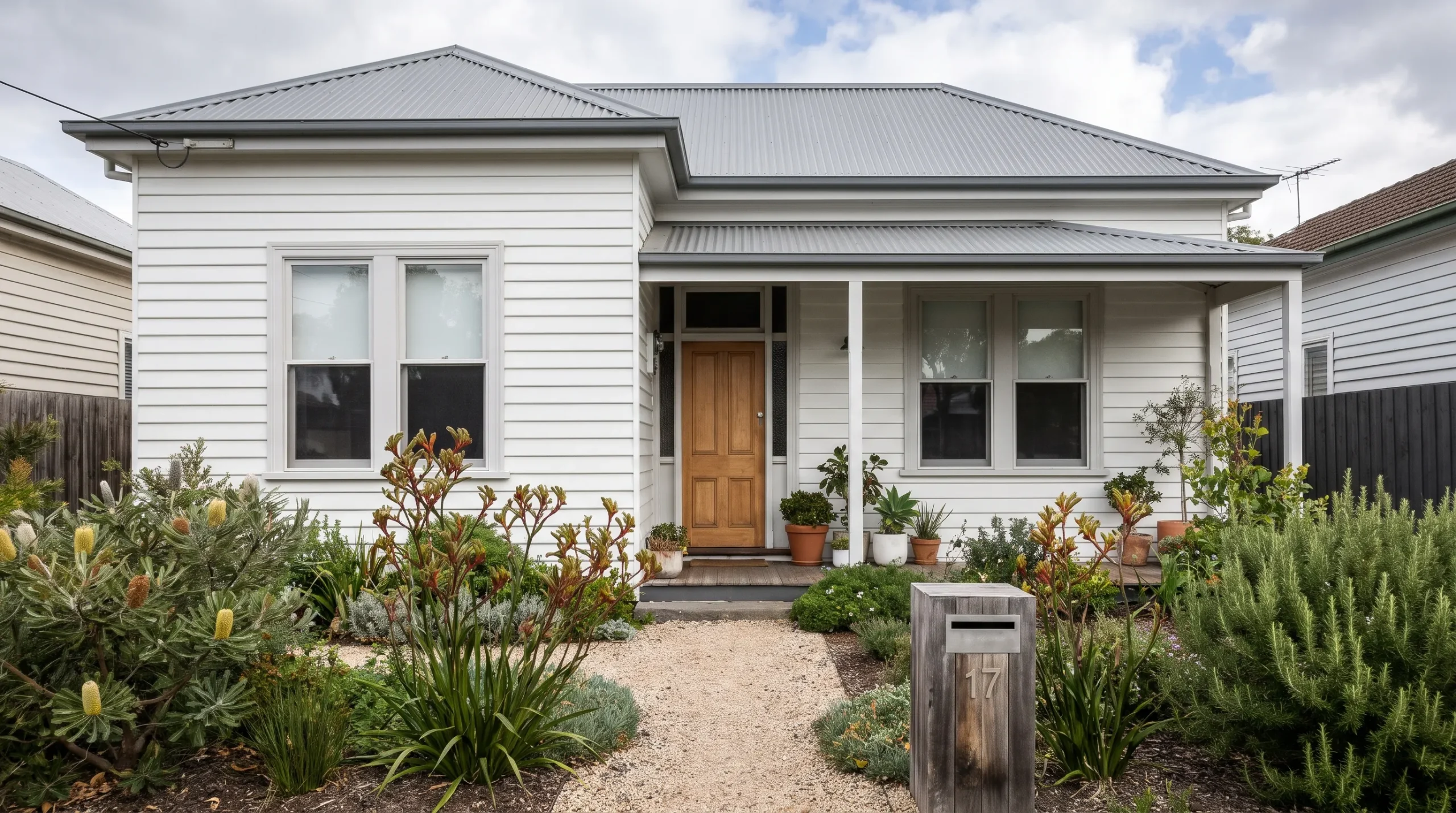
If you’re painting a house white, the challenge is choosing a white that works outdoors, not simply finding the brightest colour on the chart. Melbourne’s changing light, your roof colour, neighbouring buildings and even garden foliage can alter how a white exterior looks. Preparation and coating choice then determine whether that fresh finish stays sound or develops stains, peeling and patchy coverage.
The best starting point is your existing exterior. Choose the colour around the materials you are keeping, test it in several conditions and specify a paint system suited to each surface.
Match the white to your roof and fixed finishes
A white that looks neutral indoors can appear yellow, grey or blue across an entire façade. Before comparing paint cards, identify the undertones in your roof, exposed brick, stonework, paving and window frames.
Warm whites generally sit more comfortably beside terracotta roofs, cream mortar and sandstone. Cooler whites can work with blue-grey roofing and crisp contemporary detailing. Neither is a fixed rule: a warm roof does not automatically require a creamy wall colour, particularly if the windows and paving introduce cooler tones.
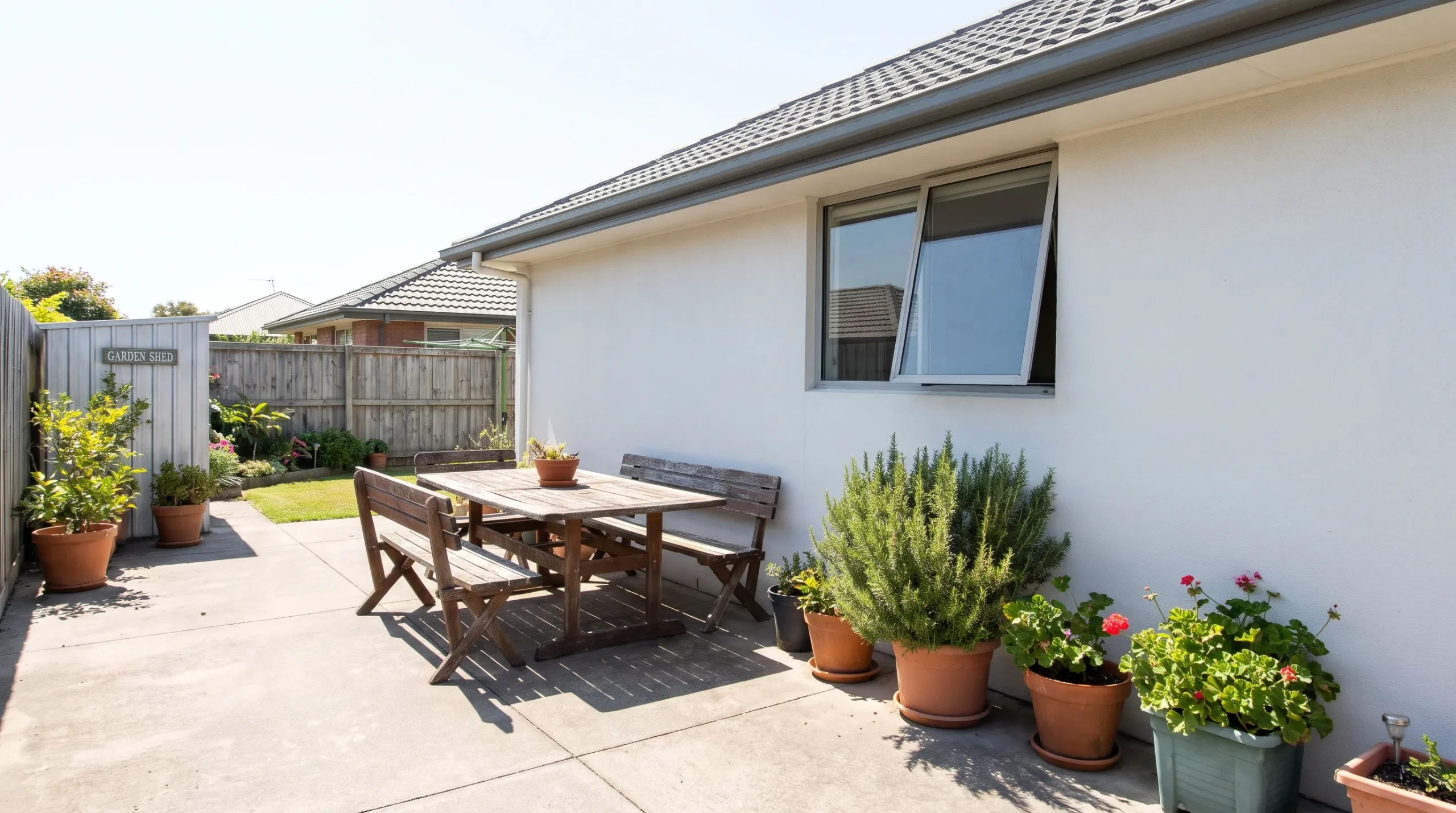
Pay attention to what will remain visible after the work. Painting the walls will not change an aluminium window frame or a large expanse of driveway, so those elements deserve more influence than a replaceable front door colour.
When painting a house white, choose a shortlist that connects the permanent finishes rather than trying to make every feature match. Two or three candidates are usually enough for a useful comparison.
Trim can provide a subtle distinction rather than a strong contrast. The same white in a different sheen may separate weatherboards from window surrounds, although texture and reflected light will affect the result. Decide which architectural details deserve emphasis before selecting a second white.
Test samples on the actual exterior
Small colour cards help narrow the choice, but they cannot show how a large wall will reflect sunlight or pick up colour from nearby trees. Test samples before ordering the full quantity.
- Choose representative locations: Include the front façade, a shaded wall and an area beside the roofline or window frames.
- Make the samples large enough: Aim for approximately one square metre where practical, or use large movable boards prepared to resemble the intended surface.
- Apply enough paint: Follow the sample product’s instructions so the background colour does not distort the result.
- Check different conditions: View the samples in morning light, midday sun, late afternoon and overcast weather.
- Stand back: Assess the colour from the street as well as close up, with permanent finishes in view.
The most useful test for painting a house white is whether the colour remains acceptable across those conditions, not whether it looks perfect for ten minutes on a sunny afternoon.
In Melbourne, north-facing walls generally receive more direct sun, while southern elevations often remain shaded. Western walls can look particularly bright in afternoon light. Trees, brick fences and neighbouring buildings may cast additional colour onto white surfaces.
A sample surrounded by a dark existing wall can also appear brighter than it will across the finished house. A larger test area or movable board helps reduce that misleading contrast. Confirm the final product and sheen too, because a sample pot is primarily a colour guide.
Allow for heat, glare and visible dirt
Light-coloured surfaces generally absorb less solar energy than dark ones, but white walls alone do not make a house comfortable in summer. Roof construction, insulation, shading, glazing and ventilation also matter. The Australian Government’s Your Home guidance on passive cooling explains how these elements work together.
Do not confuse light reflectance value, or LRV, with a complete measure of thermal performance. LRV describes visible light reflection. It does not, by itself, tell you how much solar heat a coating reflects.
One practical concern when painting a house white is glare. A brilliant white façade beside pale concrete can feel harsh in full sun, particularly on a broad, minimally shaded elevation. An off-white may soften the appearance, although the sample test remains more useful than the colour’s name.
White also makes some maintenance issues easier to see. Dust, cobwebs, splashback and runoff below gutters may stand out, while leaf stains can mark damp corners. Check gutter leaks, overflowing downpipes and garden beds touching the walls before painting. Correcting those conditions is more effective than expecting a different white to conceal them.
Choose sheen by surface, not colour alone
The right sheen balances appearance, cleanability and the condition of the substrate. Product labels vary, so compare the manufacturer’s intended uses rather than assuming every “low sheen” coating behaves identically.
| Exterior surface | Finish worth considering | What to check |
|---|---|---|
| Render and masonry | Exterior matt or low sheen | Suitability for the render type, moisture conditions and existing coating |
| Timber weatherboards | Exterior low sheen or another specified finish | Timber condition, movement and compatibility with previous paint |
| Doors and timber trim | Exterior satin, semi-gloss or gloss | Exposure, preparation requirements and the desired level of detail |
| Metal trim and gutters | A coating system approved for the metal | Corrosion treatment, primer requirements and existing factory finishes |
For painting a house white, higher sheen is not automatically the more durable choice. Durability depends on the complete coating system and application, while gloss can make dents, patching and uneven surfaces more noticeable.
A lower-sheen wall finish often gives large elevations a softer appearance. A higher-sheen trim can emphasise architectural detail and provide a surface suited to regular wiping where the product allows it.
Avoid choosing a generic wall coating for every material. Brick, lime-based finishes, timber and metal may need different preparation and primers, even when the final colour is identical.
Surface preparation before painting a house white
White can expose problems that a darker or more varied surface previously disguised. Brown tannin bleed, rust marks, uneven repairs and dirty runoff become particularly obvious against a pale finish.
Remove the cause of stains before coating
Clean the surface using a method appropriate to the material and its condition. Remove loose paint and address mould, chalking or contamination according to the coating manufacturer’s instructions. Repair leaks and allow damp areas to dry before proceeding.
Exposed timber may need a suitable stain-blocking primer where tannins are a concern. Rusting metal needs proper treatment and a compatible primer. Painting over either problem without the right preparation can allow discolouration to return.
Preparation for painting a house white should also include checking repairs in angled daylight. Raised filler edges and poorly feathered patches can remain visible through a fresh finish, especially on smooth render or trim.
Decide whether a primer is actually needed
A darker wall does not automatically need to be painted white before receiving the final colour. The correct approach depends on adhesion, surface porosity, staining and the requirements of the chosen coating system.
A sound, compatible painted surface may need cleaning and preparation rather than a full primer coat. Bare areas, repairs, powdery surfaces and difficult stains may require specific primers or sealers. A manufacturer-approved tinted undercoat can sometimes assist a major colour change, but it does not replace the specified finishing coats.
Older paint may contain lead, and some sheet cladding may contain asbestos. Arrange appropriate assessment before disturbing suspect materials. Do not scrape, sand or pressure-wash them as routine DIY preparation.
Plan application around weather and safe access
Melbourne can provide suitable painting weather across different seasons, but the forecast alone is not enough. Air temperature, surface temperature, humidity, direct sun and overnight dew all affect application and drying. Follow the product’s stated limits and rain-resistance guidance.
A wall in strong afternoon sun can be much hotter than the reported air temperature. Conversely, a sheltered wall may remain damp after nearby surfaces have dried. Schedule work by elevation rather than treating the entire house as one consistent environment. Auspainters’ guide to choosing a suitable time to paint in Melbourne explores these scheduling considerations.
When painting a house white, consistent application matters because thin coverage, missed edges and lap marks can undermine an otherwise well-chosen colour. Use the specified coverage rate and drying intervals rather than stretching the paint to reduce material costs.
Access deserves the same planning as colour. Upper-storey walls, eaves and awkward ground levels may require professional access equipment. People already receiving care for back or neck pain should ask their treating clinician about prolonged overhead work before undertaking a DIY project. Avoid turning a cosmetic improvement into an injury risk.
Get a quote that defines the finished result
A quote for a “white exterior” leaves too much open to interpretation. Confirm which surfaces are included, particularly eaves, fascia boards, gutters, downpipes, window frames, doors and outbuildings.
The scope should identify preparation, repairs, primer requirements, finishing products and the proposed number of coats, subject to the coating specification. Ask how unexpected substrate problems will be handled and whether access equipment is included.
Budgeting for painting a house white means accounting for the work underneath the colour. A dark-to-white change, extensive weatherboard repairs or difficult access can affect the scope more than the choice between two similar whites. This guide to what changes exterior house painting prices explains the main cost factors without relying on a one-size-fits-all estimate.
Keep a record of the colour name, tint formula, product, sheen and surfaces painted. That information makes future maintenance easier, although local touch-ups can still show against weathered paint. At the final walkthrough, inspect coverage, edges and repaired areas in daylight and discuss any remaining defects before signing off.
Frequently asked questions
What is the best white for a Melbourne house exterior? There is no single best white. Start with the undertones in the roof, masonry, windows and paving, then test a small shortlist on sunny and shaded elevations. A white that suits a contemporary rendered house may look quite different on a weatherboard home with a terracotta roof.
Do I need a white undercoat over a dark exterior? Not necessarily. When painting a house white over a dark colour, the priority is a sound surface and a compatible coating system with sufficient coverage. Use a primer or undercoat where the substrate, stains or manufacturer’s specification requires one. Do not substitute an extra coat of ordinary white wall paint for a required primer.
Will a white exterior need more maintenance? White can make dirt, algae and runoff stains more noticeable, but maintenance also depends on exposure, moisture, landscaping and paint quality. Inspect shaded walls, lower splash zones and areas below gutters regularly. Clean using the coating manufacturer’s recommended method rather than aggressive pressure washing.
Should the walls and trim be the same white? They can be. Using one colour with different approved sheens can create a restrained finish, while a slightly different trim white can define windows and eaves. Test them together because two whites with conflicting undertones may make one look unexpectedly yellow or grey.
Plan your exterior with Auspainters
A successful white exterior starts with tested colour choices and a clear preparation plan. Auspainters provides residential and commercial painting across Melbourne, with free quotations, Dulux accreditation, full insurance and a 5-year workmanship warranty.
Request an exterior assessment to discuss your surfaces, shortlisted whites and access requirements. Confirm the coating specification and warranty terms in writing, then use the final walkthrough to check that the agreed finish has been delivered.