

Hiring house painting contractors can feel straightforward until you start comparing quotes and realise every painter describes the job differently. One quote may include thorough sanding, premium paint and a walkthrough, while another may only cover a quick repaint with minimal preparation.
Before you choose, the aim is not to interrogate a tradie. It is to make sure you understand who is working in your home, what is included and how the finish will hold up in Melbourne conditions. If you are still weighing up professional work against doing it yourself, this guide on why homeowners hire a professional painter instead of DIY gives useful context.
Why your questions matter when comparing house painting contractors
A painting quote is only useful when the scope is clear. Two painters can visit the same home and provide very different prices because they have allowed for different preparation, products, labour, access needs and finishing standards.
Asking the right questions helps you compare like for like. It also gives you a sense of how organised the painter is before the project starts. If the answers are vague during quoting, communication is unlikely to improve once your furniture is covered and the first coat is on the wall.
Use the seven questions below before you approve a residential painting job, whether you are refreshing one room, repainting a weatherboard exterior or preparing a property for sale.
1. Are you insured and properly set up to work on my home?
Reliable house painting contractors should be able to explain their insurance, safety processes and business details without hesitation. At a minimum, ask whether they are fully insured and whether the people working on site are covered for the type of work being completed.
For exterior work, this becomes even more important. Ladders, scaffolding, rooflines, uneven ground and overhead power lines can create risks that should not be managed casually. A professional painter should also understand safe site setup, access, ventilation and cleanup.
Ask to see current insurance details if you are unsure. You do not need to become a compliance officer, but you should be confident the painter treats your property and their workers responsibly. For commercial or strata properties, OHS compliance may also be a requirement before anyone is allowed on site.
2. What surface preparation is included before painting starts?
Paint fails fastest when preparation is rushed. A cheaper quote can look attractive until you realise it excludes sanding, gap filling, washing, patching or priming. The finish may look acceptable for a few weeks, then peeling, flashing or cracking starts to appear.
Ask the painter to describe exactly what will happen before the first coat. Interior preparation may include moving and covering furniture, patching dents, sanding rough areas, sealing stains, caulking gaps and spot priming repairs. Exterior preparation may include washing, scraping loose paint, treating mould, sanding edges, filling cracks and priming bare timber or masonry.
Older homes need extra care. If there is a chance of old lead-based paint, ask how the painter will assess the surface before sanding or scraping. A professional should not create dust hazards by treating all old coatings the same way.
A clear preparation plan is one of the easiest ways to tell whether a quote is built for a long-lasting finish or a fast cosmetic cover-up.
3. Which paint system do you recommend for this project?
Good house painting contractors do more than ask what colour you want. They should recommend a paint system suited to the room, surface and exposure level. Bathrooms, laundries, kitchens, bedrooms, trims and exterior walls do not all need the same coating.
For interiors, ask about washability, sheen level, low-odour options and suitability for high-traffic areas. For exteriors, ask how the chosen product handles UV exposure, rain, temperature changes and the specific substrate of your home, such as render, brick, timber or fibre cement.
If a painter is accredited by a major paint brand, ask what that means for product knowledge and finish standards. Auspainters, for example, is Dulux accredited, which can be reassuring for homeowners who want a painter familiar with premium coating systems.
Colour selection matters too. If you are unsure where to start, these expert picks for home paint colours can help you narrow down options before your quote is finalised.
4. Can you give me a detailed written quote, not just a total price?
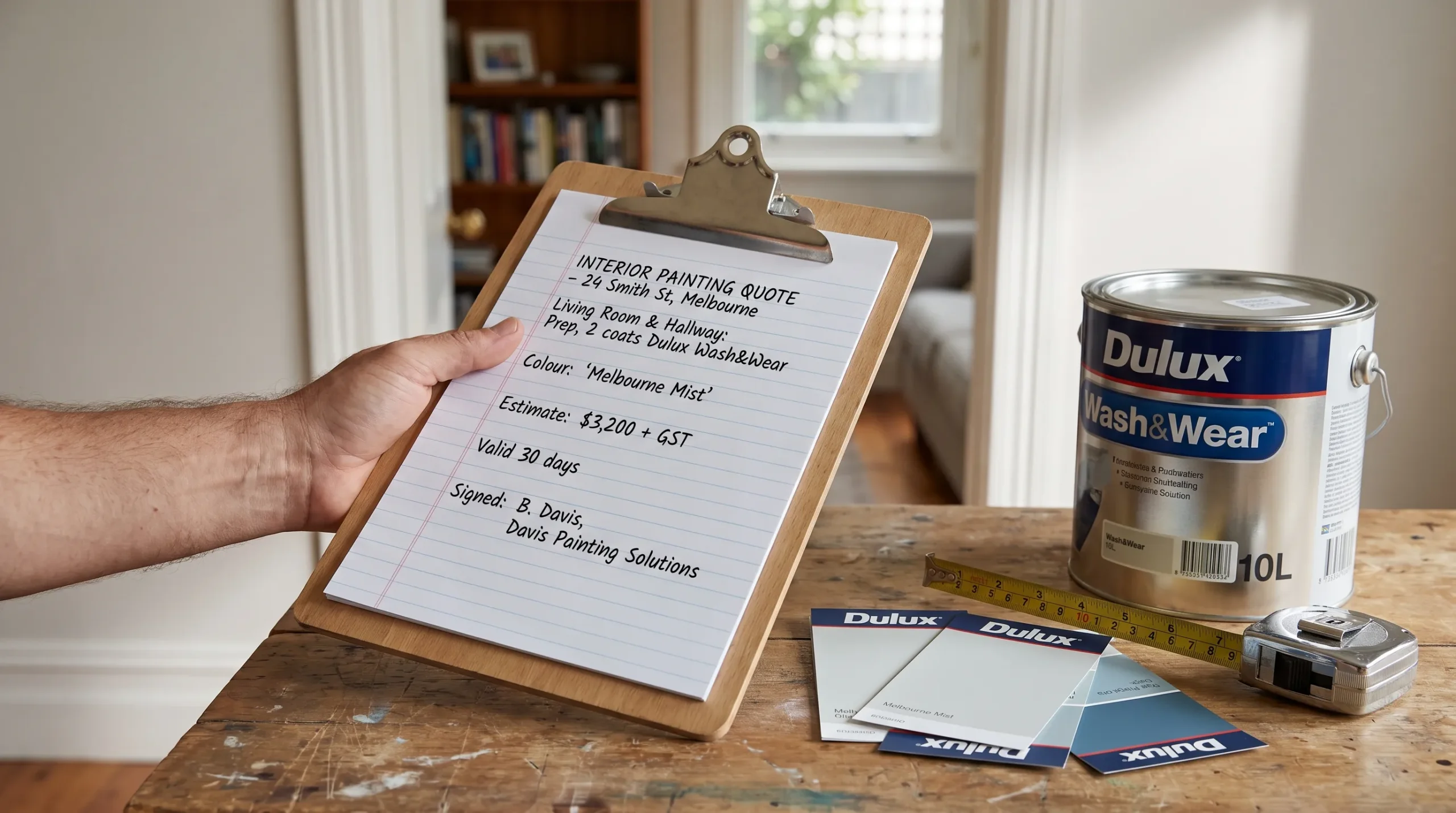
A single total price does not tell you enough. You need a written quote that explains what is included, what is excluded and how the job will be completed. This protects both you and the painter because it reduces assumptions.
A strong quote should identify the areas being painted, number of coats, paint products or product range, surface preparation, access requirements, estimated timeframe and warranty terms. It should also clarify whether GST is included and whether additional repairs may be charged separately.
| Quote detail | What to look for | Why it matters |
|---|---|---|
| Areas included | Rooms, ceilings, trims, doors, exterior walls or fences listed clearly | Prevents confusion about scope |
| Preparation | Washing, sanding, filling, caulking and priming explained | Shows whether durability has been allowed for |
| Paint system | Brand, finish type and number of coats noted where possible | Helps compare quality between quotes |
| Timing | Estimated start date and project duration | Helps you plan access and disruption |
| Warranty | Written workmanship warranty and exclusions | Confirms what happens after completion |
If one quote is much lower than the others, ask why. It may be efficient, but it may also be missing preparation, premium paint or enough labour to do the job properly.
5. How will you protect my home and manage disruption?
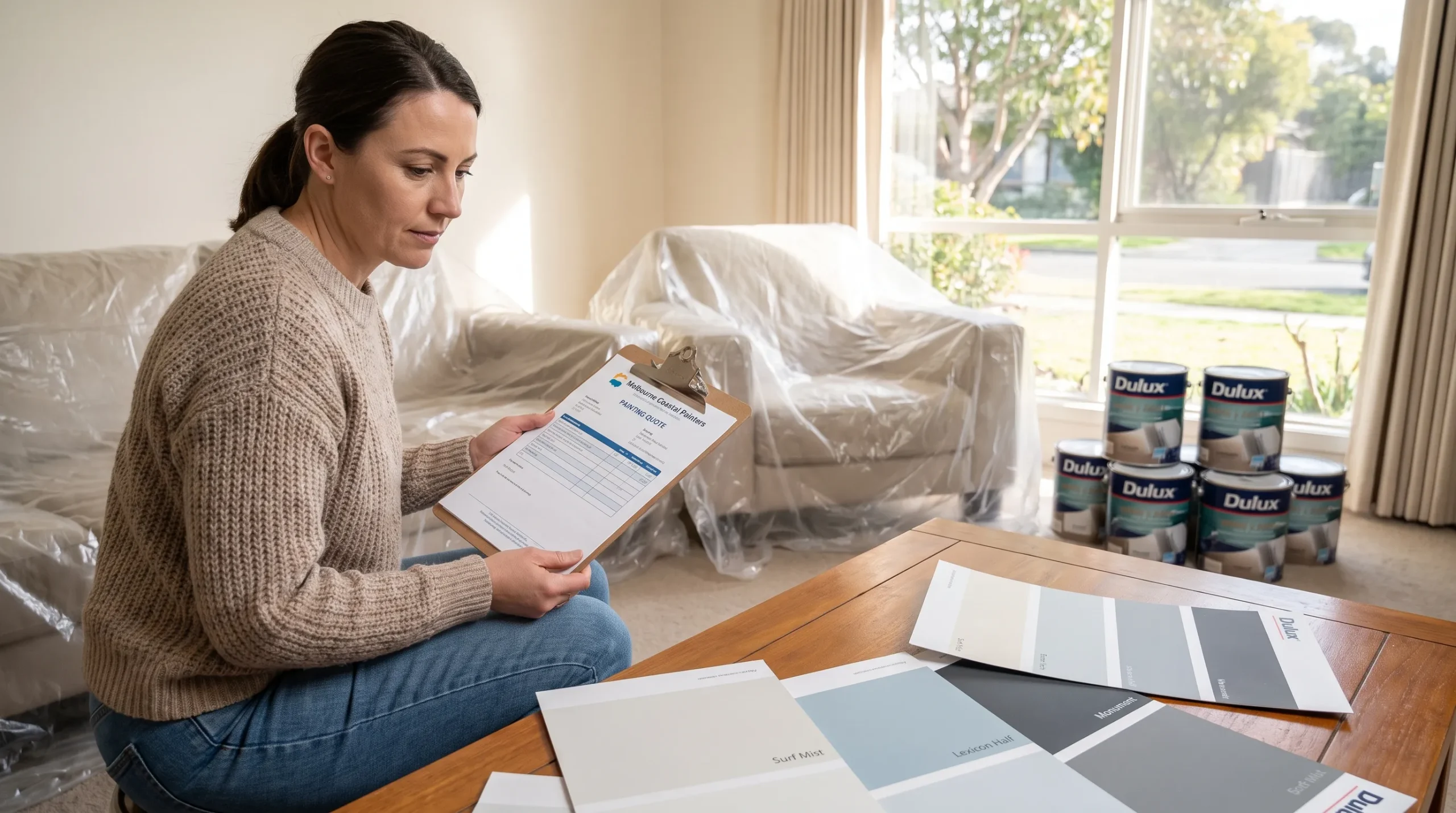
Professional house painting contractors should have a clear plan for protecting your home before work begins. Painting is not just about the final coat. It involves moving through living spaces, masking edges, covering floors, handling dust and keeping the site safe.
Ask how furniture, flooring, fixtures, landscaping and outdoor areas will be protected. For interior work, find out whether the team will move furniture or whether you need to prepare rooms before they arrive. For exterior work, ask about garden beds, outdoor furniture, driveways, windows and neighbouring properties.
You should also discuss daily cleanup. A tidy site reduces stress, especially if you are living in the home during the project. Ask what condition the home will be left in at the end of each day and whether you will still be able to access key rooms.
Timing also matters in Melbourne, particularly for exterior painting. If you are planning outside work, this guide to the best time to paint a Melbourne house can help you understand how weather affects scheduling.
6. Who will be on site, and how is quality checked?
The person who quotes the job is not always the person who completes the work. That is not necessarily a problem, but you should know who your main contact will be and who is responsible for quality control.
Ask whether the team uses employees, subcontractors or a mix of both. More importantly, ask how work is supervised and how issues are handled during the job. A clear point of contact makes a major difference when you need to discuss access, colour changes, small defects or timing.
The best painters have a process for checking edges, coverage, patchiness, runs, missed spots and clean lines before the job is considered finished. A final walkthrough is especially useful because it gives you a structured chance to inspect the work with the painter while tools and materials are still on site.
For larger projects, ask whether the work will be staged and how progress will be communicated. A painter who can explain their process clearly is usually easier to work with once the project starts.
7. What warranty do you provide, and what does it actually cover?
Warranty terms can vary widely, so do not accept the word “guaranteed” without asking for details. A workmanship warranty usually relates to the painter’s application and preparation, while the paint manufacturer may have separate product conditions.
Ask how long the warranty lasts, what it covers and what might void it. For example, water leaks, structural movement, poor ventilation, rising damp or damage from other trades may not be covered by a painter’s workmanship warranty. That does not make the warranty weak, but the boundaries should be clear.
Good house painting contractors will explain the difference between normal wear and a workmanship issue. They should also be willing to document warranty terms in writing before work begins.
Auspainters provides a 5-year workmanship warranty, along with a final walkthrough so homeowners can review the finish before the job is wrapped up. When comparing painters, that kind of written commitment is worth factoring into your decision, not just the initial price.
Red flags to watch for before you accept a quote
Not every warning sign means you should reject a painter immediately, but several together should make you pause. A home repaint is too visible and too disruptive to leave to guesswork.
Watch for these signs during quoting:
- The quote is verbal only or missing important details
- The painter cannot explain preparation steps
- Insurance details are avoided or unclear
- The price is far lower than other quotes without a clear reason
- You are pressured to decide immediately
- The warranty is vague or only discussed verbally
- Reviews, references or previous work examples are difficult to verify
Trust your judgement during the first conversation. If communication is rushed, defensive or unclear before you pay a deposit, it may be harder once the job is underway.
A quick checklist before you hire
Use this checklist when comparing two or three quotes. It keeps the decision focused on value, not just the lowest number.
| Question | Green flag | Caution sign |
|---|---|---|
| Insurance | Current cover can be explained or provided | Details are vague |
| Preparation | Steps are written into the quote | Prep is described as “standard” only |
| Paint choice | Products suit the surface and exposure | Paint quality is not specified |
| Communication | You know who manages the job | No clear point of contact |
| Protection | Floors, furniture and fixtures are covered | Cleanup is not discussed |
| Warranty | Workmanship terms are in writing | Warranty is verbal only |
| Completion | Final walkthrough is included | Handover process is unclear |
The best choice is usually the painter who explains the job clearly, respects your home and provides a finish designed to last.
Frequently Asked Questions
How many quotes should I get before hiring a painter? Getting two or three quotes is usually enough for a residential project. More than that can become confusing unless the scope is identical. Focus on comparing preparation, paint quality, warranty and communication, not price alone.
Should I choose the cheapest house painting contractors? The cheapest option is not always poor, but it should be checked carefully. If the quote excludes preparation, uses lower-grade paint or has no written warranty, it may cost more later through early repainting or repairs.
What should be included in a house painting quote? A good quote should include the areas being painted, surface preparation, number of coats, paint type, estimated timeframe, access needs, cleanup expectations and warranty details.
Do I need to move furniture before painters arrive? It depends on the painter and the scope. Some painters include basic furniture moving and protection, while others expect rooms to be cleared before arrival. Confirm this in writing so the first day runs smoothly.
How long should exterior paint last in Melbourne? Longevity depends on surface condition, preparation, paint quality, sun exposure and weather. A properly prepared exterior with a suitable premium coating should last significantly longer than a rushed repaint, especially on exposed sides of the home.
Ready to compare painters with confidence?
If you are planning an interior or exterior repaint in Melbourne, Auspainters can provide a free quotation and a clear scope before work begins. The team is fully insured, OHS compliant and focused on clean workmanship, premium finishes and a final walkthrough.
To discuss your home or commercial painting project, contact Auspainters and ask the seven questions above during your quote. A good painter will welcome them.