

Before professional commercial painting begins, ask for safety documents that match the actual work, not simply a folder of generic policies. Depending on the project, these may include a safe work method statement (SWMS), safety data sheets, site induction records, hazardous-material information and evidence of insurance. The right combination depends on the building, preparation methods, access equipment and people using the premises.
For Melbourne property managers and business owners, the practical question is whether those records explain how the job will be carried out safely. An office repaint beside occupied desks presents different risks from spraying a warehouse ceiling or preparing an older shopfront. A contractor’s paperwork should reflect those differences.
Victoria operates under occupational health and safety legislation, commonly called OHS legislation. Documents labelled “WHS” are not automatically unsuitable, but their content must address the Victorian requirements and your site. Collecting paperwork also does not remove the duties of an employer, building controller or other responsible party. The documents should support coordination between everyone involved.
Which documents does professional commercial painting require?
There is no single document pack that suits every repaint. Some records are legally required when particular activities or hazards are present. Others are practical planning tools or requirements imposed by the building manager.
Use this table to start the discussion, then confirm what applies to your project.
| Document or record | What it helps establish | What to check |
|---|---|---|
| SWMS, where required | How high-risk construction work will be controlled | Actual work steps, hazards, controls and responsibilities |
| Safety data sheets (SDS) | Product hazards and precautions | Documents match the paints, solvents and other hazardous products being used |
| Site risk assessment and access plan | How workers and occupants will be protected | Work zones, public access, deliveries and emergency routes |
| Induction and competency records | Whether workers understand the site and relevant equipment | Site-specific instruction and any required licences or training |
| Hazardous-material records | Whether preparation could disturb asbestos or lead-containing coatings | Relevant surveys, registers, testing and unresolved uncertainties |
| Insurance evidence | Whether appropriate cover is current | Insured business name, dates, limits and relevant activities |
A written painting scope belongs alongside these records. It identifies the surfaces, preparation methods and coating systems that the safety planning needs to address.
SWMS: when one is required and what it should contain
A SWMS is required before high-risk construction work starts. It is not automatically required for every painting task just because the work is commercial.
Painting associated with construction, renovation or maintenance may involve high-risk construction work. Relevant examples can include work involving a risk of falling more than two metres, work near energised electrical installations or services and work in an area where powered mobile plant is moving. The applicable category must be assessed against the actual activity.
WorkSafe Victoria’s guidance on safe work method statements explains the requirements. A useful SWMS identifies the high-risk work, associated hazards and controls, including how those controls will be implemented, monitored and reviewed.
For professional commercial painting, look for a connection between the document and the proposed method. If the crew will use a mobile scaffold above a warehouse aisle, the SWMS should not describe only ground-level brushwork in an empty room.
Workers involved must understand the relevant procedures. A signature alone does not show that the controls are suitable or being followed. If the method changes, the work needs to be reassessed and affected documents reviewed before proceeding.
Even where a SWMS is not required, the contractor still needs to identify and control risks.
Safety data sheets and hazardous-material checks
Product information must match what arrives on site
An SDS explains a chemical product’s hazards, handling precautions, storage requirements, first aid and emergency measures. It is different from a technical data sheet, which describes matters such as application conditions, coverage and recoating times.
Ask how current SDS documents will be available to workers and relevant site personnel. Where hazardous substances are used, confirm that the applicable register and SDS requirements are addressed. A sheet for one paint does not cover a different solvent, cleaner or two-pack coating.
“Low odour” and “low VOC” do not mean that exposure controls are unnecessary. Ventilation, isolation and respiratory protection decisions must follow the product hazards and task assessment, particularly when spraying or working in enclosed areas.
Check existing surfaces before disturbing them
Safe preparation is an essential part of professional commercial painting, especially where sanding, scraping or drilling could disturb hazardous materials.
Ask the person with management or control of the workplace for the asbestos register where one is required, together with any relevant survey information. If suspect material is not adequately identified, stop the proposed disturbance and arrange assessment by a competent person. An absent register is not proof that asbestos is absent.
Older coatings may also contain lead. Where lead is suspected, assessment should guide the preparation method, containment, cleaning and waste handling. WorkSafe Victoria’s asbestos information provides a useful starting point for understanding responsibilities around suspect building materials.
Clarify who arranges investigations and whether testing or specialist remediation sits outside the painting quote.
Site plans should protect occupants as well as painters
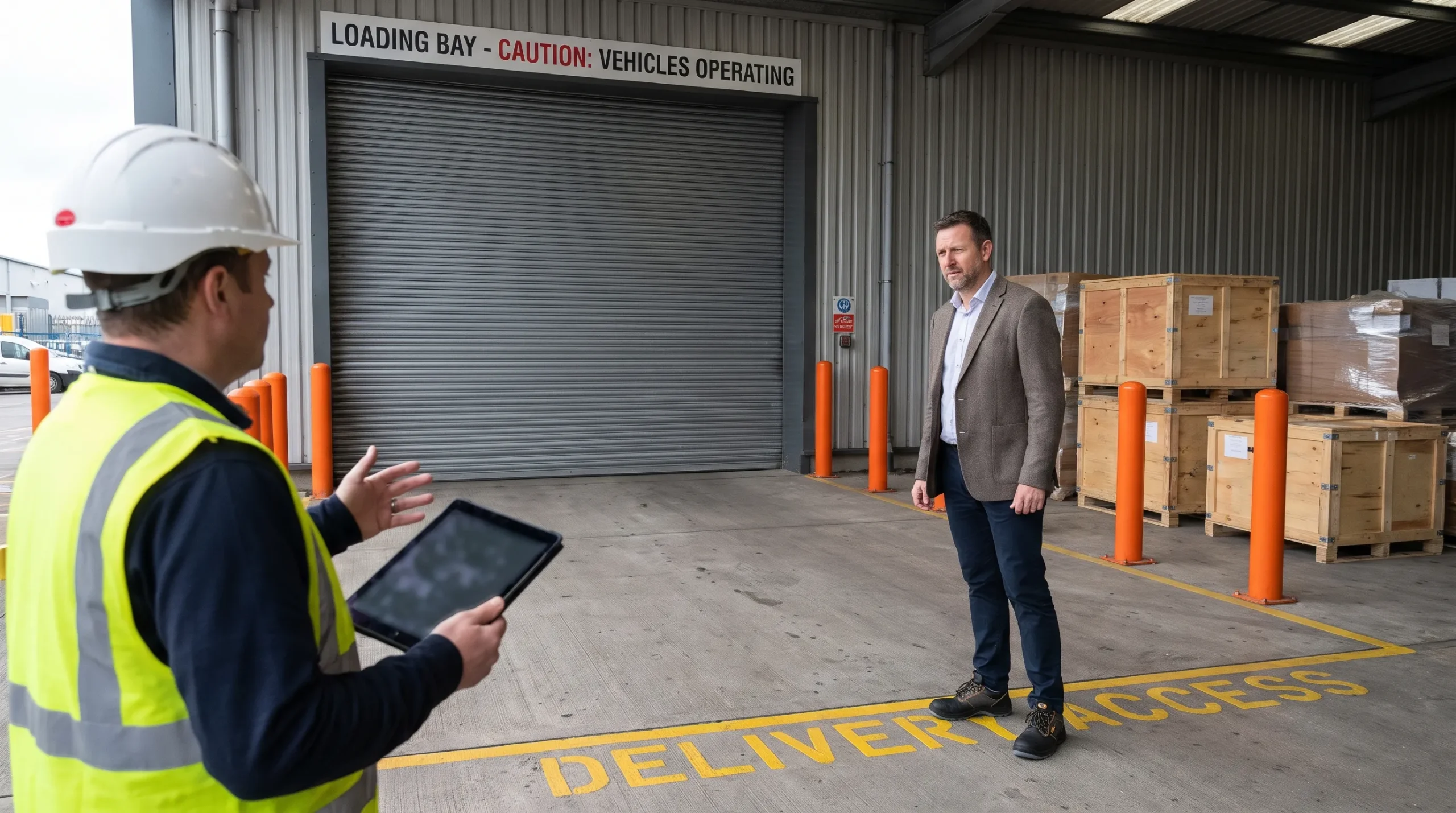
A site plan should show how the work will coexist with normal business activities. Offices, retail premises and shared buildings can have visitors, cleaners and delivery drivers entering areas that employees already know to avoid.
The plan should identify barriers and restricted zones, safe pedestrian routes, equipment locations and emergency access. Where relevant, it should also address ventilation, nearby air intakes, product storage and separation from vehicles or other trades.
For professional commercial painting in an occupied building, agree who will notify tenants and staff, how much notice they need and who can authorise an area to reopen. Reopening should account for product instructions, drying conditions, ventilation and any remaining work hazards, not just whether the surface feels dry.
After-hours work may reduce disruption, but it introduces its own coordination needs. Confirm building access, security arrangements, emergency contacts and how workers will obtain assistance.
Our guide to how commercial paint contractors minimise business downtime covers staging and scheduling in more detail. The safety documents should describe the controls behind that schedule, rather than simply promising that the business can remain open.
Insurance, induction and competency evidence
Insurance and training records answer different questions. Neither replaces a safe work plan.
A public liability certificate of currency helps you check the insured entity, policy period and stated cover. Ask whether the proposed activities are covered and whether any relevant exclusions apply. Workers compensation insurance evidence should also be checked where applicable to the contractor’s employment arrangements.
For construction work, confirm relevant construction induction requirements. Workers may also need site-specific induction covering emergency procedures, restricted areas, amenities and coordination with other occupants.
Equipment competency should match the task. Certain plant requires a high-risk work licence, while other equipment requires appropriate instruction and training. A construction induction card does not establish that someone can safely operate every access platform.
Dulux accreditation is a separate credential from statutory licensing or equipment qualifications. Similarly, an insurance certificate does not prove that a proposed ladder or scaffold arrangement is suitable.
Ask who supervises the crew and checks these records, including for subcontractors. The contracting business should be able to explain the arrangements rather than leaving you to resolve gaps after work starts.
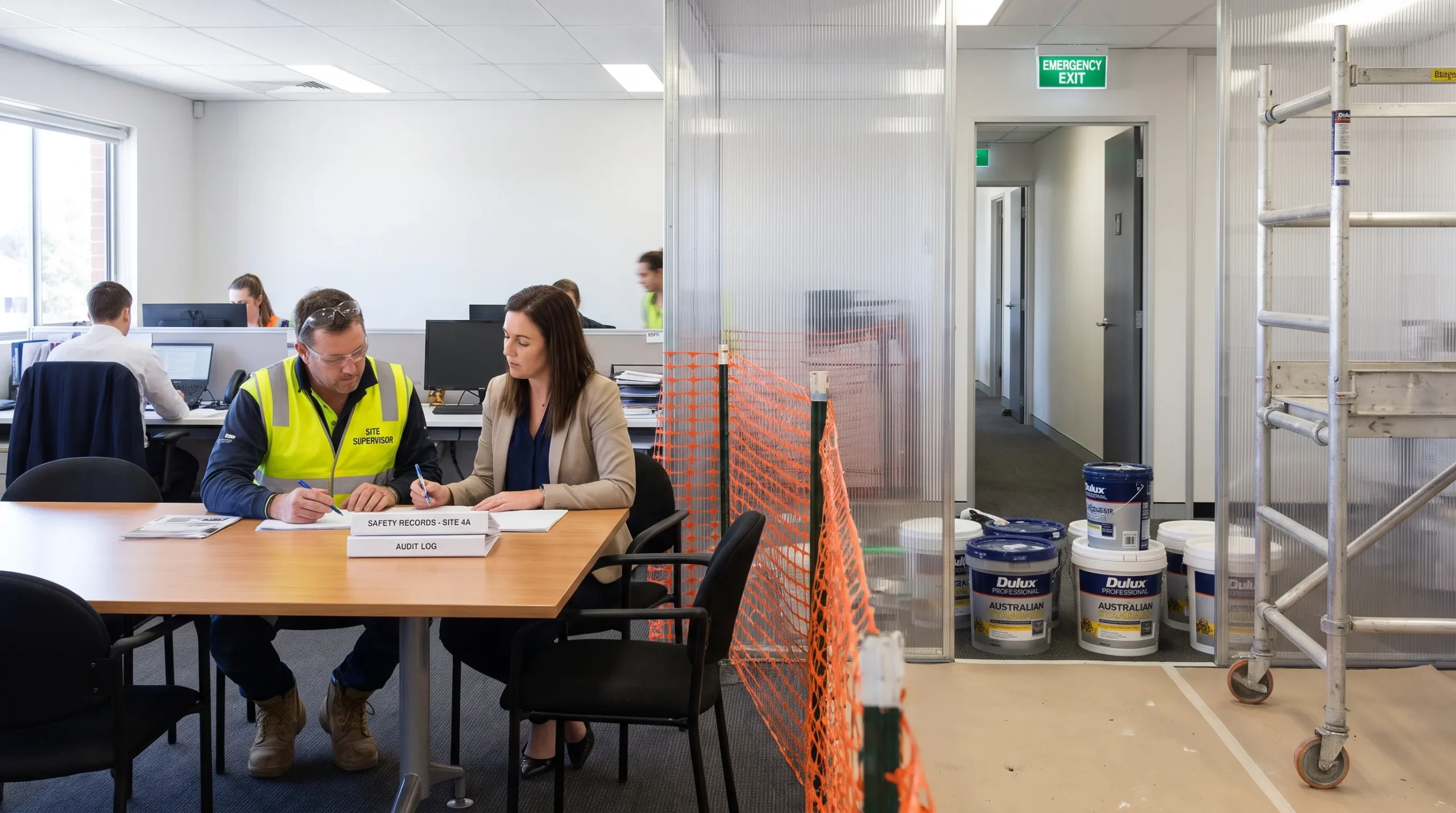
Keep document control simple and responsibilities clear
A large document pack can still fail if nobody knows which version applies. Before mobilisation, agree who provides each record, who reviews it and where the current copy will be available.
A shared register can record the document name, responsible person, revision date and review status. Keep unresolved matters visible. For example, an unanswered question about a ceiling material should not disappear because the rest of the paperwork has been received.
Businesses exploring AI-supported business systems should keep the same distinction between administration and approval. Automated filing or reminders may help organise records, but they do not verify that a safety control suits the work. A competent person still needs to assess the content.
Changes during professional commercial painting also need a clear process. Switching from rolling to spraying, introducing different access equipment or discovering deteriorated substrate can alter the risks. The crew should know when to stop, who to contact and what must be reviewed before restarting.
Make approval authority explicit. Receiving a document is not the same as confirming that every issue has been resolved, and a client’s review does not transfer the contractor’s responsibilities.
What to request before accepting a quote
Give contractors enough information to assess the job properly. Share the intended scope, operating hours, preferred timing, access restrictions and known hazardous-material information. Identify who controls common areas and whether building management has its own induction or permit process.
For professional commercial painting, a useful request is:
Please identify the safety documents applicable to this scope, who will prepare them and when they will be provided. Include proposed access methods, occupant protection, product information and any assumptions about hazardous materials. Please flag investigations, permits or specialist work excluded from the price.
The quotation should also distinguish surface repairs from coating preparation. If a repair changes the work method or involves another trade, clarify who coordinates that work and updates the safety arrangements.
For a broader purchasing checklist, see how to compare commercial painting companies in Melbourne. Safety documentation should be considered alongside preparation, product specifications, supervision and warranty terms.
Watch for mismatches rather than judging by page count. Wrong addresses, unrelated equipment, missing products and controls that cannot be implemented are reasons to seek clarification before mobilisation. Necessary documents should be ready before the relevant work starts, not supplied retrospectively.
Frequently asked questions
Does every commercial repaint need a SWMS? No. A SWMS is required for high-risk construction work. The contractor must assess whether the proposed activities fall within those categories. Other painting tasks still require appropriate risk controls, even when a SWMS is not required.
Can painting continue while the business stays open? Sometimes. Professional commercial painting can be staged around occupants when suitable separation, access and exposure controls are achievable. Some tasks or products may require temporary closure of an area. Confirm the arrangement before committing to a programme.
Is a permit to work always required? No. Requirements depend on the activity, applicable law and site procedures. A building manager may require permits or authorisations for particular work. Ask which permissions apply, who issues them and when they must be obtained.
Does a five-year workmanship warranty replace safety documentation? No. A workmanship warranty concerns the work covered by its written terms. It does not establish safe access, chemical controls or compliance during the project. Review warranty coverage and safety arrangements separately.
Who should keep the completed records? Agree recordkeeping responsibilities before work starts, including any applicable legal retention requirements. The client should retain the relevant handover information and correspondence, while each responsible party maintains the records required for its own duties.
Discuss your Melbourne painting project
Auspainters provides residential and commercial painting across Melbourne, with free quotations, Dulux accreditation, full insurance and a five-year workmanship warranty. Its service includes a final walkthrough.
When requesting a quote for professional commercial painting, provide your scope, operating hours and known site hazards. Ask which safety documents apply, when they will be available and how the work will be coordinated with your building’s requirements. Contact Auspainters to discuss the project and request a free quotation.