

The best time to book interior and exterior painting services is before failing paint becomes a repair problem, but after you understand the condition of the surfaces and your project deadlines. In Melbourne, a suitable booking window also depends on weather, access and other trades. Securing a painter and choosing the actual application dates are separate decisions, especially for exterior work.
Book an inspection when wear becomes more than cosmetic
Faded colour or a few scuffed walls can usually be planned around your calendar. Peeling coatings, exposed timber and recurring damp patches deserve an earlier inspection because painting alone may not resolve the underlying problem.
Outside, check window frames, weatherboards, eaves and other exposed areas for cracking, flaking or open joints. Inside, look for bubbling paint, persistent staining and coatings that no longer withstand normal cleaning. These signs help establish whether you need routine repainting or repairs before any coating goes on.
Water ingress, active leaks and deteriorating substrates should be investigated before painting starts. A fresh finish can conceal symptoms temporarily without fixing their cause. If older coatings may contain lead, arrange an assessment before sanding or scraping them.
There is no single repainting interval that suits every property. Exposure, previous preparation, coating type and maintenance all affect how quickly surfaces deteriorate. An inspection is more useful than choosing a date solely because a particular number of years has passed.
When to book interior and exterior painting services in Melbourne
For exterior work, book the assessment early enough to identify repairs and discuss suitable weather windows. Spring and autumn can offer workable conditions, but neither season guarantees a run of suitable days. Melbourne’s changing weather means the final application schedule needs flexibility.
The forecast is only part of the decision. Painters also need to consider surface moisture, substrate temperature, direct sun, wind and the coating manufacturer’s application requirements. A sunny afternoon does not necessarily mean timber or masonry has dried sufficiently after rain.
Summer work may require managing hot surfaces and moving around shaded elevations. Winter work can be affected by shorter drying windows, dew and persistent dampness. Our guide to the best time to paint a Melbourne home explores those seasonal considerations further.
Interior painting is less dependent on outdoor conditions, but room temperature, humidity and ventilation still matter. Winter can be practical for indoor projects where those conditions can be managed. Ask how rooms will be ventilated without leaving the property unnecessarily cold or exposing fresh coatings to unsuitable conditions.
Work backwards from your real deadline
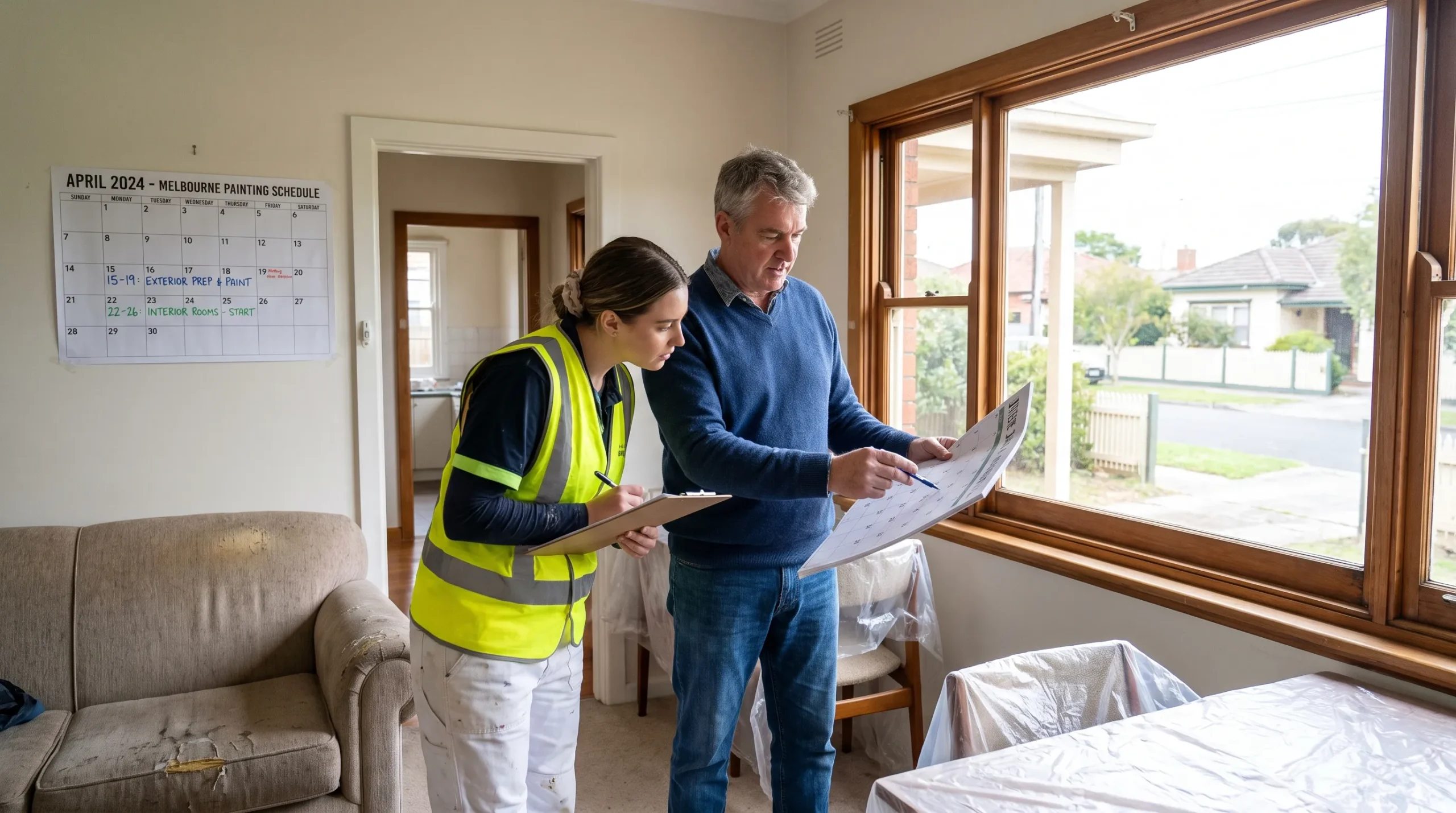
If you need interior and exterior painting services before moving in, listing a property or reopening a business, give the painter that deadline during the first enquiry. Distinguish between the date painting must finish and the date rooms need to be ready for normal use.
Paint that feels dry may not have reached its full hardness or washability. Recoating, handling and curing requirements vary by product and conditions, so ask when furniture can return, doors can remain closed and freshly painted surfaces can be cleaned.
| Your situation | When to begin booking discussions | What the schedule needs to allow for |
|---|---|---|
| Moving into a home | Once access and settlement arrangements are sufficiently clear | Preparation, painting and drying before furniture arrives |
| Preparing a property for sale | Before photography and inspection dates are fixed | Repairs, completion and presentation checks |
| Renovating | Before other trades lock in their final sequence | Dust-producing work, painting stages and touch-ups |
| Refreshing business premises | Before announcing closure or reopening dates | Staff access, ventilation and return-to-use requirements |
| Repainting an exterior | Once deterioration is identified | Repairs, suitable application conditions and weather delays |
Avoid building a schedule that relies on every day proceeding perfectly. Where the deadline cannot move, agree on priorities and a contingency plan before accepting the quote.
Decide whether to book everything together or in stages
Booking interior and exterior painting services together can make coordination easier, but the two parts do not always need to start or finish at the same time. Ask whether the project should be staged around surface readiness, weather and how the property is used.
For an occupied home, completing one group of rooms before moving to the next may be more manageable than disrupting the whole house. Explain which bedrooms, bathrooms and access routes must remain available. The painter can then assess whether your preferred sequence is practical.
Exterior work may need a separate window if roof repairs, gutter replacement or timber repairs are still outstanding. Painting first can create avoidable rework when another trade later removes fittings or disturbs finished surfaces.
For businesses, discuss customer entrances, operating hours and areas that cannot close simultaneously. Do not assume evening or weekend work is available without confirming it. Our guide to commercial interior painting for productive workspaces covers the operational considerations behind an occupied-site project.
A staged approach should still have a written scope. Record which areas belong to each stage, what must happen before the next stage begins and how any return visits will be arranged.
Confirm the scope before reserving a start date
A date is only useful if everyone agrees on what will be completed. Before booking interior and exterior painting services, request a written quote that identifies the areas, preparation and coating system included, along with access requirements and exclusions.
An interior quote should make clear whether ceilings, walls, doors, frames and skirting boards are included. For exterior work, check the individual elevations and features rather than relying on a broad description such as “paint the house”. Confirm whether scaffolding or other access equipment is needed and who arranges it.
Preparation also needs definition. Cleaning, removing loose paint, filling, sanding and priming should reflect the condition of the surface, not simply appear as an unexplained allowance. This guide to what interior painting services should include before you book provides a useful checklist for comparing preparation, protection, paint quality and clean-up.
Ask how unforeseen repairs or extra work will be approved and priced. Confirm payment stages, responsibility for moving furniture and what happens if weather prevents exterior work from proceeding.
A very short quote is not automatically unsuitable, but missing details need clarification before you commit. Comparing the same scope across quotes is more informative than comparing totals alone.
Make sure the property is ready for the booked start
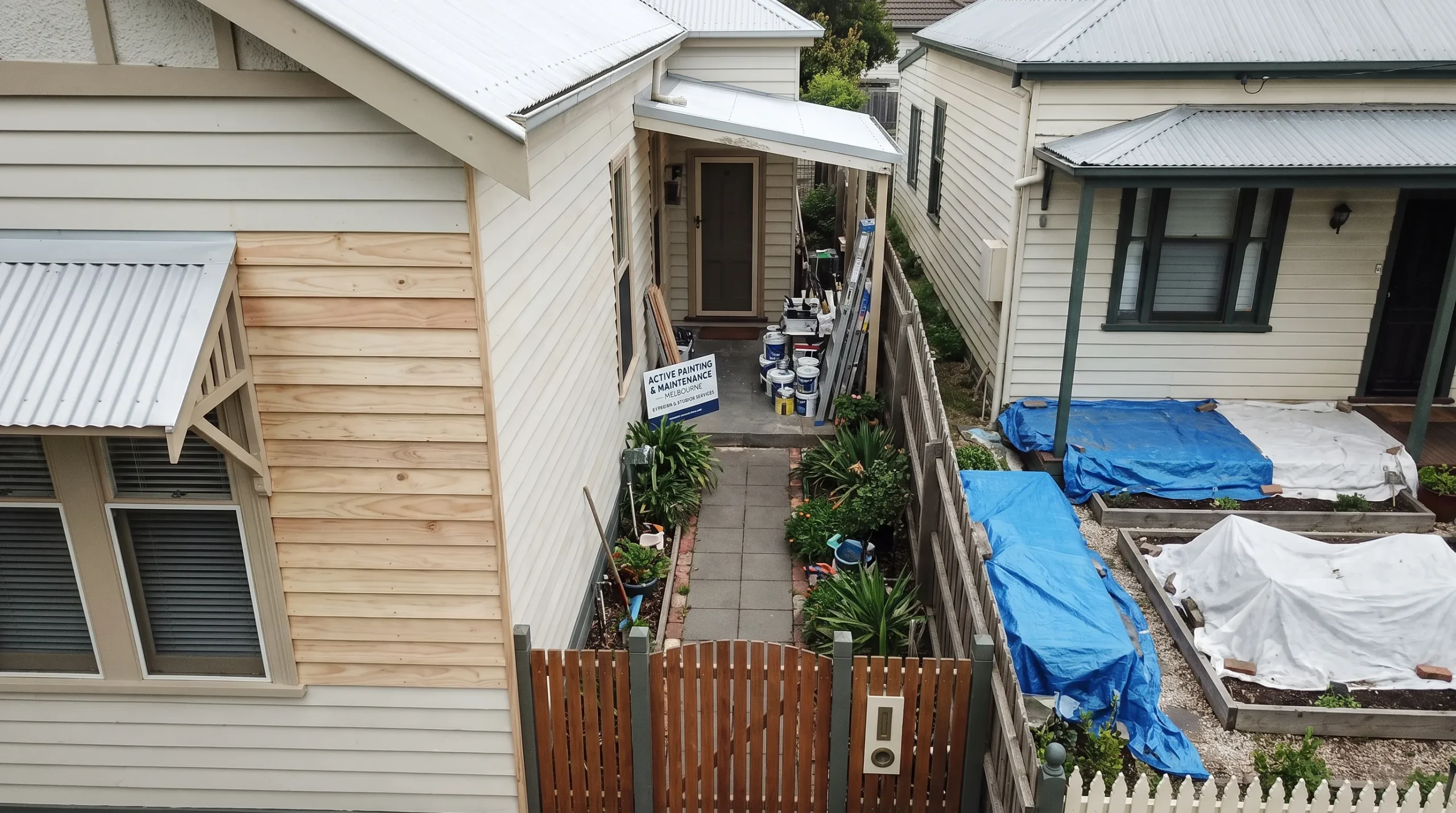
Once you have booked interior and exterior painting services, agree on what needs to be ready before the team arrives. Unfinished repairs, blocked access and late colour decisions can disrupt an otherwise sensible schedule.
Finalise colours and finishes with enough time to review samples in the actual space. Light changes throughout the day, and a colour selected from a small swatch may look different across a whole wall. Confirm the final selections in writing rather than relying on an informal conversation.
For interiors, clarify who moves large furniture, removes wall decorations and protects items that remain. Discuss arrangements for children and pets, particularly where doors need to stay open or work areas must remain undisturbed.
Outside, identify access constraints such as narrow side passages, locked gates, nearby vehicles and overhanging vegetation. Apartment buildings and shared properties may also require approvals or agreed working hours before access can be confirmed.
Shortly before commencement, reconfirm the start arrangements, site contact and any weather-related decisions. If conditions or repairs have changed since the quote, tell the painter promptly. It is better to adjust the plan before work begins than discover an unresolved issue after preparation is underway.
Frequently asked questions
How far ahead should I book a painter? Enquire once you understand the likely scope and have a realistic access window. Lead times vary by contractor, project size and season. For interior and exterior painting services tied to a fixed deadline, request an assessment before confirming photography, moving or reopening arrangements.
Can painting be done during winter in Melbourne? Interior painting can proceed when suitable temperature and ventilation conditions are maintained. Exterior work depends on surface dryness, weather and product requirements. A winter booking should allow flexibility rather than assume every scheduled day will be suitable.
Should I book painting before or after renovations? Discuss the sequence with the painter and other trades. Leaks, substrate repairs and major dust-producing work generally need attention first. Painting may then be staged around flooring, cabinetry and final fit-off, with any touch-ups agreed in advance.
How much should I budget for painting? A property-specific quote is more useful than an hourly rate alone. Surface condition, preparation, access, occupied rooms and the areas included all affect cost. Ask for a clearly defined scope so you can compare proposals fairly.
Arrange an assessment before locking in your dates
Auspainters provides interior and exterior painting services across Melbourne, with free quotations, fully insured and OHS-compliant work, Dulux accreditation and a 5-year workmanship warranty. A final walkthrough is also part of the service.
To plan your booking, request a free quote from Auspainters and explain your property’s condition, access arrangements and preferred completion date. Use the assessment to confirm preparation, project sequencing and a realistic start window before making other commitments.