

Comparing commercial painting companies in Melbourne is not just about finding the lowest number on a quote. A repaint affects staff productivity, tenant experience, brand presentation, maintenance budgets and, in many sites, trading hours. The right painter should understand your building, prepare surfaces properly, work safely and leave you with a finish that still looks professional years after handover.
Start with your site, not the paint colour
Before you request quotes, define the job in practical terms. A CBD office, medical clinic, school, warehouse and hospitality venue all place different demands on a painting team. Access hours, foot traffic, odour control, floor protection, signage, parking, security and noise limits can change how the work should be planned.
Write a simple scope before calling painters. Include the areas to be painted, the current surface condition, known problem spots, preferred timing and any areas that cannot be shut down during business hours. This helps every company quote against the same information, which makes comparisons more meaningful.
For office and workspace projects, it can also help to think about how colour and finish affect comfort and workflow. Auspainters covers this in more detail in its guide to commercial interior painting for productive workspaces.
How to compare commercial painting companies beyond the quote
A good quote should tell you more than the final price. It should reveal how carefully the painter inspected your site, how they plan to prepare surfaces and whether they understand the operational risks of working in a live commercial environment.
Look for clear inclusions, not vague promises. Preparation is where many commercial paint jobs succeed or fail, so the quote should explain cleaning, sanding, patching, priming, caulking, rust treatment or any other surface work required. If two quotes are far apart, check whether one company has allowed for proper preparation and the other has only priced a quick repaint.
The most reliable commercial painting companies will also explain what is excluded. That may include major plaster repairs, rotten timber replacement, high access equipment, after-hours loading or specialist coatings. Exclusions are not necessarily a problem. Hidden assumptions are.
| What to compare | Why it matters | What to ask |
|---|---|---|
| Surface preparation | Determines adhesion and finish life | What preparation is included for each surface? |
| Paint system | Impacts durability, washability and appearance | Which primer, topcoat and sheen will be used? |
| Access method | Affects safety, timing and cost | Will ladders, scaffolding or lifts be required? |
| Business disruption | Protects trading, staff and customers | Can work be staged outside peak hours? |
| Warranty terms | Shows accountability after completion | What is covered and for how long? |
Check insurance, safety and site compliance
Commercial painting involves more than skilled brushwork. Painters may be working around staff, customers, stock, vehicles, electrical fittings, access equipment or public areas. In Melbourne workplaces, you should expect a contractor to take safety documentation seriously.
Ask for evidence of current insurance and confirm the painter understands site-specific safety requirements. If your building has induction processes, loading dock rules, height access procedures or contractor sign-in requirements, raise these before accepting a quote.
When comparing commercial painting companies, pay close attention to how each one discusses risk. A professional contractor should be comfortable talking about site protection, OHS obligations, public liability insurance and safe work practices. Auspainters, for example, is fully insured and OHS compliant, which matters when work is happening in active commercial spaces.
Safety should also show up in the schedule. If a company proposes rushing high access work, painting across busy entry points during trading hours or leaving equipment unsecured, treat that as a warning sign.
Look for a plan that protects business continuity
For most commercial clients, the paint finish is only one part of the outcome. The other part is getting the work done without frustrating tenants, customers or staff. A professional painter should ask when your site is busiest, which areas need priority access and whether the work can be staged in zones.
This is especially important for customer-facing environments. A healthcare reception, hospitality venue or retail tenancy cannot always tolerate strong odours, blocked entrances or visible mess. For example, service businesses such as family dental practices like All About Smiles rely on clean, welcoming spaces where clients feel comfortable from the moment they arrive.
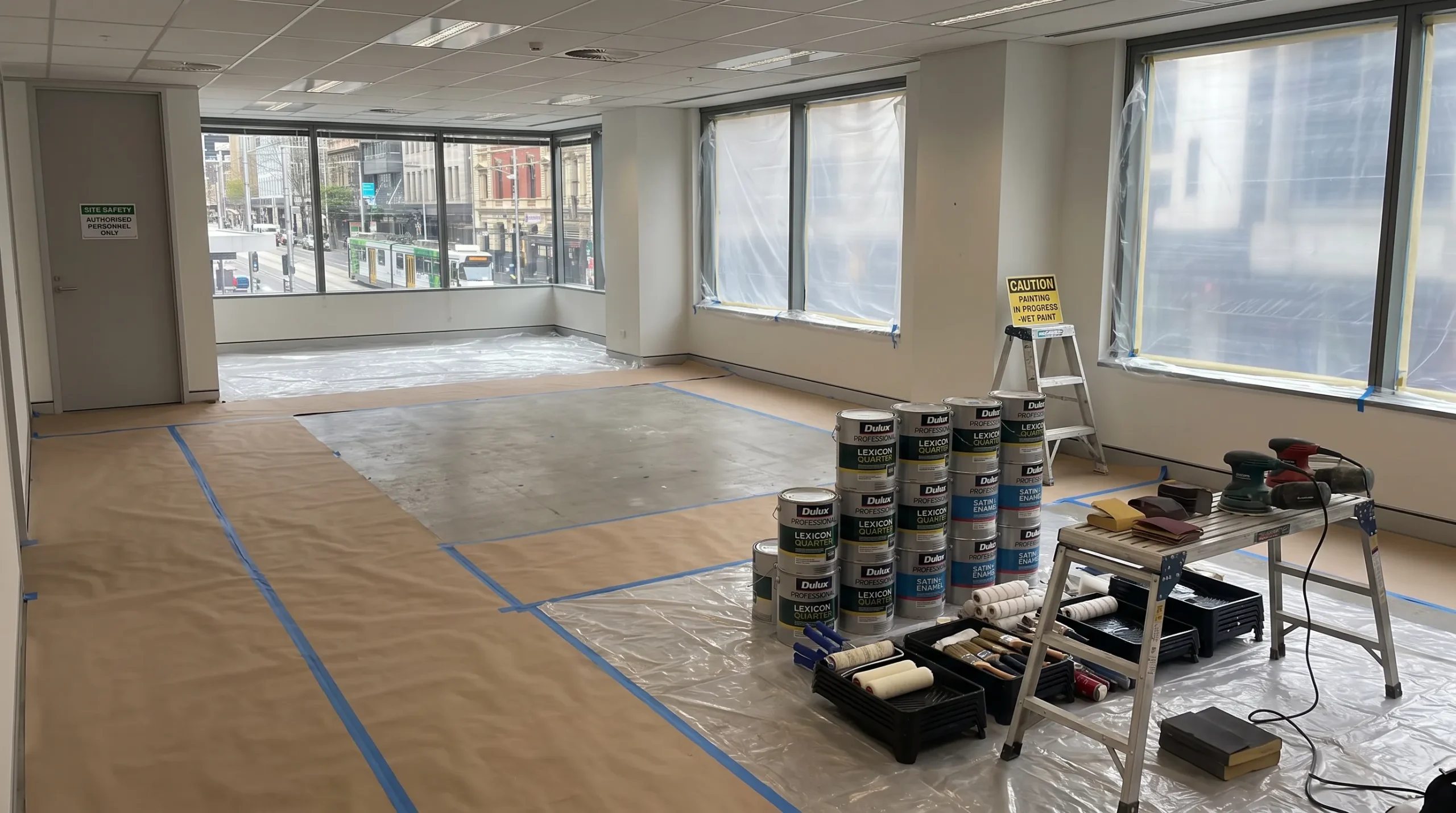
Ask commercial painting companies how they handle dust, odour, drying times, signage, noise and daily clean-up. You want to know whether they can complete sections after hours, return furniture safely, protect floors and leave the site ready for use each day.
Evaluate product knowledge and finish standards
The right paint system depends on the substrate and the use of the space. A boardroom wall does not need the same coating as a warehouse roller door, exterior render, stairwell, amenities area or childcare corridor. The painter should recommend coatings based on wear, cleanability, exposure and presentation.
Ask why a specific product is being recommended. For interiors, the discussion may include low-odour options, washable finishes and sheen levels that suit lighting conditions. For exteriors, it may include UV exposure, moisture, metal corrosion, timber movement and Melbourne weather patterns. If your project includes exterior work, Auspainters' advice on choosing exterior painters for a finish that lasts is a useful companion read.
Strong commercial painting companies will not simply say they use premium paint. They will explain the full coating system, including primer where needed, number of coats, drying conditions and how the finish will be checked at completion. Dulux accreditation can also be a useful trust signal because it shows the company meets recognised standards connected to product knowledge and workmanship.
Compare communication before you compare promises
The quoting stage is a preview of how the project will run. Slow replies, unclear answers and rushed inspections rarely improve once work begins. On the other hand, a contractor who asks practical questions early is more likely to plan properly.
Notice whether the company confirms appointment times, sends written documentation and explains the next step. For larger jobs, ask who will supervise the site and who you should contact if something changes. You should not need to chase basic updates or decode vague text messages during a commercial repaint.
When commercial painting companies communicate well, they reduce the risk of disputes. A clear quote, agreed schedule, documented scope and final walkthrough make it easier for both sides to know what has been promised. Auspainters includes a final walkthrough as part of its service, which gives clients a chance to review the work before the job is closed.
Understand warranties and aftercare
A workmanship warranty is not just a marketing line. It should tell you what the painter is prepared to stand behind. Ask what the warranty covers, what it excludes and how defects are handled if they appear after completion.
Common exclusions may include water leaks, structural movement, impact damage, pre-existing substrate failure or areas painted over surfaces that were already compromised. That is reasonable when it is clearly explained. A vague warranty with no written terms gives you less confidence.
Auspainters offers a 5-year workmanship warranty, which is valuable because commercial clients need accountability after the invoice is paid. Still, any warranty should be assessed alongside preparation standards. Even a strong warranty cannot replace careful surface assessment, correct primers and suitable coatings.
Watch for red flags during the quoting process
Most problems can be spotted before work starts. If a painter avoids site inspection, cannot explain preparation or pressures you to accept quickly, slow down. Commercial projects involve too many variables for guesswork.
Be cautious if you notice these warning signs:
- A quote with only one line and no scope breakdown
- No clear insurance or safety information
- Little interest in your trading hours or site access
- Unwillingness to specify paint products or number of coats
- No written warranty information
- A much lower price with no explanation of what has changed
When commercial painting companies compete only on price, the compromise often appears later in shortcuts, delays, poor protection or early coating failure. A fair comparison should balance cost with risk, durability and the quality of project management.
Use a simple scoring matrix for your shortlist
If you are comparing three or four painters, create a basic scorecard. This keeps the decision objective and helps stakeholders understand why one contractor is the better fit.
| Criteria | Weight | What a strong response looks like |
|---|---|---|
| Site understanding | High | The quote reflects your building, access limits and operating hours |
| Preparation detail | High | Surface repairs, sanding, cleaning and primers are clearly described |
| Safety and insurance | High | Documentation is available and site risks are discussed early |
| Finish and product advice | Medium | Coatings are recommended for use, exposure and maintenance needs |
| Communication | Medium | Replies are prompt, clear and documented |
| Warranty and handover | Medium | Workmanship cover and final inspection are explained in writing |
| Price | Medium | The cost is competitive for the scope, not simply the lowest |
This approach works because it compares commercial painting companies on the factors that affect the finished result. A slightly higher quote may be better value if it includes more thorough preparation, safer access, after-hours staging and a stronger warranty.
Questions to ask before you hire
Good questions make it easier to separate professional operators from underprepared contractors. Before accepting a quote, ask how the company will prepare each surface, what products they recommend, how long the job will take and how they will protect your site.
You should also ask who will supervise the work, whether the team is insured, how changes are handled and what happens at completion. For a more detailed question list, Auspainters has a practical guide on what to ask painting contractors before you hire. Although it is written for house painting, many of the same checks apply to commercial projects.
The aim is not to interrogate the painter. It is to confirm that their process matches the needs of your building and your business.
Frequently Asked Questions
How many commercial painting quotes should I get in Melbourne? Getting two to three detailed quotes is usually enough to compare scope, preparation, safety and price. More quotes can help on large or complex projects, but only if every contractor is pricing the same brief.
Should I choose the cheapest commercial painter? Not automatically. A low price may leave out preparation, access equipment, after-hours work or suitable coatings. Compare the full scope before deciding whether the cheapest quote is genuinely better value.
What should commercial painting companies include in a quote? A detailed quote should include surface preparation, paint products, number of coats, access requirements, site protection, timing, exclusions, warranty details and payment terms.
Why does a workmanship warranty matter? A workmanship warranty gives you clearer accountability if defects linked to application appear after completion. It is most valuable when supported by proper preparation, quality coatings and a documented final walkthrough.
Can commercial painting be done outside business hours? In many cases, yes. Availability depends on the site, access, noise limits, drying times and project size. Discuss staging and after-hours work during the quoting stage so it is included in the schedule and price.
Ready to compare with confidence?
The best painter for your business is the one that can deliver a clean, durable finish while respecting your site, schedule and customers. Compare scope, safety, communication, warranty and preparation before you compare the final number.
If you are planning a commercial repaint in Melbourne, contact Auspainters for a free quotation. The team provides interior, exterior and commercial painting services across Melbourne suburbs, with Dulux accreditation, full insurance, OHS compliant practices, premium finishes and a 5-year workmanship warranty.