
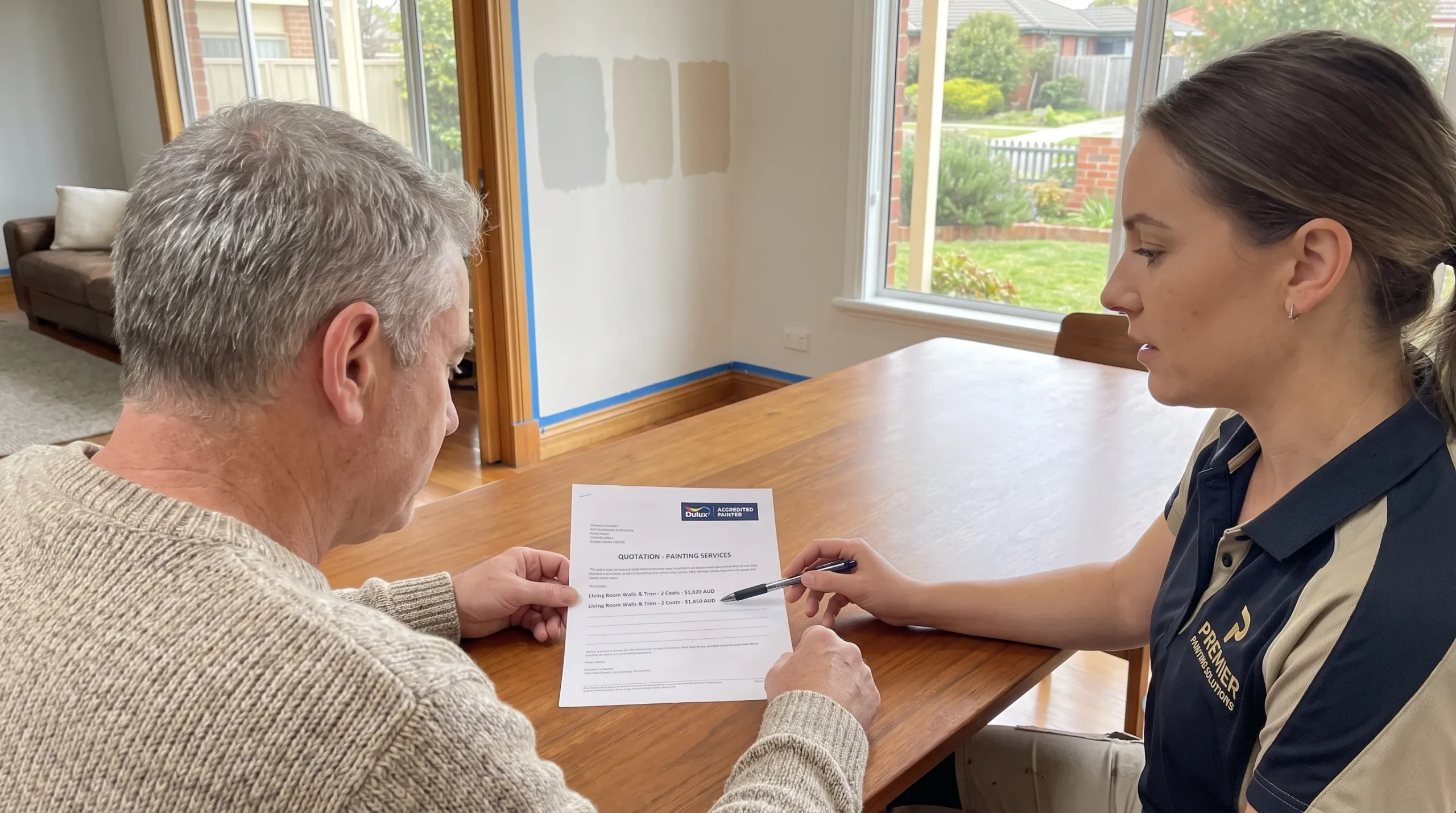

A painting quote should tell you what will happen to your home, not just what it will cost. When comparing residential painting contractors, the most useful document is one that clearly describes the surfaces, preparation, paint system and conditions behind the total price. Without those details, two apparently similar quotes may cover very different jobs.
For Melbourne homeowners, access, weather exposure and the condition of existing coatings can all affect the scope. This guide explains what to look for in a written quote, which items need clarification and how to compare offers without assuming the cheapest price includes everything.
What residential painting contractors should itemise
A clear quote identifies both the work included and the work excluded. Start with the property address and a room-by-room or elevation-by-elevation description. “Paint interior” is not specific enough to establish whether doors, ceilings or skirting boards are included.
For an interior job, the scope should distinguish walls, ceilings, cornices, doors, door frames, window frames and other trim. For an exterior job, it should identify the relevant cladding, render, weatherboards, eaves, fascia boards and other surfaces being painted.
Check boundaries carefully. Painting a window frame does not necessarily include removing hardware, repairing rotten timber or repainting flyscreens. Likewise, walls inside a wardrobe may be excluded even when the bedroom itself is included.
When residential painting contractors describe the scope broadly, ask for the individual surfaces to be listed before accepting the quote. Confirm whether garages, stairwells, balconies and detached structures are part of the job.
The document should also identify the contracting business, the quote date and any validity period. This helps you confirm which version you are accepting, particularly if colours or repair requirements change during discussions.
Surface preparation and repairs
Preparation is one of the biggest reasons quotes differ. A sound wall needing minor filling is a different job from one with peeling paint, water stains or extensive cracking.
Rather than accepting “prepare surfaces as required”, look for a description of the work anticipated after inspection. Depending on the surface, that might include washing, scraping loose paint, sanding, filling small defects, caulking suitable gaps and priming exposed areas.
The quote should distinguish routine preparation from substantial repairs. Replacing rotten timber, repairing damaged plasterboard, rectifying leaks and treating underlying moisture problems may require separate work or another trade.
Define the repair allowance
Ask how much patching is included and what happens if more damage becomes visible once loose coatings are removed. An allowance for minor nail holes is not the same as resurfacing an entire wall.
A useful preparation description from residential painting contractors explains the expected work and the process for approving anything additional. It should not leave you guessing whether every crack will be repaired within the original price.
Older coatings may also need assessment for lead before they are disturbed. Do not assume ordinary sanding is appropriate for unidentified old paint. If hazardous material is suspected, ask whether assessment and specialist handling are included or excluded.
Paint products, coats and finish
A quote should describe the coating system, not simply promise “premium paint”. Useful details include the manufacturer, product range, intended finish and the surfaces on which each product will be used.
Look for a distinction between primer, sealer or undercoat and the finishing coats. These serve different purposes. Priming bare timber or sealing a repaired patch is not interchangeable with applying another topcoat.
The quoted number of coats also needs context. Ask whether it applies to every surface, whether spot priming is additional and how the contractor will handle a major colour change if the specified coats do not provide adequate coverage.
Compare the products specified by residential painting contractors rather than treating all branded paints as equivalent. Different products within the same manufacturer's range can have different intended uses and application requirements.
For interiors, confirm the sheen for walls, ceilings and trim. For exteriors, confirm that the coating is appropriate for the substrate and exposure. Our guide to choosing exterior painters for a lasting finish explains why those choices matter beyond the initial appearance.
Ask when colours must be finalised and whether colour samples or changes after approval attract an additional charge.
Protection, access and occupied-home arrangements
Site protection is part of the job, but its extent should be clear. The quote should explain arrangements for floors, furniture, fittings, landscaping and areas beside the surfaces being painted.
Clarify who moves heavy furniture, removes curtains or blinds and takes down wall-mounted items. These tasks may be shared between homeowner and painter, so a written allocation helps prevent delays on the first day.
Exterior access deserves particular attention. Scaffolding, elevated work platforms or other access equipment can materially affect the price. Ask whether the necessary equipment is included and whether any access limitations were identified during inspection.
Keep access responsibilities specific
Ask residential painting contractors which rooms must be cleared, when access is needed and whether parts of the home will be unavailable during the work. Discuss pets, children, parking and any restrictions imposed by an owners corporation.
Mixed-use properties need an especially clear boundary. An appointment-based business such as Metro Dental on Swanston Street has different access and disruption considerations from a vacant apartment. If your home adjoins commercial premises, the quote should identify the residential areas covered and any arrangements affecting shared access, rather than assuming all spaces can be treated alike.
This does not require a lengthy site-management document for every house. It requires enough detail to establish who is responsible for making the work area ready and keeping adjoining areas protected.
Timing and working arrangements
A quote may include an anticipated start date, estimated duration and working hours. These are useful planning details, but check whether they are confirmed commitments or indicative dates subject to availability and conditions.
Exterior painting in Melbourne needs suitable conditions for preparation, application and drying. A contractor should not promise an uninterrupted schedule regardless of rain or the coating manufacturer's application requirements.
A practical quote from residential painting contractors distinguishes the expected working time from delays caused by weather, drying requirements or newly discovered repair work. For an occupied home, ask whether rooms will be completed in stages and when they can be used again.
Also confirm who will communicate with you during the project. Knowing how schedule changes and access requests will be handled is more useful than a vague assurance that the work will be completed quickly.
Total price, allowances and payment terms
The total should be easy to understand. Confirm whether it includes GST where applicable, labour, paint, consumables, access equipment and the agreed clean-up. If any items are charged separately, they should be identifiable before you accept.
A quotation and an estimate are not necessarily interchangeable. An estimate indicates an expected cost, while a quote generally offers a price for a defined scope, subject to its terms and agreed variations. Check the actual document rather than relying on its heading alone.
Understand allowances and variations
A provisional allowance is an amount set aside for work whose extent is not yet fully known. Ask what it covers, how the final cost will be established and whether unused amounts are deducted. Do not treat an allowance as a guarantee that all related work is covered.
Price differences between residential painting contractors often come from different preparation assumptions, access arrangements or exclusions. Clarifying these differences is more useful than asking every contractor to match the lowest total.
Payment terms should state any deposit, progress payments and the final payment trigger. Avoid assuming a particular percentage is standard or appropriate for every job.
Finally, agree on a variation process. Additional work, product upgrades or colour changes should be described and priced for your approval before proceeding, wherever practicable. Keep the approved changes with the original quote.

Compare quotes using the same scope
Before comparing totals, place the documents side by side and check whether they describe the same outcome. The following wording examples show the level of clarification to seek, not inclusions that every contractor automatically provides.
| Quote item | Wording that needs clarification | Detail to request |
|---|---|---|
| Surfaces | “Paint bedrooms” | Each included wall, ceiling, door and trim surface |
| Preparation | “Standard preparation” | Cleaning, filling, sanding and priming tasks included |
| Paint system | “Quality paint” | Product range, finish and coat specification |
| Access | “Access provided” | Equipment included and homeowner responsibilities |
| Price | “Total painting cost” | GST treatment, allowances and separately charged items |
| Completion | “Finish and clean” | Waste removal, reinstatement and walkthrough arrangements |
Once residential painting contractors have clarified these items, you can compare the actual work rather than the headline price. A higher quote may include more preparation or equipment, but a higher price alone does not establish better value.
If one document is still vague, request a revised written version. Verbal explanations are harder to refer back to if a disagreement arises. After reviewing the scope, these questions to ask house painting contractors before hiring can help with the remaining checks.
Clean-up, final inspection and warranty
Completion should mean more than the last coat being applied. Ask whether the quote includes removing masking, collecting painting-related waste and cleaning the work area. Confirm whether moved furniture and removed fittings will be reinstated, particularly where those tasks were included at the start.
A final walkthrough gives you an opportunity to inspect the agreed surfaces and identify touch-ups before the job is closed out. Ask how outstanding items will be recorded and when they will be addressed.
The warranty information residential painting contractors provide should explain the duration, coverage, exclusions and claims process. A workmanship warranty is not the same as a paint manufacturer's product warranty, and neither should be assumed to cover unresolved leaks or substrate movement.
Auspainters offers a 5-year workmanship warranty and a final walkthrough. When reviewing an Auspainters quote, request the applicable warranty terms so you understand how they relate to your particular project.
Insurance, Dulux accreditation and safety practices are also relevant credentials, but they do not replace a clearly documented scope of work.
Frequently asked questions
Should a painting quote include the paint? It should state whether paint and other materials are included. If you are supplying paint, confirm the required products and quantities, along with any implications for the contractor's workmanship warranty.
Are repairs automatically included? No. Minor filling may be included while extensive plaster repairs, rotten timber replacement or moisture rectification are excluded. Ask for the included preparation and repair limits to be written down.
Can the price change after I accept a quote? Changes may arise from an altered scope, agreed variations or conditions addressed in the quote's terms. Ask how additional work will be priced and approved before accepting the offer.
Do residential painting contractors need to inspect my home before quoting? An inspection helps identify surface condition, access requirements and preparation needs. If a quote is based on photographs or measurements alone, ask which assumptions it relies on and whether the price remains subject to an on-site assessment.
Is the cheapest quote necessarily the best choice? No. Compare the surfaces, preparation, products, exclusions and completion arrangements first. A lower total is only a meaningful saving when you understand what it covers.
Request a clearly scoped painting quote
Auspainters provides residential interior and exterior painting across Melbourne, with free quotations, premium finishes and fully insured, OHS-compliant workmanship. The business is also Dulux accredited.
When you request a free quote from Auspainters, identify the areas you want painted, any known surface problems and your access requirements. Then review the written scope, exclusions and warranty terms before approving the work.