
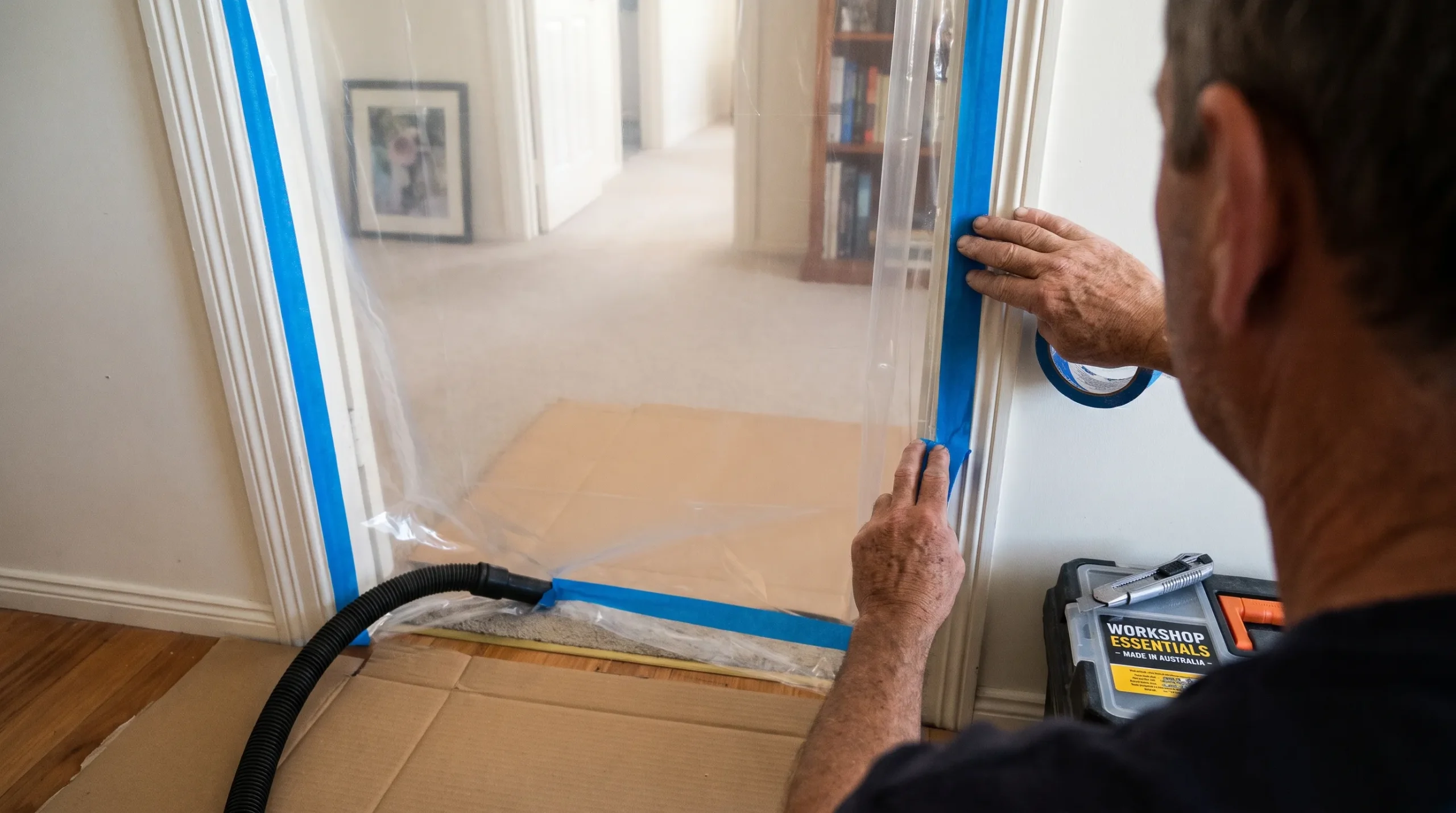

Hiring local painters when you have children and pets involves more than choosing colours and finding a convenient date. You need to know how preparation dust will be contained, which rooms will remain usable and who will stop a curious toddler or dog from wandering into the work area. These arrangements belong in the conversation before you accept a quote, not after the first drop sheet goes down.
A family-friendly painting plan should explain how everyday life will work alongside the job. That includes school mornings, naps, feeding times and access to bathrooms. It should also distinguish between paint being dry to touch, a room being suitable to re-enter and a coating being fully cured. Those are different milestones, and none should be decided by smell alone.
What to tell local painters before they quote
Describe how your household uses the property, rather than simply naming the rooms you want painted. A bedroom that doubles as a nursery needs different scheduling from a spare room nobody uses during the week.
Tell the contractor about children’s ages, pets and any household member with asthma, chemical sensitivities or other relevant health concerns. You do not need to share private medical details, but the painter needs to understand practical restrictions. Seek individual advice from your clinician or vet where necessary.
Identify the spaces you cannot easily lose: perhaps the only bathroom, the kitchen or the hallway connecting bedrooms to an exit. Ask whether the proposed sequence preserves access or requires you to stay elsewhere.
Also establish who will attend each day and who can approve changes. Understanding who carries out the work within a painting company helps you confirm that household instructions reach everyone on site, including any subcontractors. Agree on a named contact rather than relying on messages passed between different workers.
Check the paint products, not just the colour
Ask for the proposed primer, topcoat and any fillers, sealers or stripping products. A low-VOC wall paint does not tell you everything about the other materials used during preparation and application.
When comparing local painters, ask why each proposed product suits the surface and your household’s needs. Request the manufacturer’s technical information and relevant safety guidance, including ventilation instructions and any restrictions on occupancy during application and drying.
Low-VOC does not mean exposure-free or automatically suitable for every person or animal. The US Environmental Protection Agency’s guidance on volatile organic compounds explains that paints and other household products can release VOCs indoors. Product selection and ventilation both matter.
For children’s rooms, washable finishes may be useful, but ask when cleaning can begin. A coating may need longer to cure before it tolerates wiping or scrubbing, even when it already feels dry.
Birds and other sensitive animals warrant a separate discussion with your vet before work starts. Do not assume that moving a cage into the next room is sufficient. The appropriate arrangement depends on the animal, products, airflow and work involved.
Treat old-paint preparation as a separate risk
The most disruptive part of repainting may happen before anyone opens the finishing paint. Scraping, sanding and repairing deteriorated surfaces can create dust and loose flakes that children or animals could touch or swallow.
Older coatings may contain lead. The Australian Government’s Lead Alert guide to painting your home explains the risks and precautions involved when working with lead-based paint.
Ask local painters how they will assess suspect coatings before disturbing them. If lead is suspected, agree on appropriate assessment and specialist controls before preparation begins. Do not accept dry sanding of unknown older coatings as an ordinary housekeeping issue.
A useful preparation discussion covers containment, suitable dust extraction, waste handling and cleaning before the area is handed back. An ordinary household vacuum is not a substitute for equipment appropriate to hazardous dust.
Children and pets should remain outside preparation areas, including during clean-up. For exterior work, consider where flakes could land: garden beds, paths, outdoor toys and pet runs all need attention. A tidy-looking lawn is not proof that hazardous debris has been removed.
Agree on work zones and a daily handover
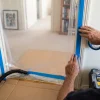
Closed doors and clearly separated work areas are more dependable than expecting children or animals to recognise a drop sheet as a boundary. A baby gate may help manage movement, but it is not a complete barrier against dust, fumes or a determined pet.
Agree on the route workers will use, where equipment will be stored and which entrances must remain secure. Keep escape routes usable. For outdoor work, discuss gates, scaffolding and access to yards before the crew arrives.
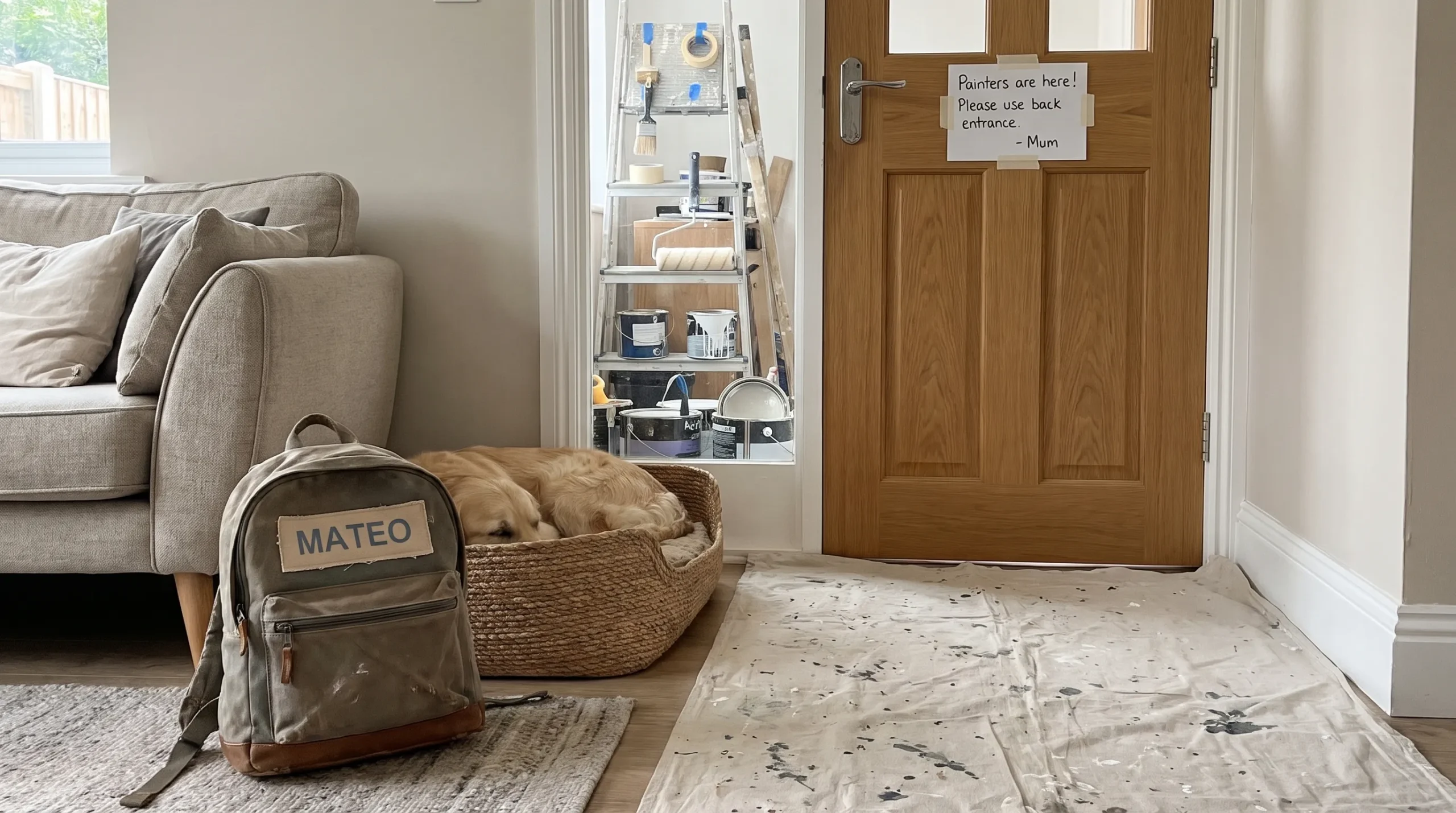
Move pet bowls, bedding, litter trays, toys and children’s belongings out of the work zone. Where items cannot be moved, agree on suitable protection rather than assuming a loose sheet will prevent contamination.
Before booking local painters, ask what the end-of-day handover includes. Paint tins, solvents, blades, ladders and extension leads should not remain accessible to children or pets. Wet surfaces and rooms that are still restricted need to be clearly identified.
The painting crew is not a childcare or pet-supervision service. A responsible adult must manage children and animals throughout the job. If secure separation is impossible, arrange care or accommodation elsewhere instead of relying on workers to watch an open doorway.
Arrange school runs, pet care and temporary stays
Build the work schedule around realistic household arrangements. Painting a hallway while everyone is leaving for school can be harder to manage than painting an unused bedroom, even if the hallway is smaller.
Ask local painters when the most disruptive tasks are expected and what could change that timing. Surface repairs, drying conditions and Melbourne’s weather can affect the sequence, particularly when exterior work is involved.
For dogs, plan toilet breaks and walks that do not cross the work area. Cats need a genuinely secure space away from opening doors, or suitable care elsewhere. Moving food bowls alone will not stop an animal returning to its usual sleeping spot.
If the repaint overlaps with a business trip to the Netherlands, services such as Stuur Chauffeurs’ business transport can cover that travel leg, while a named adult manages painting access and family arrangements at home.
Where disruption is difficult to avoid, booking house painting in stages may help preserve usable rooms. Ask about the trade-off: repeated setup and return visits can affect both cost and completion time.
Compare quotes on household protection as well as price
An hourly rate alone does not show what a family will pay or how the job will be managed. Preparation, access, surface condition and the agreed protection measures all affect the scope.
Request written quotes that cover the same rooms, surfaces and finish requirements. When assessing local painters, compare the practical arrangements alongside the paint specification, rather than assuming every contractor includes the same protections.
| Quote item | What to clarify |
|---|---|
| Surface preparation | Repairs, assessment of old coatings and any hazardous-material exclusions |
| Paint system | Named products, preparation requirements and proposed coats |
| Household protection | Work-zone separation, floor protection and arrangements for belongings |
| Occupancy and access | Rooms unavailable, access routes and any required time away |
| Cleaning and handover | Dust removal, waste disposal, equipment storage and room-release checks |
| Changes and delays | How additional repairs, return visits or revised sequencing are approved |
Ask whether staging, extra containment or specialist assessment is included or separately priced. An allowance should be identified as an allowance, not presented as a guaranteed final cost.
Check current insurance and request the written workmanship warranty terms. Ask for a reference from a similarly occupied home, with permission, and focus your questions on communication, cleanliness and how restrictions were handled. Accreditation and a good finish matter, but neither replaces a clear household plan.
Decide when rooms can be used again
There is no single waiting period that suits every paint, room, person and pet. Re-entry depends on the products used, application method, ventilation, conditions and any relevant manufacturer or health advice.
Dry to touch is not the same as fully cured, and neither is a universal re-entry test. Ask for product-specific guidance before the job starts so you can arrange sleeping spaces or accommodation without guessing.
Your local painters should explain which rooms remain restricted and what ventilation is required after they leave. Agree on airflow that helps remove emissions without carrying preparation dust into occupied areas. Fans should not simply redistribute contaminated air around the home.
Do not use the absence of a strong smell as proof that a room is suitable for a vulnerable occupant. Equally, do not assume a lingering smell tells you the concentration of a particular substance. Follow the relevant guidance and seek clinical or veterinary advice where individual sensitivities are involved.
If someone develops symptoms, move them away from the exposure and seek advice. For suspected human poisoning in Australia, call the Poisons Information Centre on 13 11 26. Call 000 for a medical emergency. For suspected pet exposure, contact a vet promptly and have the product details available.
Frequently asked questions
Can we stay home while the interior is painted? Sometimes, provided occupied spaces can be separated from preparation and painting areas, essential facilities remain accessible and ventilation is appropriate. Staying elsewhere may be more practical when work affects most rooms, hazardous coatings need treatment or household members have particular sensitivities.
Should I ask local painters to use low-VOC paint? Yes, discuss suitable lower-emission options, but also check the primers, preparation products and application method. Low-VOC paint does not remove the need for ventilation, controlled access or product-specific re-entry guidance.
Can my dog stay in the backyard during exterior painting? Only if the yard remains genuinely separate from the work. Open gates, ladders, falling flakes, equipment and wet surfaces can make a usual pet area unsuitable. Arrange another location if the crew needs access to that space.
Who cleans up before children and pets return? Define this in the quote and handover plan. The scope should identify site cleaning, waste removal and any specialist cleaning needed after hazardous preparation. Household laundry or cleaning of belongings may sit outside the painter’s scope, so clarify responsibility beforehand.
How soon can I put furniture and bedding back? Follow the product guidance and agreed room handover. Keep furniture from rubbing against uncured coatings and ask when painted surfaces can safely be cleaned. Re-entry, furniture placement and washing walls may have different requirements.
Request a quote built around your household
Auspainters provides residential interior and exterior painting across Melbourne, with free quotations, Dulux accreditation, full insurance and a 5-year workmanship warranty. Ask for the warranty terms and confirm the arrangements specific to your property.
When you request a painting quote from Auspainters, mention your children, pets, essential rooms and any scheduling restrictions. Comparing local painters is easier when each quote addresses the same practical questions: who can access each space, how preparation will be managed and what must happen before your family uses the rooms again.