

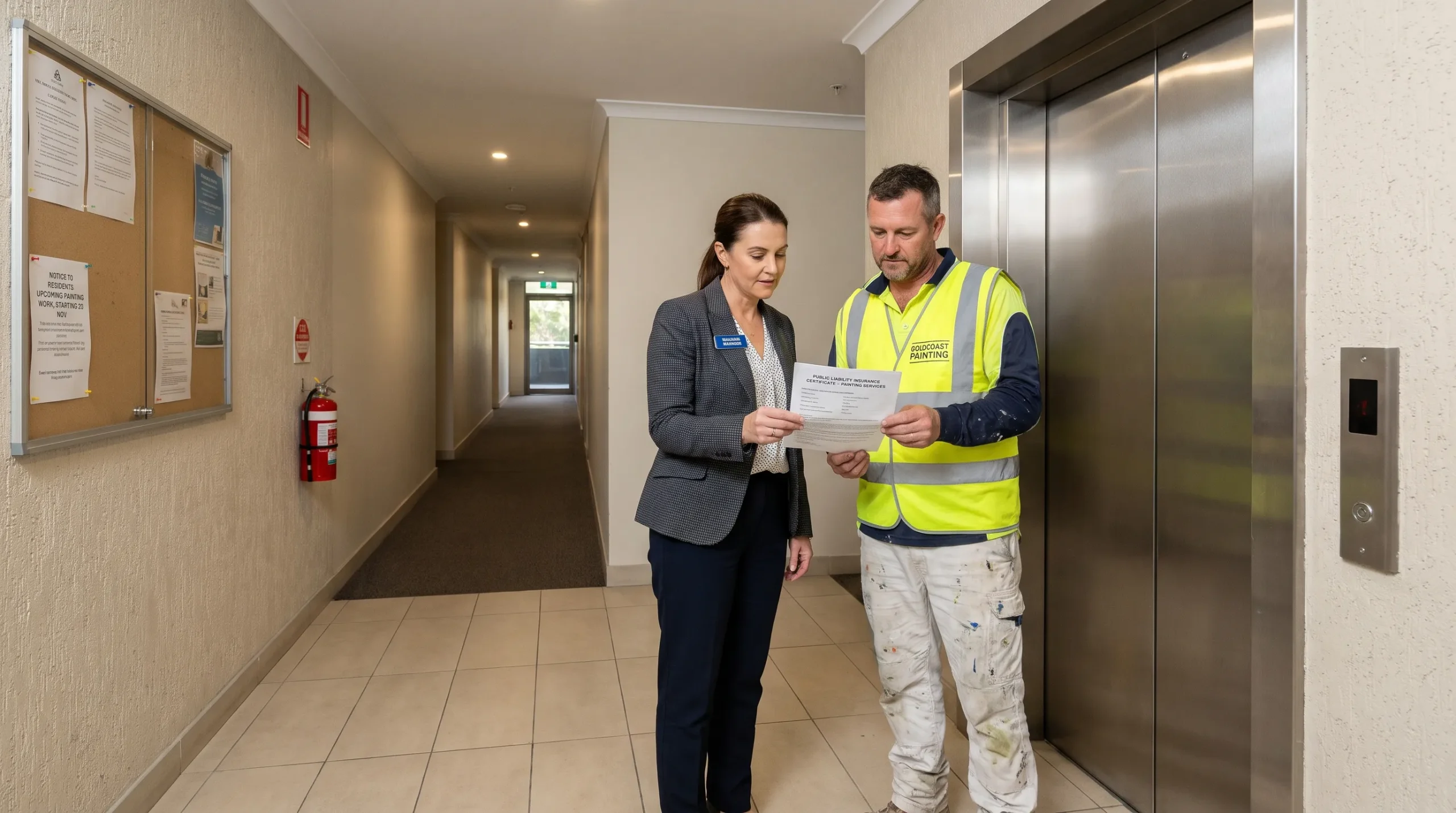

Before hiring painting contractors Melbourne neighbours or businesses recommend, ask for current insurance documents, not just a promise that the team is “fully insured”. A certificate is a useful starting point, but you also need to check whose business it covers, whether it is current and how the policy relates to your project.
For homeowners, landlords and commercial property managers, these checks help identify gaps before ladders, paint and equipment arrive. They also make responsibilities clearer if someone is injured or property is damaged.
Confirm the business behind the quote
Start with the legal name and ABN on the quotation. Compare those details with the insured entity shown on the insurance documents. A trading name may differ from the legal business name, but the contractor should explain the connection clearly.
You can use the Australian Government’s ABN Lookup to check the business details. An active ABN does not prove insurance, qualifications or workmanship, but it helps establish who you are engaging and paying.
If the quote comes from one entity and the certificate names another, ask for clarification before accepting. There may be a legitimate explanation, such as a company trading under a different business name. Do not assume that related businesses automatically share cover.
Keep the accepted quotation, business details and insurance documents together. This gives you a consistent record of the contractor responsible for the work.
What to request from painting contractors Melbourne owners hire
Ask for a current certificate of currency for public liability insurance. Depending on the workforce and project, you may also need evidence of WorkCover arrangements and confirmation about subcontractors.
| Document or detail | What to check | When to follow up |
|---|---|---|
| Insured entity | The business matches the contractor on your quote | Names differ without a clear explanation |
| Policy period | Dates cover the planned work | The policy expires before completion |
| Business activities | The declared activities are relevant to the painting work | The work includes activities not clearly addressed |
| Liability limit | The limit meets any applicable site or contract requirements | Your property manager requires a different limit |
| Workforce arrangements | Employees and subcontractors are accounted for appropriately | Nobody can explain who employs or engages the crew |
A certificate summarises selected policy information. It usually does not show every exclusion, condition or endorsement. Treat it as evidence to check, not a guarantee that every incident will be covered.
For unresolved questions, request relevant policy details or written clarification through the contractor’s insurer or broker. If independent confirmation is needed, use contact details obtained from the insurer’s official website. Privacy requirements may mean the contractor must authorise that discussion.
Match public liability cover to your project
When assessing painting contractors Melbourne property managers recommend, look beyond the dollar limit printed on the certificate. Public liability generally responds to covered legal liability for injury to third parties or damage to their property, subject to the policy terms.
It is not the same as a promise to repair every painting defect. For example, replacing a poorly applied coating and repairing accidental damage to an unrelated fixture raise different insurance questions.
The Australian Government’s overview of business insurance types distinguishes public liability from other forms of business protection. That distinction matters when a contractor describes themselves as fully insured without explaining the cover.
Ask how the policy addresses the actual work, including interiors, exterior walls, spray application or elevated access where relevant. For commercial premises, check whether the lease, facilities manager or client contract specifies an insurance limit or other requirements.
If you are also assessing scheduling and site management, our guide to comparing commercial painting companies in Melbourne covers those broader decisions without replacing the insurance check.
Ask about exclusions that could affect your site
Describe unusual risks before work begins. Relevant examples include overspray near parked cars, work above neighbouring property, heritage surfaces and access through shared areas.
Older buildings may also contain lead-based coatings or asbestos-containing materials. Insurance is not a substitute for identifying hazards and using appropriate controls. Ask what happens if suspect material is discovered during preparation and whether specialist assessment is needed before work continues.
Some policies restrict cover for property being worked on or property in the contractor’s care, custody or control. These provisions can matter when furniture is moved or an existing surface is damaged during preparation.
Rather than asking only “Is everything covered?”, describe the concern specifically and request clarification. A useful answer identifies the relevant terms instead of offering a blanket assurance.
Check WorkCover and subcontractor arrangements
With painting contractors Melbourne homeowners engage, workforce arrangements can be less obvious than the name on the van. Ask whether the people attending are employees, subcontractors or the business owner working alone.
WorkCover and public liability serve different purposes. WorkCover relates to workplace injury arrangements for eligible workers; public liability is not a replacement for it. Victorian registration requirements depend on the circumstances, including applicable exemptions and how workers are engaged.
Ask for evidence of WorkCover registration where required. The WorkSafe Victoria website provides guidance on WorkCover insurance and contractor arrangements. A sole trader working alone may have different requirements from a company employing a crew, so a missing certificate needs an explanation rather than an automatic conclusion.
Personal accident insurance is another distinct product. If it is mentioned, do not treat it as interchangeable with statutory workers compensation cover.
For business clients, unclear contractor arrangements can also raise questions about their own obligations. Seek advice where the working relationship is uncertain rather than relying on the label “subcontractor”.
Establish who is responsible for subcontractors
If subcontractors will attend, ask who engages them and how their activities are insured. Depending on the arrangements and policy terms, they may need their own cover, and the principal contractor’s policy may respond differently to claims involving them.
Get written confirmation of who supervises the work and handles any damage report. Avoid assuming that a subcontractor’s mistake will automatically be covered by someone else’s policy.
Repeat the check if the contractor changes the crew or brings in another business for specialised access or preparation. The people performing the job should match the arrangements you agreed to, even when staffing changes are reasonable and necessary.
Record the property’s condition before painting starts
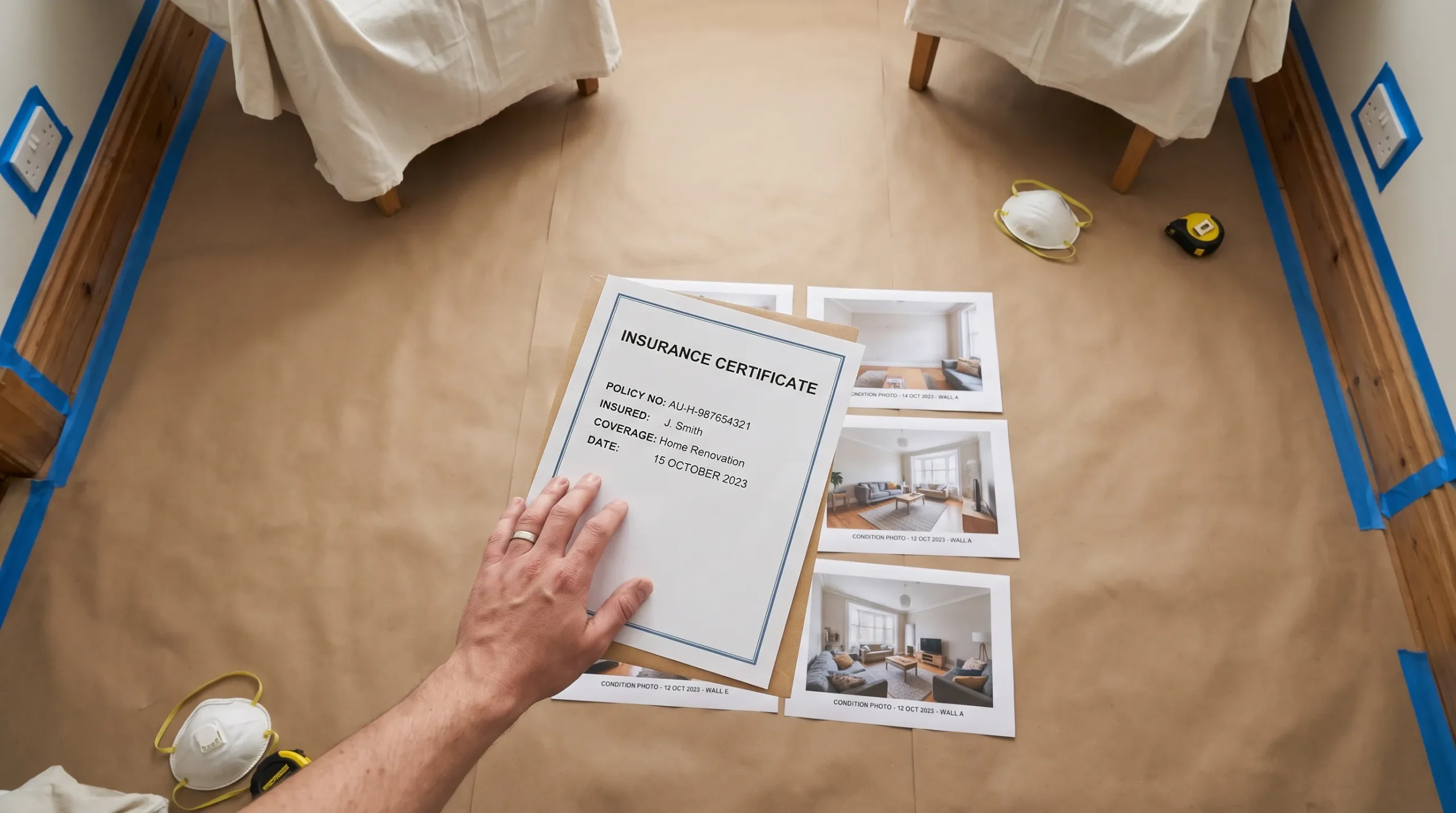
Even when painting contractors Melbourne residents recommend provide clear insurance documents, a condition record remains worthwhile. Photograph floors, windows, benchtops, fixtures and nearby vehicles before work begins. Include existing chips, scratches and stains so later discussions have a reliable reference point.
Agree who will move furniture, remove wall hangings and protect items that stay in place. Valuable, fragile or irreplaceable possessions are better relocated where practical than left beneath a drop sheet.
Keep purchase records for valuable furnishings, including imported pieces. For example, if décor came from Sandhai, a UAE online marketplace, retain the original invoice alongside current photographs. These records help identify the item and its original purchase price, although they do not determine an insurance settlement.
For apartments, document shared corridors, lifts and entry areas as well as the unit. Our guide to planning interior painting in Melbourne apartments explains the related access and building-management considerations.
Check with your own property insurer if the project involves circumstances that could affect your policy, such as extended vacancy or broader renovation work.
Put insurance checks into the written agreement
When comparing painting contractors Melbourne clients have recommended, use the same documentation standard for each. A clear written agreement should connect the insurance evidence to the business doing the work and the scope you have accepted.
Record the planned dates, responsible contact, subcontractor arrangements and any site-specific insurance requirements. If the policy expires during the project, request updated evidence before work continues beyond that date. Apply the same check when weather delays push exterior work into a later policy period.
Keep insurance separate from the workmanship warranty. The warranty explains the contractor’s commitments if covered workmanship defects arise; insurance responds according to its own policy terms. Neither should be described as replacing the other.
Also agree how concerns will be reported and documented. Having one nominated contact reduces confusion if an occupant, tenant or building manager notices damage while the painting team is still on site.
Know what to do if an incident occurs
If damage or injury occurs, address immediate safety first. Keep people away from hazards and obtain emergency assistance where necessary. Then notify the contractor promptly and record the date, location and circumstances with photographs where safe.
For painting contractors Melbourne businesses engage on occupied sites, make sure the site manager also receives the report. Ask the contractor to acknowledge it in writing and explain the next step, including whether their insurer needs notification.
Avoid promising a settlement or arranging non-urgent repairs before the relevant parties have had an opportunity to inspect. Emergency action to prevent further damage may still be necessary, so keep receipts and records of what was done.
Notify your own insurer where appropriate. Whether a particular loss is covered depends on the facts and policy wording, not simply on a contractor having supplied a certificate.
Frequently asked questions
Does a certificate of currency prove every part of the job is covered? No. It shows selected information about insurance at the time it was issued. Exclusions, endorsements and other conditions may affect a claim, so ask about risks specific to your property.
Should I insist on a particular public liability limit? Check any requirements set by your contract, owners corporation or property manager first. There is no single figure that proves a policy suits every painting project. The activities covered and relevant exclusions matter too.
Does public liability insurance cover poor workmanship? Do not assume it will pay to redo defective painting. Policies commonly distinguish the cost of rectifying faulty work from liability for resulting damage. Check both the policy terms and the contractor’s written warranty.
What if the insurance expires after the job starts? Request renewed evidence before the existing policy expires. This also applies if delays or return visits extend the work beyond the original dates.
Is Dulux accreditation the same as insurance? No. Accreditation and insurance are separate checks. An accreditation does not replace current evidence of public liability or any required WorkCover arrangements.
Request a quote with clear documentation
Shortlisting painting contractors Melbourne property owners trust should include a straightforward conversation about insurance, responsibility and workmanship.
Auspainters provides residential and commercial painting across Melbourne, with free quotations, Dulux accreditation and a 5-year workmanship warranty. When you request a free painting quote from Auspainters, ask to review current insurance documentation alongside the proposed scope, property-protection arrangements and final walkthrough process. Resolve any unanswered questions before accepting the quote.