


The professional painters Melbourne homeowners and businesses hire should deliver more than freshly coloured walls. A better result means an even finish, reliable adhesion, clean edges and surfaces that stand up to their intended use. Those outcomes depend on decisions made before the first coat, not just skill with a brush. Understanding what goes into professional workmanship helps you judge whether a painting job is genuinely well executed, rather than simply looking good on the day it is completed.
Better painting starts with diagnosing the surface
Paint cannot correct every problem beneath it. Peeling may indicate poor adhesion, moisture or an incompatible previous coating. A stain may return unless its source is addressed and a suitable primer is used. Cracks can require different treatment depending on whether they are superficial or associated with ongoing movement.
A capable painter looks for these conditions before deciding how to prepare and coat the surface. Where a leak, deteriorated timber or structural movement needs attention, painting should follow the relevant repair rather than conceal the problem.
This changes the result in practical ways. Instead of repeatedly covering a stain or applying another coat over loose paint, the work addresses the reason the finish failed.
Preparation also involves recognising hazards. Older coatings may contain lead, and some building materials may contain asbestos. Suspect materials should be assessed before sanding, scraping or other disturbance. Good preparation is targeted work, not simply more sanding.
How professional painters Melbourne homeowners hire build a lasting finish
The preparation method and coating system need to suit each other. A clean surface can still produce a poor result if it is glossy, unstable or incompatible with the proposed paint.
Professional workmanship connects each stage: removing contamination, dealing with loose material, repairing defects and applying the appropriate primer where required. The finish coats then go onto a surface capable of holding them.
| Surface condition | Appropriate response | Why it improves the result |
|---|---|---|
| Dirt or grease | Clean thoroughly and allow the surface to dry | Reduces contamination that can interfere with adhesion |
| Loose or flaking paint | Remove unstable coating and assess the cause | Avoids building a new finish over material already failing |
| Glossy existing coating | Prepare and prime as required by the chosen system | Helps the new coating bond to the surface |
| Repairs or bare patches | Use suitable preparation and primer | Helps control uneven absorption and visible patchiness |
The exact process depends on the substrate and product instructions. Treating every wall, door and exterior board identically is not a reliable shortcut.
Application quality is more than neat cutting-in
The professional painters Melbourne property owners engage also need to control how the paint is applied. Roller choice, brush technique, spreading rate and drying conditions all affect the finished surface.
Paint spread too thinly may not provide the intended coverage or protection. Excessively heavy application can create runs, sagging or drying problems. Reworking paint after it has started to set can leave texture changes and visible marks.
Keeping a workable wet edge helps avoid lap marks, while consistent application helps maintain a uniform appearance across a wall. This matters particularly where daylight falls across the surface and reveals differences in texture.
For lived-in homes, professional interior painting also involves matching finishes to room use. A washable coating may suit a busy hallway, while the sheen level affects both appearance and how clearly surface imperfections show.
The right finish is the one suited to the surface and its use, not automatically the glossiest, most expensive or most heavily applied option.
Melbourne weather makes timing part of workmanship
Exterior painting depends on more than finding a rain-free afternoon. Surface temperature, humidity, moisture and the forecast all influence whether a coating can be applied successfully.
A wall exposed to strong sun may behave differently from a shaded surface on the same property. Overnight dew can leave moisture behind even when the morning looks clear. Cool or humid conditions can extend drying times, which affects when another coat should be applied.
The professional painters Melbourne clients hire should assess actual conditions against the product’s application requirements rather than follow a fixed timetable regardless of the weather.
Interior work needs similar discipline. Ventilation and temperature affect drying, and the difference between touch-dry, ready to recoat and fully cured matters. A surface that feels dry may still be vulnerable to cleaning, rubbing or objects resting against it.
Reliable scheduling therefore includes room for the coating system to perform as intended. Rushing to finish on a particular day can undermine otherwise careful preparation and application.
A well-managed worksite reduces disruption and risk
Painting quality includes what happens around the painted surface. Floors, furniture, fittings and landscaping need suitable protection. Access routes should remain controlled, and tools or materials should not create avoidable hazards for occupants.
In a business, the work sequence may need to account for customer access, staff movement and operating hours. Different premises also call for different priorities. An early learning environment such as Aubrey Early Learning Centre in Stillwater, New Zealand illustrates why the activities within a space matter when planning maintenance. For childcare premises, painting plans should address cleanability, ventilation and separation between work areas and children.
Low-VOC paint can be relevant to product selection, but it does not remove the need to follow ventilation and reoccupation guidance.
The professional painters Melbourne businesses appoint should make these arrangements clear before work begins. For homeowners, the same principle applies to room access, pets and the handling of furniture. Organisation protects the property and makes the project easier to live or work around.
Quality control catches problems before handover
A professional result should be checked throughout the job, not only after the last coat. Preparation defects are easier to correct before they are covered. Uneven application is easier to address before equipment is packed away and rooms are returned to use.
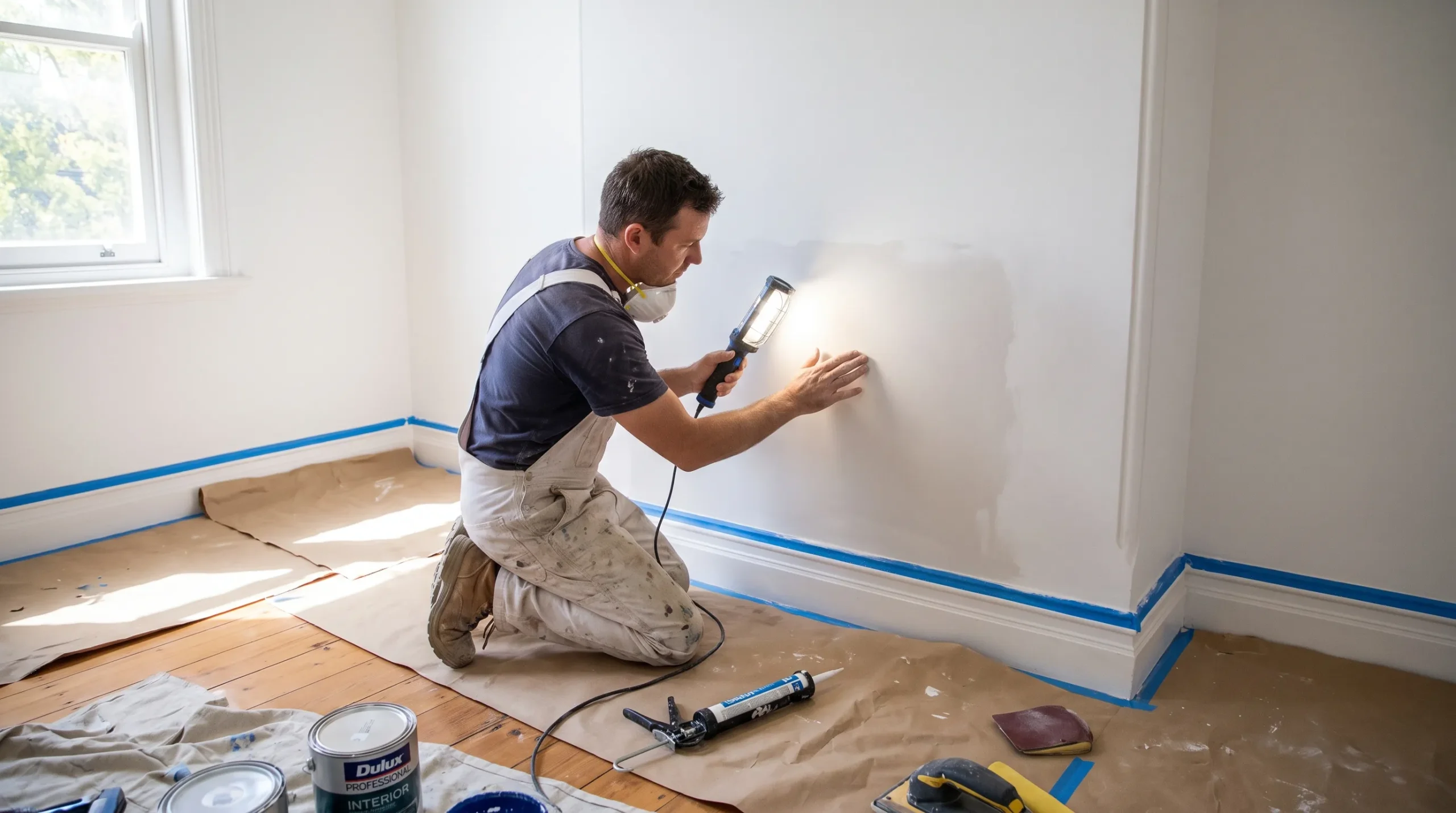
Useful checks include repaired areas, coverage, edge consistency and paint on surfaces that should have remained untouched. Side lighting can help reveal surface irregularities that are less obvious when viewed straight on. Inspection should also consider normal viewing conditions and the agreed scope, rather than assume an older wall will become perfectly flat through painting alone.
For professional painters Melbourne customers can assess confidently, the final walkthrough is an opportunity to review the finish together, identify outstanding work and confirm any care instructions.
A workmanship warranty adds accountability, but it is not a promise that every surface will remain unchanged. Ask for the written terms, including what is covered and what is excluded. Moisture problems, substrate movement and normal wear need to be distinguished from defects in the painting work.
When is professional painting worth choosing over DIY?
DIY can be reasonable for a small, accessible area with sound surfaces, especially if you have time to prepare carefully and follow the product instructions. Hiring a painter becomes more valuable as the project adds difficult access, damaged surfaces, multiple coating types or tight operational requirements.
The comparison should include more than paint and labour. Equipment, preparation time, protection, clean-up and the possibility of redoing unsuccessful work all affect the practical cost.
A low-priced professional quote is not automatically better than DIY either. If essential preparation is omitted, the finish may have the same weaknesses as a rushed home project.
To make a useful comparison, compare painting quotes on equivalent scopes. Look at what will be prepared, which coatings are proposed and how completion will be checked. That gives the price context without assuming that the highest quote guarantees the best result.
Frequently asked questions
Do professional painters always need to remove all existing paint? No. Sound, compatible coatings can often remain after suitable cleaning and preparation. Loose, failing or incompatible material requires a different approach. The decision should follow an assessment of the surface and proposed coating system.
How many coats should a professional painting job include? There is no single answer for every project. Coverage, colour changes, substrate condition and the manufacturer’s coating requirements determine the appropriate system. A clear scope should distinguish primers and undercoats from finish coats.
What should I expect from professional painters Melbourne property owners recommend? Expect an assessment of the surfaces, a clear written scope, appropriate protection and preparation, product-compatible application and a completion check. Ask about insurance, site safety and the terms of any workmanship warranty.
Does Dulux accreditation replace the need to check a quote? No. Accreditation is a useful credential, but you should still confirm the preparation, products, exclusions and completion process for your particular property.
Discuss your Melbourne painting project with Auspainters
Auspainters provides residential and commercial painting across Melbourne, including interior and exterior work. The team is Dulux accredited, fully insured and OHS compliant, with free quotations, a final walkthrough and a 5-year workmanship warranty.
Request a free painting quote from Auspainters to discuss your surfaces, the preparation required and the finish you want. A clear scope is the starting point for a result that looks good at handover and is suited to everyday use.