
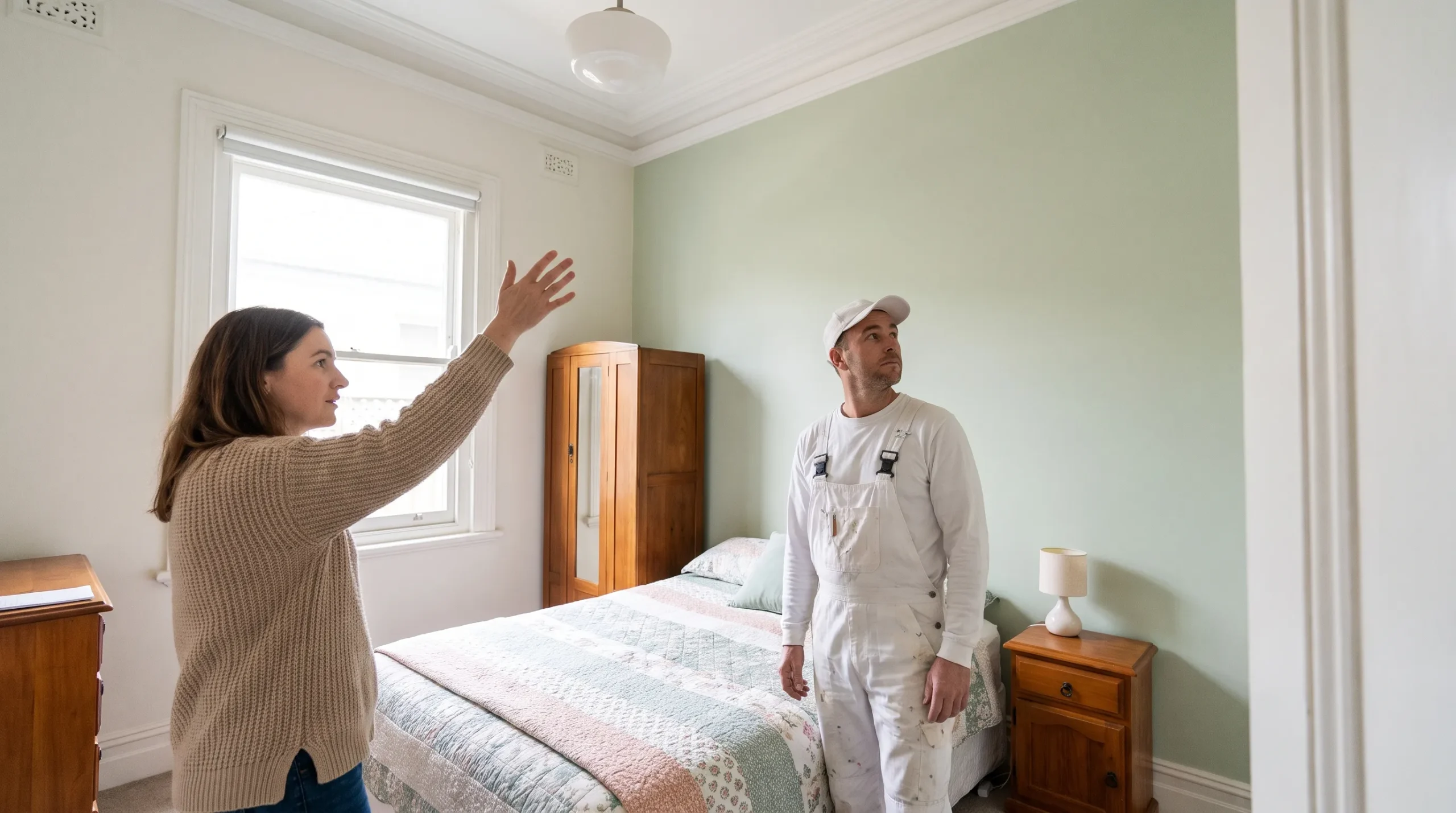

For a straightforward bedroom repaint in Melbourne, use A$500 to A$1,000 for walls only as an initial planning allowance. If you also want the ceiling, skirting boards, door and frame painted, A$1,100 to A$2,200 or more is a more useful starting budget. A house painter will need to confirm the room’s condition and scope before giving you a reliable price.
These figures are illustrative budgeting estimates, not published Auspainters rates or a fixed quote. All amounts below are in Australian dollars and allow for GST where applicable. Repairs, difficult access and specialist preparation can push the cost outside these ranges.
Single-room painting budgets at a glance
The most useful comparison is between clearly defined scopes, not simply between two prices for “painting a bedroom”. For the following examples, assume a room approximately 3.5 metres by 4 metres, a standard-height ceiling, sound existing paint and straightforward access.
| Scope | Illustrative budget | What the allowance assumes |
|---|---|---|
| Walls only | $500 to $1,000 | Basic protection, minor filling, local preparation and two finish coats |
| Walls and ceiling | $800 to $1,500 | The same wall preparation plus a sound, accessible ceiling |
| Walls, ceiling and standard painted trim | $1,100 to $2,200+ | Skirting boards, one door and its frame added to the scope |
These scenarios exclude extensive plaster repairs, wallpaper removal, moisture damage and hazardous-coating treatment. They also assume painted trim rather than stained timber needing a different coating system.
A larger room does not necessarily cost proportionally more. Setup and travel make up part of a small job, while intricate trim or damaged surfaces can make a compact room relatively labour-intensive.
How a house painter measures a single room
Floor area helps describe room size, but it is not the same as paintable area. Wall height, windows, doorways and the surfaces included all matter.
For a room measuring 3.5 metres by 4 metres with a 2.4-metre ceiling:
- Wall perimeter: 3.5 + 4 + 3.5 + 4 = 15 metres.
- Gross wall area: 15 × 2.4 = 36 square metres.
- Illustrative net wall area: About 32 square metres after deducting 4 square metres for openings.
- Ceiling area: 3.5 × 4 = 14 square metres.
That gives approximately 46 square metres of walls and ceiling before counting trim. Two finish coats involve coating that area twice, although a quote should not be interpreted as a simple multiplication of floor area by a paint price.
Door and window openings also require careful cutting-in around their edges. Subtracting their area does not remove all the labour associated with them, so measurements alone cannot determine the final charge.
Why a small job can still have a substantial labour cost
A house painter still needs to travel, unload equipment, protect the room, prepare surfaces and clean up, even when the job involves only four walls. Those tasks do not shrink in direct proportion to the room’s floor area.
Drying intervals can also affect scheduling. A painter may need to return after filling, priming or applying the first coat. Drying time is not automatically billable labour, but return visits involve additional travel and setup.
This explains why dividing a whole-home quote by the number of rooms rarely gives a dependable single-room price. A larger project can spread some setup costs across several spaces.
Ask whether the contractor uses a minimum job charge and whether the price is fixed for the agreed scope. If the quote is based on hourly labour, clarify how materials, travel and additional preparation will be charged. Neither pricing method is automatically better; the important point is knowing your likely total and how variations will be approved.
What pushes the price above a basic repaint?
Repairs, stains and failing paint
A few picture-hook holes are different from cracked plaster, peeling coatings or widespread dents. The latter may require scraping, patching, sanding and priming before finishing can begin.
Ask the house painter to distinguish minor filling from substantial repairs. Otherwise, a low initial price may cover much less preparation than you expected.
Water stains may need a suitable stain-blocking primer, but the cause of the water damage must be addressed first. Repainting over an active leak or damp wall does not solve the underlying problem.
In an older property, suspect coatings may also require assessment for lead before disturbance. Do not dry-sand unidentified old paint to save on preparation costs; ask whether testing or specialist controls are needed.
Strong colour changes and different coating systems
Changing from a dark red wall to a pale neutral can require more work than refreshing a similar colour. The necessary primer and number of finish coats depend on the existing surface, chosen colour and coating system.
Ask whether the quote allows for the coverage your colour change requires, rather than assuming two coats will always be sufficient.
Previously stained timber, glossy enamel and bare plaster also need different preparation from a sound, previously painted wall. Choosing a suitable product for the surface matters more than buying the most expensive tin available.
Ceilings, doors and decorative details
A house painter may spend considerable time on skirting boards, doors and frames because they involve detailed preparation and application. Ornate cornices, multiple window frames or a panelled door can add work without greatly increasing the room’s dimensions.
Tall ceilings and awkward access can introduce further equipment and protection requirements. A furnished bedroom may also take longer to organise than an empty room, particularly if large items cannot be moved clear of the walls.
Make these details visible in the photos you send for an estimate. A photograph showing only the centre of a wall will not reveal the condition of the door, cornice or skirting boards.
Compare quotes by scope, not just the total
For a single room, an apparently cheaper quote can simply mean fewer surfaces or less preparation. Compare written descriptions before comparing the bottom line.
A useful quote identifies the surfaces being painted, preparation included, paint products, coat system and responsibility for moving furniture. It should also explain cleanup, GST treatment and how additional work will be authorised.
For example, “paint bedroom” leaves several questions unanswered. “Prepare and repaint walls, ceiling, skirting boards, one door and frame” establishes a clearer starting point, although the preparation and coating details still need to be specified.
The broader guide to what residential painting contractors include in their quotes can help you check those details without turning a small job into an unnecessarily complicated tender.
Ask about insurance and the written workmanship warranty too. Confirm what the warranty covers rather than assuming every future scuff, stain or moisture problem will qualify.
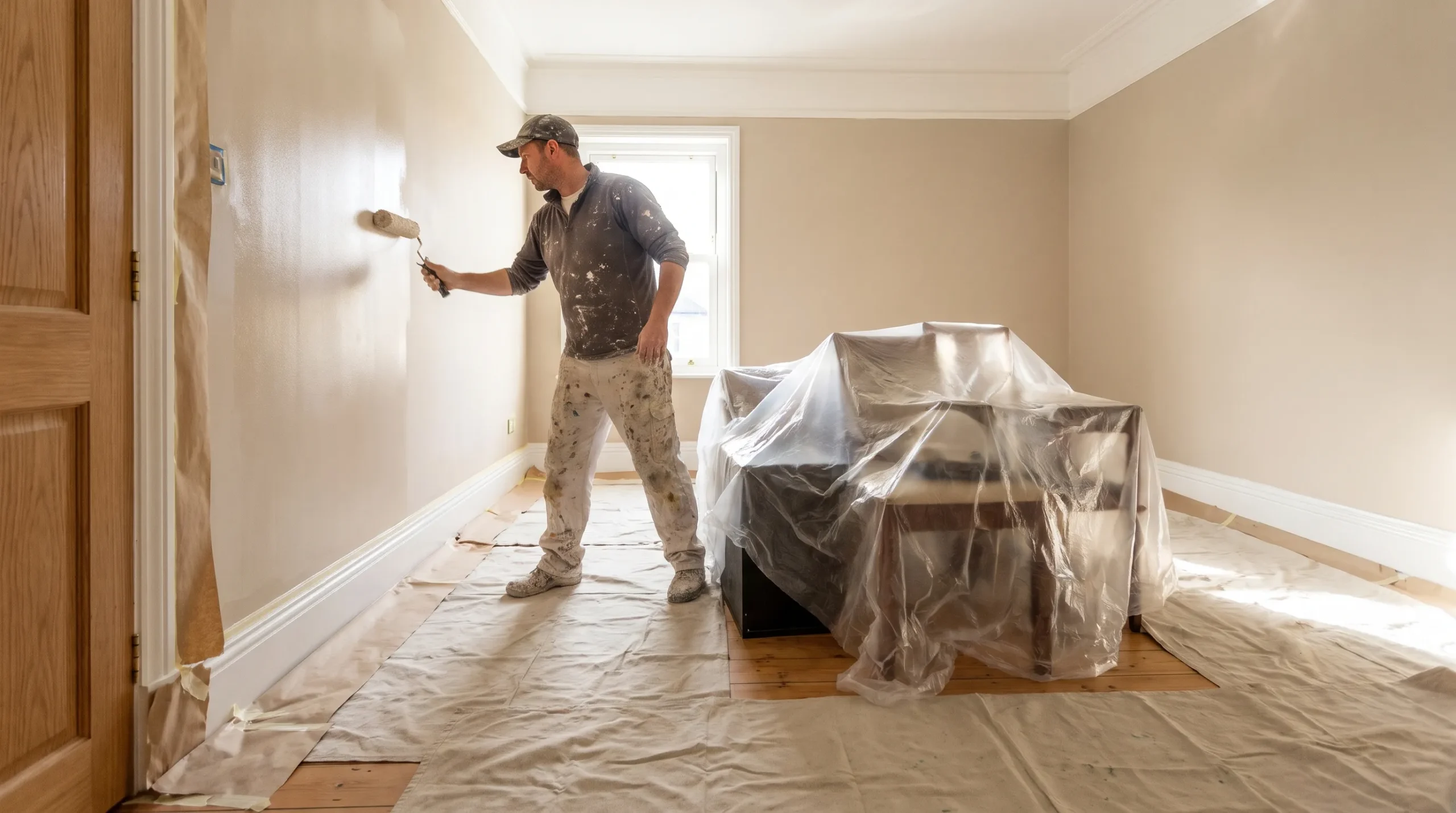
Can you reduce the cost by preparing the room yourself?
Clearing belongings can make the job easier, but agree on your responsibilities before doing any preparation. Emptying shelves, removing pictures and creating clear access are usually more straightforward than attempting repairs yourself.
An inexperienced patch or the wrong filler can create extra work. Removing wallpaper can also expose damaged plaster, so it should not be treated as a guaranteed saving.
Ask your house painter whether the quote changes if the room is empty and whether furniture moving is otherwise included. Keep electrical fittings and any work requiring a qualified trade outside your DIY preparation.
During the job, arrange ventilation in line with the coating instructions and keep children and pets away from wet surfaces and equipment. Discuss when the room can be occupied again, especially if it is someone’s only bedroom.
If you have another room that genuinely needs painting, requesting a combined quote may spread setup costs. Compare the additional cost rather than commissioning unnecessary work just to obtain a lower price per room.
Budgeting for a rental bedroom
For a rental property, the painting bill is only one part of the decision. Consider access, lost rental days and whether the room can be painted without disrupting occupied shared areas.
Room-by-room letting can create a different maintenance schedule from letting an entire home. This comparison of monthly room rentals and whole-home rentals examines vacancy, shared spaces and owner workload. It is US-focused, so use it for business-model considerations rather than Victorian tenancy requirements.
Give the house painter a realistic access window before accepting a quote. A tight handover deadline may affect availability and the practical scope of work. For a vacant property, planning painting between tenancies can help coordinate repairs, painting and the next occupant’s arrival.
Frequently asked questions
Does a single-room painting quote include the ceiling? Not necessarily. Walls, ceilings, doors and trim should be named separately. A quote described as “walls only” generally should not be treated as covering the rest of the room.
Is paint included in the price? It may be, but check the written quote. Confirm the product, finish, colour and whether primers are included. If you supply paint, agree on its suitability and quantity before purchasing it.
How long does painting one bedroom take? A straightforward repaint may take one to two working days, but repairs, trim work and drying conditions can extend the schedule. Ask for both the expected work period and the time before normal use. Touch-dry paint is not necessarily fully cured.
Can a house painter quote from photos? Photos and measurements can support an initial estimate. A site inspection may still be needed to assess adhesion, repairs, access or suspect coatings. Confirm whether a photo-based price is fixed or subject to inspection.
Will one feature wall be much cheaper than a full room? It uses less paint and covers less area, but protection, travel and setup are still required. A minimum job charge can limit the saving, particularly if the colour change needs extra preparation or coats.
Get a quote for the room you actually want painted
For an accurate price, provide the room’s dimensions, ceiling height, photos, current and proposed colours and a clear list of surfaces. Mention peeling paint, stains or previous repairs before booking.
Auspainters offers interior painting across Melbourne, free quotations and a 5-year workmanship warranty. The business is Dulux accredited and fully insured, with a final walkthrough included in its service.
Request a quote that separates your essential work from optional extras, such as adding the ceiling or doors. That gives you a practical way to manage the budget without leaving preparation or finish quality undefined.