

Searching for “house painters exterior” is a useful starting point, but a coastal home needs more than a fresh colour and a competitive quote. Around Melbourne’s bayside suburbs, salt deposits, wind-driven rain and strong sunlight can expose weaknesses in preparation long before a finish looks worn elsewhere. The right painter should explain how they will assess your particular property, prepare each surface and choose a compatible coating system.
This guide focuses on the decisions that matter near the coast: comparing preparation allowances, identifying hidden repair costs, checking credentials and agreeing on realistic maintenance. Those details help you distinguish a properly scoped job from a cheaper quote that leaves essential work unresolved.
Why coastal exposure changes the painting brief
Salt does not affect every coastal property equally. Distance from the water matters, but so do prevailing winds, surrounding buildings, vegetation and the orientation of individual walls. A sheltered veranda can retain airborne deposits because rain rarely washes it, while another elevation receives repeated wetting from storms.
Deposits left on a surface can interfere with preparation and coating performance. Moisture entering through failed joints or damaged flashings creates another problem: a new finish cannot correct an underlying leak. On metal components, corrosion may continue beneath paint unless the preparation and primer suit the substrate and its condition.
Ask for an elevation-by-elevation assessment, not one preparation description for the whole house. The seaward wall, shaded southern side and protected porch may need different attention.
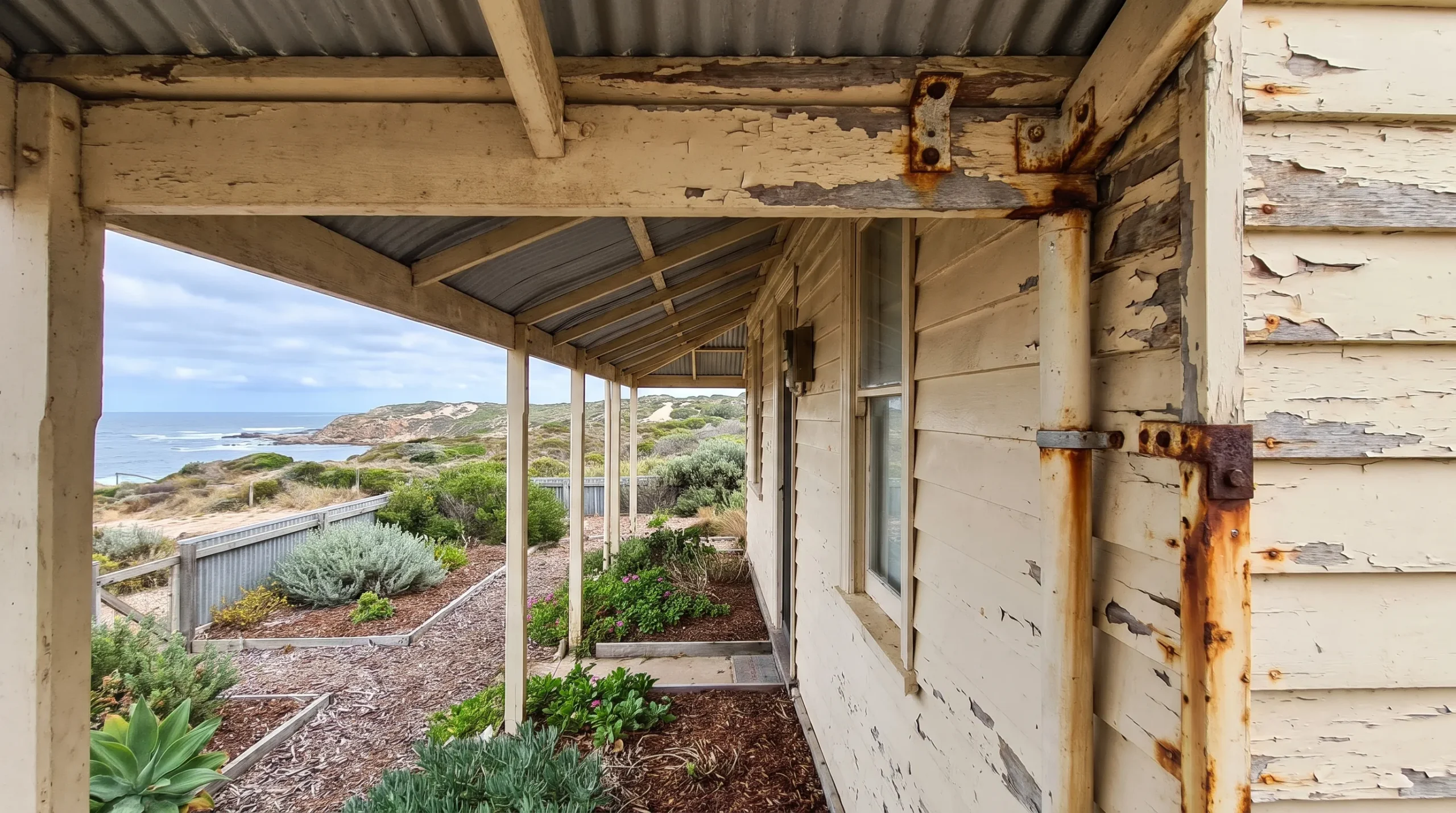
Show house painters exterior areas where deterioration returns repeatedly, including bubbling near windows, rust around fixings and peeling beneath eaves. Previous failure patterns are useful evidence, even if the surface looks better after a recent patch repair.
A site inspection should also separate painting defects from building defects. Rotten timber, movement cracks and water entry may require another trade before painting begins.
Look for a preparation plan that addresses salt and moisture
A quote that simply says “wash, sand and paint” leaves too much unresolved for a coastal property. Ask the painter to describe what washing is intended to remove, how unsound coatings will be treated and how they will determine whether the surface is ready for recoating.
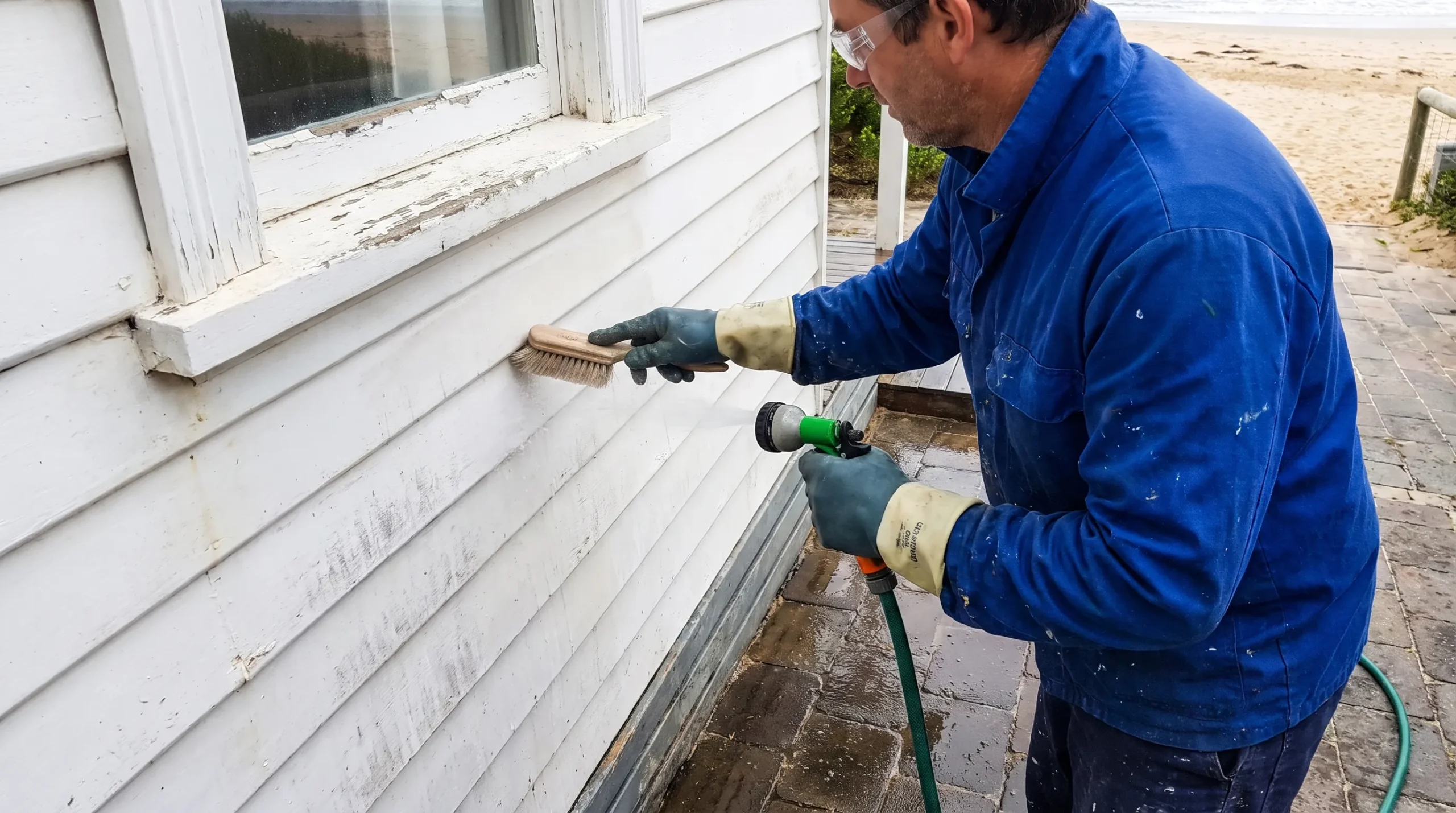
Salt contamination needs appropriate cleaning rather than being sanded into the substrate or covered with primer. Cleaning methods must also suit the building. Aggressive pressure washing can damage timber, disturb weak coatings or drive water into vulnerable joints.
After washing, drying time should reflect the material, weather and coating requirements. A wall that feels dry on the surface may still need further assessment, particularly where moisture problems are suspected.
Ask exterior house painters to explain how they will handle chalking paint, mould, loose edges and failed sealants. These are different defects, not interchangeable reasons for a quick sand.
The preparation plan should identify which areas need spot priming and which require more extensive treatment. Where the existing coating is uncertain, the painter may need compatibility or adhesion checks before specifying the new system.
How to compare “house painters exterior” quotes for coastal homes
Send each contractor the same scope so you can compare like with like. Specify the walls, eaves, fascia boards, window frames, doors and other components you want included. Do not assume gutters, downpipes, fences or decks are automatically part of an exterior repaint.
Use this comparison table when reviewing written proposals:
| Quote item | What a useful scope should explain |
|---|---|
| Surface cleaning | Contaminants being removed and the proposed cleaning method |
| Failed paint | How loose, peeling or poorly bonded coatings will be addressed |
| Repairs | Included filling, sealant work and any limits on timber or render repairs |
| Primers | Products or systems proposed for different substrates and conditions |
| Finish coats | Named product, number of coats and application requirements |
| Access | Scaffolding, elevated work platforms or other necessary equipment |
| Protection | Measures for gardens, paving, vehicles, windows and neighbouring property |
| Completion | Cleanup, inspection, defect correction and handover information |
A stated number of coats is useful, but it does not replace correct application. Coatings must also meet the manufacturer’s spreading rates, drying conditions and recoat requirements.
Compare the complete system, not just the final price or paint brand. Two quotes can name the same finish paint while allowing very different preparation work.
Clarify exclusions before accepting the price
Coastal deterioration can become more obvious once loose paint is removed. Give house painters exterior repair reports and photographs from previous work, especially if the property has a history of leaks or timber replacement.
Ask whether rotten boards, damaged render, corroded fixings and failed window joints are included, excluded or subject to further assessment. Larger repairs may need a carpenter, renderer or other suitable trade.
Older coatings also warrant caution. The Australian Government’s guidance on lead in house paint explains the risks associated with disturbing lead-containing paint. Where it may be present, ask how assessment, containment and waste management will be handled before scraping or sanding starts.
Other exclusions can include permits, difficult access, removing fixtures and repairing concealed damage. Agree on how variations will be described, priced and authorised before extra work proceeds.
For a broader explanation of these cost drivers, Auspainters’ guide to what changes exterior house painting prices helps separate surface condition, access and detailing costs.
Verify experience, insurance and warranty terms
Coastal experience is most useful when a contractor can explain decisions, not simply claim to work near the beach. Ask for examples involving similar cladding, exposure and existing coating problems. With the owner’s permission, an older completed project can reveal more about durability than a freshly painted frontage.
A practical verification checklist includes:
- Business details: Confirm who is quoting, contracting and carrying out the work.
- Insurance: Request current evidence of relevant cover and check that it applies to the proposed activities.
- Comparable references: Ask about communication, preparation, site cleanliness and how issues were resolved.
- Safety planning: Confirm how work at height, pedestrian access and hazardous materials will be managed.
- Written warranty: Check its duration, coverage, exclusions and process for reporting a defect.
Check any registration or permit requirements that apply to the actual scope, particularly if building repairs are bundled into the project. A trade badge alone does not establish that every part of the work is covered.
When comparing exterior house painters, distinguish a workmanship warranty from a paint manufacturer’s product warranty. Neither should be assumed to cover every failure associated with leaks, substrate movement or neglected maintenance.
Auspainters states that it is Dulux accredited, fully insured and OHS compliant, and offers a 5-year workmanship warranty. Ask how those commitments apply to your written scope and coastal conditions.
Choose the coating system by surface, not by brand alone
There is no single exterior paint that is best for every coastal home. The specification needs to account for the substrate, existing coating, exposure and manufacturer’s requirements. A wall coating, timber finish and metal primer perform different jobs, even when they come from the same brand.
Ask house painters exterior coating questions that go beyond colour: what must the system adhere to, what preparation does it require and where are its limitations?
Weatherboards and exterior timber
Timber expands and contracts as its moisture content changes. Loose coatings, damaged joints and decayed sections need assessment before painting, rather than being hidden beneath filler and finish coats.
Ask how exposed timber, board ends and repaired areas will be prepared and primed. Sealant must be suitable for the joint and compatible with the coating, and it should not block drainage paths or ventilation openings.
Colour selection also deserves care. Dark finishes absorb more solar heat, and some timber products or cladding systems have colour restrictions. Check the substrate manufacturer’s guidance rather than assuming every colour is suitable.
For weatherboards, the painter should explain how preparation and application will preserve the building’s intended water-shedding details.
Render, masonry and fibre cement
Cracks, powdery surfaces and damp patches need diagnosis before a coating is chosen. Filling a crack without understanding whether it is stable or still moving can lead to an early return of the defect.
New cement-based surfaces may also have curing and alkalinity requirements. Existing coatings can affect what may safely go over them, while moisture entry may need building repairs rather than another paint layer.
Ask for a system matched to the actual surface. A texture coating, conventional exterior finish and specialist masonry coating are not interchangeable solutions. Any claims about bridging cracks or managing moisture should be checked against the named product’s technical information.
Metal railings, gutters and exposed fixings
Coastal metalwork needs particular attention because rust is not merely a colour defect. The painter should identify the metal, assess the extent of corrosion and specify preparation and primer accordingly.
Galvanised steel, aluminium and previously painted steel can require different treatments. A general-purpose wall paint should not be treated as a universal metal protection system.
Ask whether corroded fasteners or severely deteriorated components need replacement. Painting over a weakened fitting does not restore its strength, and replacement may sit outside the painter’s scope.
Factory-coated metal products can also have specific repainting requirements. Your chosen contractor should check compatibility rather than relying on appearance alone. On mixed-material façades, the quote should make these separate systems clear.
Agree on weather limits and a realistic programme
A coastal painting programme should allow for unsuitable conditions, not promise uninterrupted progress. Rain, strong wind, excessive surface heat and overnight condensation can all affect preparation or coating application.
Air temperature alone does not establish whether a surface is ready. A sunlit wall may be much hotter than the forecast, while a shaded elevation can remain damp longer. Drying and recoat times also vary with the product and conditions.
Give house painters exterior access details before they schedule the job, including narrow side passages, sloping ground and areas exposed to strong winds. These affect equipment selection as well as productivity.
Ask what conditions would stop work, how delays will be communicated and how prepared surfaces will be protected between stages. Avoid choosing a contractor solely because they promise the shortest completion time.
For Melbourne’s bayside homes, the useful commitment is a workable sequence: preparation, sufficient drying, coating within product limits and inspection. A fixed calendar promise without weather allowances can encourage rushed decisions.
Protect household routines and visitor access
Confirm how residents will enter the house, where equipment will be stored and when windows or doors may need to remain accessible for painting. Tell the contractor about children, pets and anyone with particular access or health requirements.
For appointment-based businesses, from home consulting rooms to dental clinics such as Beenleigh Dental, clear arrival instructions and safe access matter. If your coastal home also serves clients, include their movements in the site plan rather than treating the property as an empty worksite.
Agree on dust and overspray controls, protection for outdoor belongings and arrangements for neighbouring properties. Where equipment could obstruct shared access, resolve permissions before the start date.
Plan maintenance before the final walkthrough
A well-specified repaint still needs care in a coastal environment. Ask exterior house painters for maintenance advice tied to the products actually used, rather than a generic promise that the finish will last a certain number of years.
The handover should identify paint products, colours and sheens, along with relevant care instructions. Ask which sheltered areas need particular attention because rainfall does not remove deposits there. Cleaning frequency should follow the coating manufacturer’s recommendations and the property’s exposure.
During the final walkthrough, inspect accessible surfaces together for missed areas, patchy coverage, paint on adjacent finishes and unresolved defects. Confirm that agreed repairs and cleanup are complete, and record anything still requiring attention.
Keep the quotation, approved variations, warranty and product details together. Photographs at completion can provide a useful reference for later inspections.
Maintenance checks should look beyond fading. New rust spots, opening joints, peeling edges and moisture staining deserve investigation before they become widespread. If deterioration appears quickly, contact the contractor and establish the cause rather than immediately arranging another coat.
Frequently asked questions
How much does it cost to paint a coastal house exterior? The price depends on paintable area, existing condition, access, detailing and the specified coating systems. Coastal exposure can increase preparation or metal-treatment requirements, but there is no reliable universal coastal surcharge. Obtain site-based written quotes with matching inclusions rather than comparing headline figures alone.
Are hourly rates a useful way to compare painters? Only to a limited extent. An hourly rate does not tell you how much preparation is included, what equipment costs extra or how long the job will take. A clear scope and an agreed pricing basis provide a better comparison. If work is charged hourly, clarify materials, access costs and authorisation limits.
Which exterior paint brand is best near the coast? Start with the surface and exposure, then compare suitable systems within established product ranges. The named primer, finish and preparation requirements matter more than the brand alone. Ask why the proposed products suit your timber, masonry or metal and whether any manufacturer restrictions apply.
Can painters coat over salt deposits or existing rust? Salt deposits should be appropriately removed before coating. Rust treatment depends on the metal, corrosion severity and specified system. Neither problem should be concealed under ordinary finish paint without suitable preparation. Severely deteriorated metal may need replacement rather than repainting.
How often will a coastal home need repainting? There is no dependable interval for every property. Exposure, substrate condition, preparation, application and maintenance all affect service life. Different elevations may deteriorate at different rates. Regular inspection and prompt repairs are more useful than assuming the entire house will last for one fixed period.
Request a coastal exterior assessment
If your search for “house painters exterior” has produced several similar-looking offers, narrow the choice through preparation detail, relevant experience and a clear written scope. The strongest proposal should explain how the painter will address your home’s actual exposure, not simply promise premium paint.
Auspainters provides exterior painting across Melbourne, with free quotations and a final walkthrough. Request an exterior painting quote from Auspainters and ask for an assessment covering salt-exposed surfaces, repairs, access and the coating systems proposed for your coastal home.