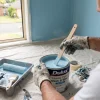

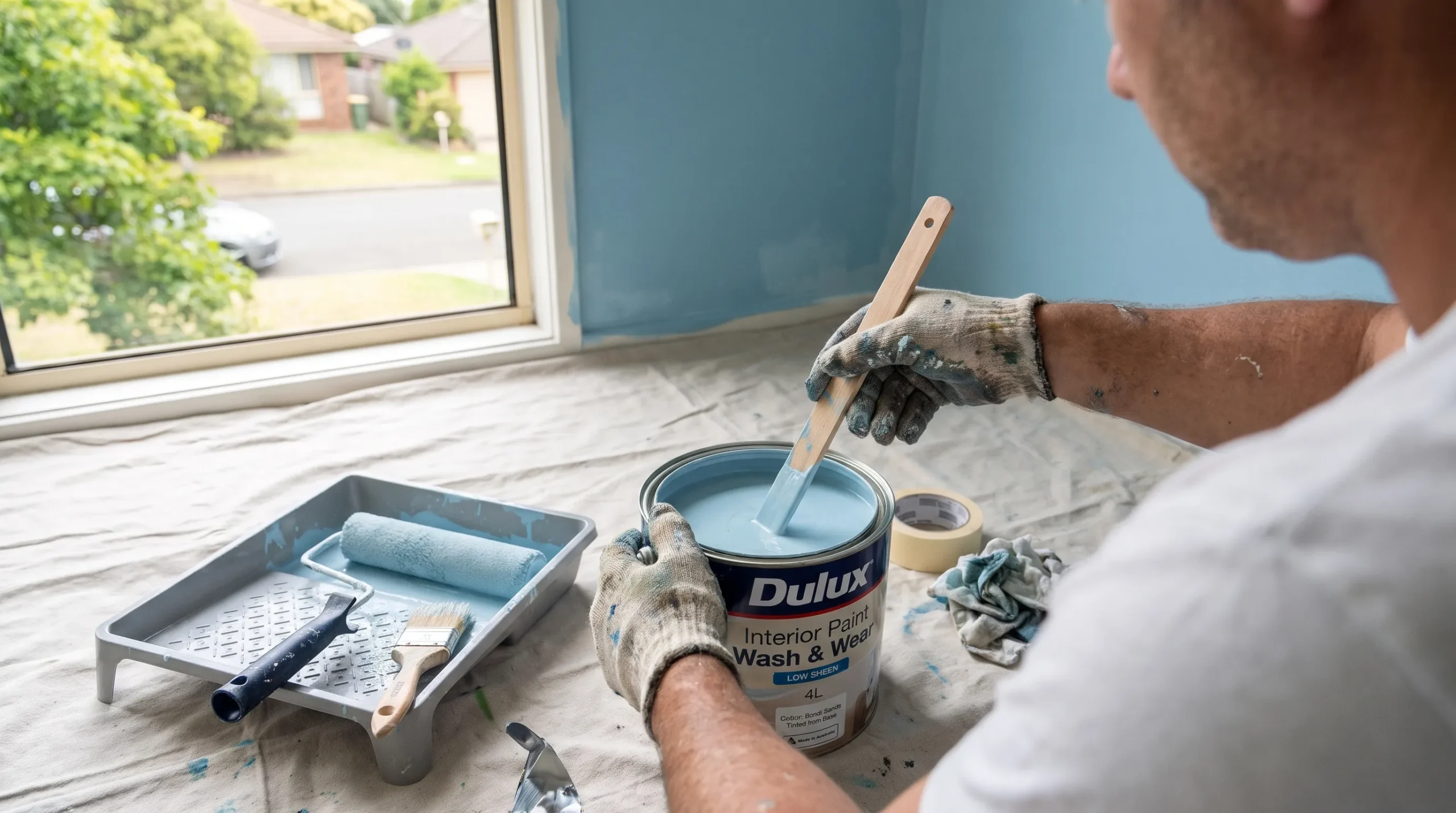

Choosing low-VOC vs zero-VOC paint for your Melbourne home involves more than finding the tin with the strongest environmental claim. Both can reduce the amount of volatile organic compounds in a coating compared with higher-VOC alternatives, but neither label guarantees an odour-free room, immediate reoccupation or a better finish.
The useful comparison is between the fully tinted products and the complete coating system, including primers and undercoats. Your room’s ventilation, the condition of its surfaces and the paint’s durability matter too. Here is how to weigh those details before approving a painting quote.
Low-VOC vs zero-VOC paint: the key differences
VOCs are chemicals that can evaporate into the air at room temperature. Paints, cleaning products, adhesives and other household materials can release them. Their potential health effects depend on the particular substance, its concentration and the duration of exposure.
For interior wall paints, common marketing benchmarks are below 50 grams per litre (g/L) for low-VOC products and below 5 g/L for zero-VOC products. These are not universal Australian definitions for every coating, so check the manufacturer’s stated threshold and measurement method rather than relying on the front label.
| Consideration | Low-VOC paint | Zero-VOC paint |
|---|---|---|
| VOC content | Below a stated limit, which varies by product or standard | Usually below a very low threshold, rather than necessarily absolute zero |
| Odour | May still have a noticeable smell | Can still have an odour |
| Tinting | Colourants may affect the final VOC content | The claim may apply only to the untinted base |
| Ventilation | Required during application and drying | Still required during application and drying |
| Durability | Depends on the formulation and intended use | Depends on the formulation and intended use |
Neither category automatically wins on coverage, washability or appearance. Compare products designed for the same surface and level of wear.
What the label does not tell you
VOC content and indoor emissions are different measures
A VOC content figure describes the amount of VOCs in the liquid coating under a particular test method. An emissions test measures substances released into the air under specified conditions. These measurements answer different questions.
A lower content figure is useful, but it does not establish that every possible emission has been assessed. Equally, a strong smell is not a reliable measurement of exposure, and a paint with little smell is not automatically harmless.
The US Environmental Protection Agency’s guidance on VOCs and indoor air quality explains why ventilation and following manufacturers’ directions remain important when using products that emit organic compounds.
If a paint carries an independent certification, check what it covers. A limit on VOC content is not the same as chamber testing for emissions, and neither should be interpreted as a blanket medical safety guarantee.
Tint, primer and preparation products count too
Ask whether a low-VOC or zero-VOC claim applies to the finished colour, not just the white base. Colourant formulations differ, so do not assume every shade retains the same published figure.
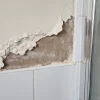
The topcoat is also only one part of the job. A room may need a sealer, stain-blocking primer, gap filler or a specialised coating over existing enamel. These products can have different ventilation requirements and VOC levels.
Some stains and difficult substrates need a particular primer for reliable adhesion or stain blocking. Substituting an unsuitable product simply to keep every tin in the same VOC category can compromise the result. Ask your painter to explain any exception and how application will be managed.
Low-VOC paint also does not make dusty preparation work harmless. Older coatings may need assessment for lead before sanding or disturbance.
Which option suits each room?
Bedrooms, nurseries and home offices
These rooms are sensible places to prioritise lower-emission products because people may spend long periods in them. Look for clear information about the tinted paint, any emissions testing and the manufacturer’s instructions for ventilation and reoccupation.
For someone with asthma, chemical sensitivities or another health concern, discuss individual precautions with their treating clinician. A zero-VOC label alone cannot establish that a particular person will tolerate the product.
Allow enough time to complete preparation, painting and ventilation before the room is needed. Scheduling a nursery repaint immediately before a baby arrives leaves little flexibility if drying conditions are poor.
Hallways, kitchens and bathrooms
In busy hallways, scrub resistance and stain resistance deserve attention alongside VOC content. A coating that tolerates routine cleaning may avoid premature repainting, but that performance must come from the product specification rather than the VOC label.
Kitchens and bathrooms need coatings suitable for their actual conditions, including condensation and regular cleaning. Fix leaks, inadequate extraction and persistent moisture before painting. Even a bathroom-specific coating cannot correct an unresolved moisture problem.
For exterior surfaces, weather resistance and substrate compatibility become central. An interior zero-VOC wall paint is not an alternative to an appropriate exterior coating.
Melbourne weather, ventilation and returning to the room
Allow for cool or damp conditions
Melbourne’s changing weather can affect an indoor repaint even when rain never reaches the walls. Cool surfaces and high humidity can slow drying, while closed windows can reduce ventilation.
Check the product’s minimum application temperature, humidity limits and recoat instructions. Air temperature alone may not reflect the temperature of an external-facing wall on a cold morning.
Plan the work so ventilation is practical and secure. Opening windows on opposite sides of the home can help when conditions allow, and a suitably positioned fan can assist air movement. Avoid directing strong airflow across wet paint if it introduces dust or disrupts application.
Running a heater is not a substitute for exchanging indoor air with fresh outdoor air. Any heating arrangement must also be safe and compatible with the products being used.
Touch-dry does not mean fully cured
Paint can feel dry before it is ready for another coat, furniture contact or washing. Recoat time, return-to-service time and full cure time are separate instructions.
There is no single waiting period that makes every freshly painted room suitable for every occupant. Follow the manufacturer’s directions for the exact paint and preparation products used, and ask for clarification if the guidance is unclear.
Continue ventilation as directed, including after the painters leave. Where practical, keep children, pets and people with sensitivities away from the work area during application and initial drying.
For apartments, ventilation plans also need to respect building rules. Propping open a fire door or exhausting air into an enclosed common corridor is not an appropriate shortcut.
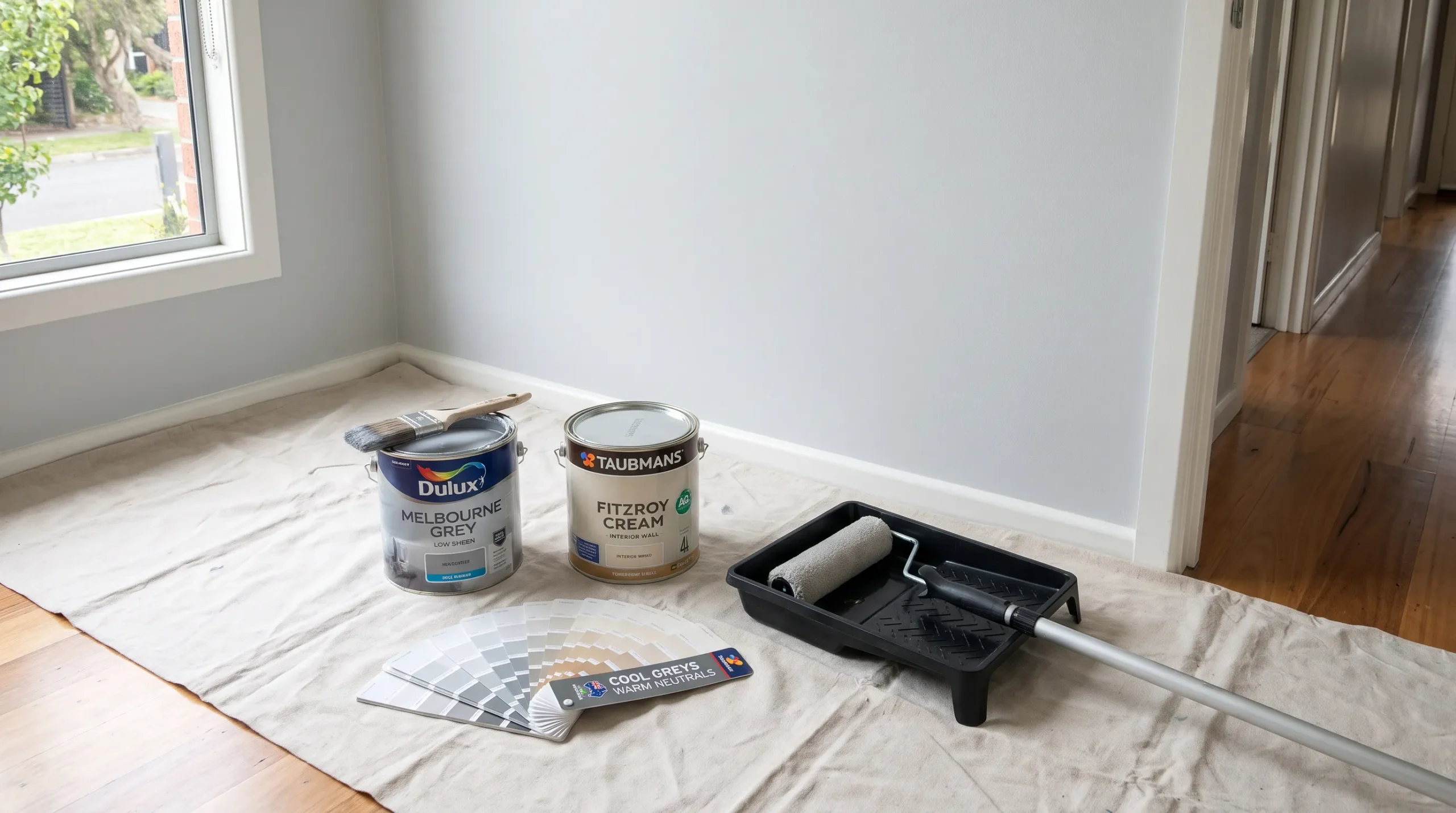
What to ask your painter before accepting a quote
A useful quote identifies the products and work involved rather than promising only “premium eco paint”. Melbourne house painters should be able to explain why the proposed coating suits your walls, existing finishes and daily use.
Ask these questions before approving the job:
- Which exact products are included? Request the manufacturer, product range and sheen for primers, undercoats and topcoats.
- Does the VOC claim include tinting? Confirm whether the published figure applies to your selected colour.
- What evidence supports the claim? Ask for the technical data sheet, safety data sheet and details of any relevant certification or emissions testing.
- Are any higher-VOC products needed? Find out where they will be used, why they are required and what precautions apply.
- How will occupied rooms be managed? Agree on room sequencing, ventilation and manufacturer-based return-to-use guidance.
- When can the finish be cleaned? Obtain the curing and maintenance instructions, not just the touch-dry time.
Keep these details with the quote. They make comparisons more meaningful and help prevent a last-minute substitution with a product you have not reviewed.
Is zero-VOC paint worth paying more for?
Sometimes, but the label alone does not justify a premium. The price difference varies between ranges, finishes and suppliers. Preparation, access, repairs and labour can also account for much more of the project cost than the difference between two wall paints.
For low-VOC vs zero-VOC paint, compare the installed cost of systems that meet the same performance requirements. A lower-VOC product with suitable durability and clear supporting documentation may be a better choice than a poorly specified alternative marketed as zero-VOC.
If the budget is tight, reduce the scope or stage the rooms rather than omitting necessary preparation. Our guide to affordable house painting without cutting essential preparation explains how to make those trade-offs.
If you live in Singapore and are considering borrowing from a Singapore lender such as Magnus Credit to fund work on a Melbourne property, assess eligibility and total borrowing costs separately from the painting quote.
Frequently asked questions
Does zero-VOC paint have no smell? No. Ingredients outside the relevant VOC definition, or substances present at low levels, can still produce an odour. Smell is not a dependable way to measure emissions or decide whether ventilation is adequate.
Is zero-VOC paint always better for a nursery? It can be a useful preference, but check the tinted product, preparation coatings and any emissions testing. Complete the work well before the room is needed and follow the manufacturer’s ventilation and reoccupation guidance.
Can low-VOC paint be washable? Yes. Low-VOC and zero-VOC paints can offer washable finishes, depending on the formulation. Check the stated cleaning performance and allow the coating to cure before washing it.
Can you apply these paints during a Melbourne winter? Often, provided the room and surfaces meet the product’s application requirements and adequate ventilation is possible. Cold or damp conditions may extend drying times, so the schedule needs flexibility.
Choose the coating and the application plan together
The best choice combines a suitable paint, documented product claims and a practical plan for preparation, ventilation and curing. Ask for those details before deciding on either label.
Auspainters provides interior house painting in Melbourne, with free quotations, Dulux accreditation and a 5-year workmanship warranty. When requesting your quote, mention any sensitivities, occupied bedrooms or ventilation constraints so these can be considered in the proposed work.